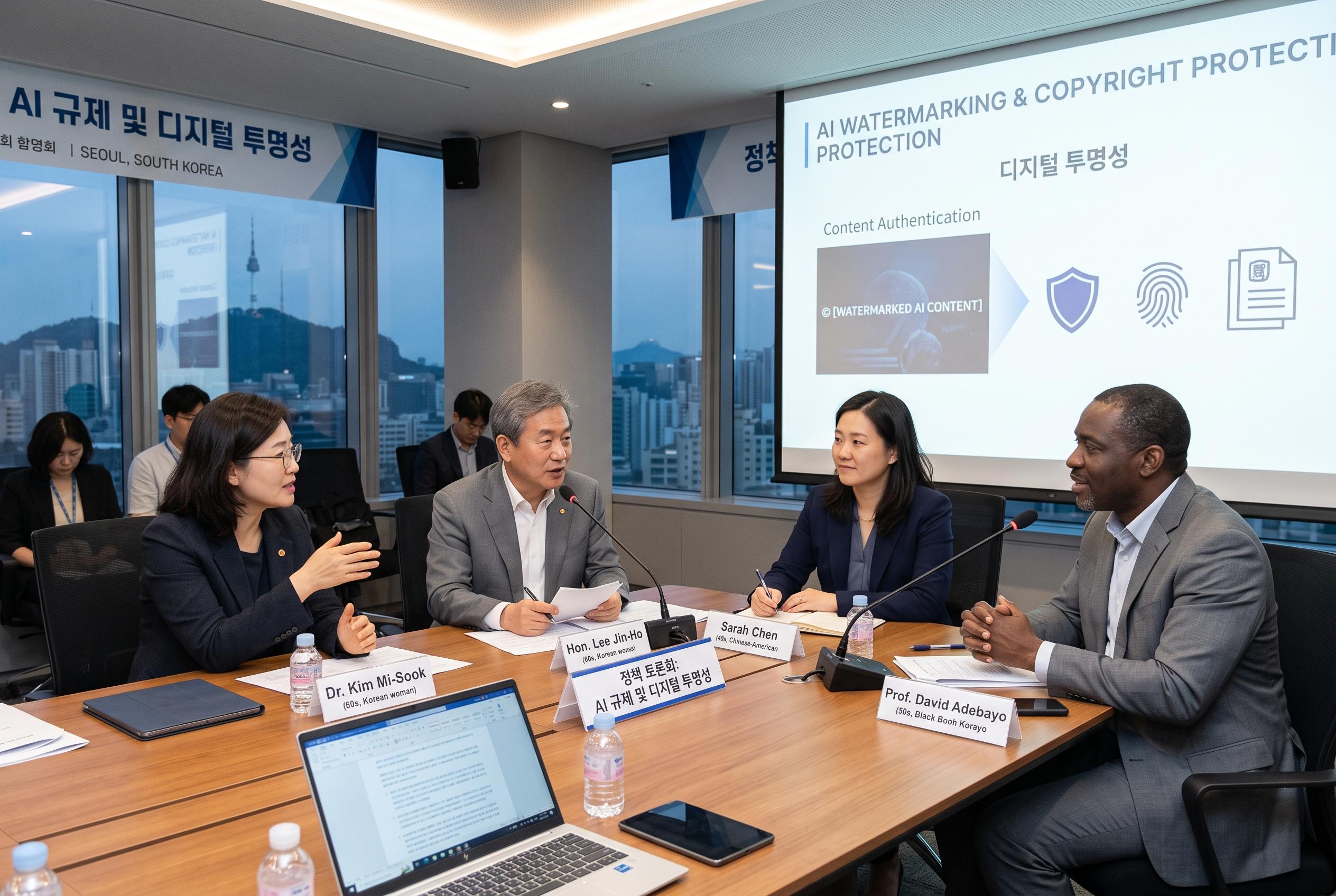

South Korea is considering extending its AI rules to hold platforms responsible for watermarking and transparency, as debate grows over managing AI-generated content and safeguarding copyright amid enforcement difficulties.
South Korea should extend its artificial intelligence rules so platforms, not just developers and users, are responsible for keeping disclosure marks attached as AI-made content spreads online, a forum convened by the science ministry and the Korea Information Society Development Institute heard in Seoul on Monday. The discussion reflected a growing view that the country’s AI Basic Act needs a more detailed responsibility chain covering creation, posting and distribution, rather than treating all intermediaries alike.
At the first meeting of the AI Social Policy Forum’s technology and norms division, Shin Eun-ji, a visiting professor at Sookmyung Women’s University, argued that platform operators should be brought into the legal framework as a separate category. She said content published by users can fall outside the act’s disclosure obligations if the platform is neither the developer nor the direct user of the AI system. Her proposal would define businesses that distribute or provide generative AI content to the public as “distributors and operators”, but would limit their duties to technical and procedural tasks such as preserving watermarks and metadata rather than judging whether content is authentic.
Shin also said platforms that take reasonable steps should have room for legal exemption. The point, she argued, is not to impose liability for outcomes they cannot control, but to require them to carry out the safeguards they can control. That approach fits with South Korea’s wider transparency framework, which already requires AI-generated material to be marked. Korea JoongAng Daily reported earlier this year that the AI Basic Act, which took effect on January 22, 2026, calls for watermarks on generated content, while enforcement remains difficult because watermark-removal tools are widely available and some deepfakes are made with foreign apps that may sit outside Korean jurisdiction.
The forum also heard calls to move beyond a one-size-fits-all label of “AI-generated” content. Lee Ha-jin, a professor at Seoul National University, said users may react differently depending on how deeply AI was involved in production, so disclosure should distinguish between levels of AI involvement. She cited research suggesting that AI labels can affect whether people recognise AI use, but do not necessarily change later behaviour such as sharing. She also pointed to cases in which AI disclosure lowered trust in accurate information but raised it for false material, arguing that notices about AI use should be separated from warnings about risky content.
On copyright and training data, the discussion focused on a compromise between full disclosure and business confidentiality. Park Il-hyun, a lawyer at Yulchon, proposed that AI companies keep internal records of training data lists and usage histories so rights holders can later check whether their works were used, if they raise a complaint. Park said retention obligations and disclosure obligations should be treated separately, allowing the law to avoid disputes over trade secrets while still giving rights holders a practical route to verification. Academic work cited in the broader policy debate has also noted that Korean copyright law does not recognise purely AI-generated works, while policymakers continue to weigh provenance labelling, watermarking and other transparency tools.
Disclaimer: This content is intended for informational purposes only. Readers are advised to exercise their own judgement, conduct due diligence, or consult a qualified expert before acting on any information provided.