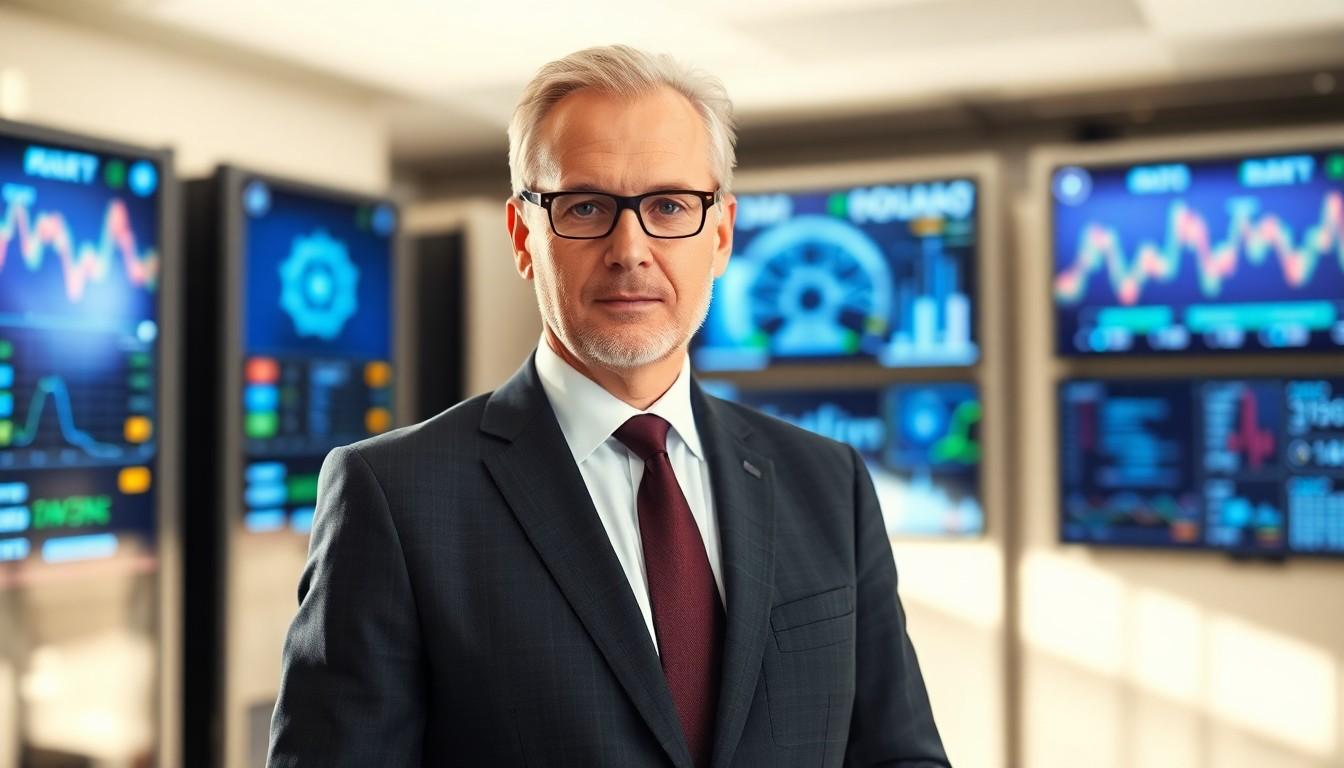

Hermann Hauser, influential European investor, cautions against market exuberance in AI but emphasizes its potential for revolutionary change and highlights Europe’s need for strategic independence amid hardware innovation and geopolitical tensions.
Hermann Hauser, one of Europe’s most influential technology investors, says the artificial intelligence boom is still capable of generating extraordinary value, even if parts of the market have become overheated. Speaking on CNBC’s “The Tech Download” podcast, the Acorn Computers and Arm co-founder said the current cycle is likely to be volatile, with some valuations having raced ahead of fundamentals.
Hauser’s warning is not a broad dismissal of AI. On the contrary, he argued that the technology could create more value than any previous wave of digital change. His concern is that the market has moved too quickly in places, particularly where recent circular financing arrangements have fuelled expectations. Even so, he suggested that the best-capitalised companies, including OpenAI and Anthropic, should be able to absorb setbacks if investor sentiment cools.
His comments also reflect a deeper shift under way in computing. AI systems are proving expensive to operate, while power consumption, heat management and memory costs are becoming more visible constraints. Hauser said these pressures are forcing a rethink of computer architecture, with approaches such as in-memory computing and photonic computing gaining attention because they aim to cut the cost of moving data between processors and memory.
For Hauser, that technical change is as significant as the architectural transition that helped Arm challenge established chipmakers. He said he had not expected AI to trigger such a fundamental redesign of computing systems. But the combination of cost, scale and energy demands is pushing the industry towards new hardware models, and that could reshape competition across semiconductors as the AI market matures.
Hauser also used the interview to restate a long-held concern about Europe’s place in global technology. He argued that the continent has the talent and inventive capacity to compete with the US and China, but still struggles to turn start-ups into global leaders. That difficulty, he said, sits alongside a more strategic problem: Europe’s heavy dependence on foreign suppliers for critical technologies, from AI models to chip design software.
His remarks align with a wider policy debate in Brussels. The European Commission has recently set out a Tech Sovereignty Package designed to reduce reliance on American and Chinese technology vendors through measures including a new chips strategy, cloud and AI infrastructure plans, and support for open-source software. Hauser has argued in earlier interviews that Europe’s model of technological sovereignty should remain open and values-based, but he has also warned that dependence on outside suppliers can become a weakness when export controls and geopolitical tensions intensify. His view is clear: Europe should keep close ties with the US, but not become, in his words, “a technology colony of the U.S.”
Disclaimer: This content is intended for informational purposes only. Readers are advised to exercise their own judgement, conduct due diligence, or consult a qualified expert before acting on any information provided.