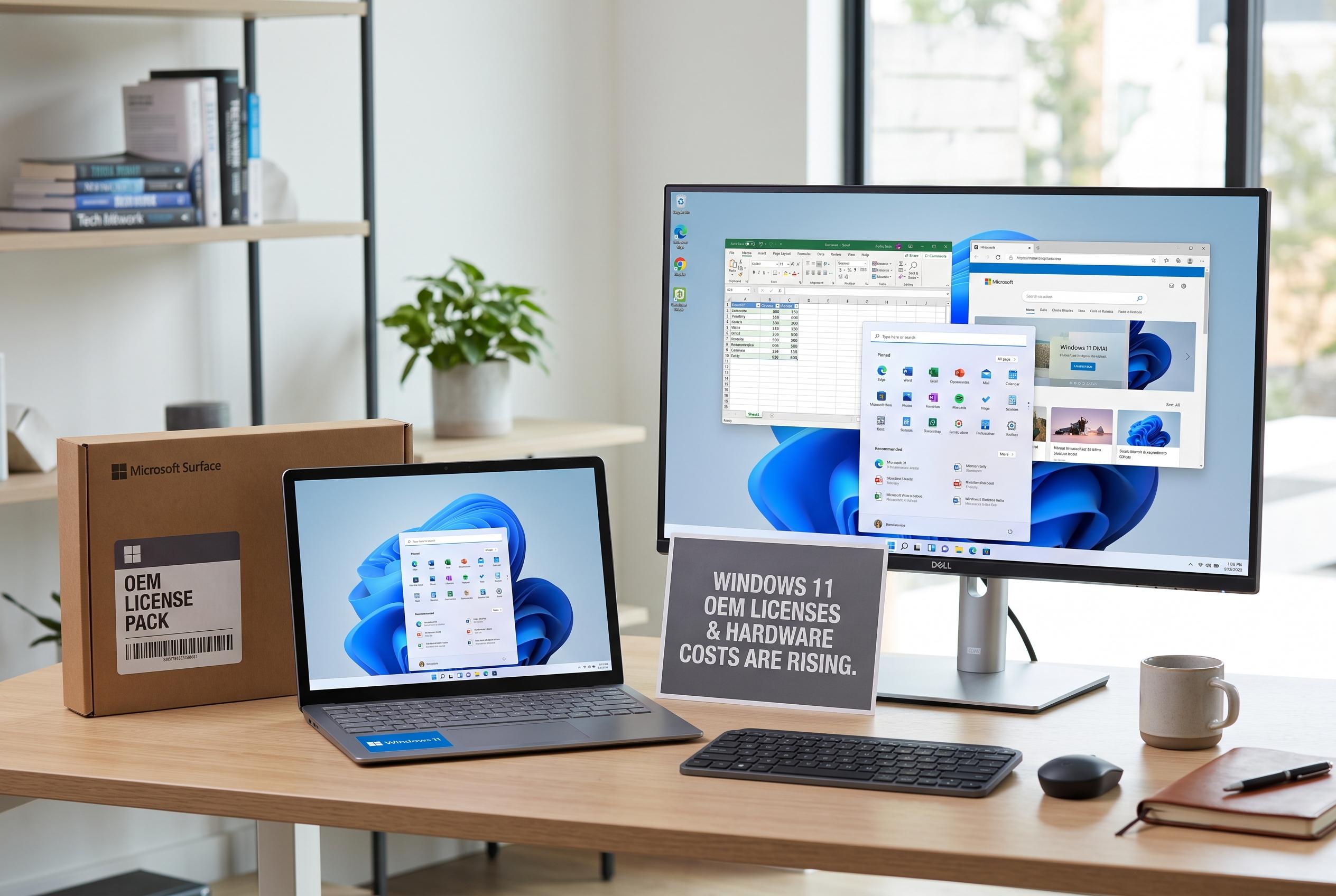

The recent increase in Windows 11 OEM licence costs, combined with soaring hardware prices and sluggish demand, is pushing both entry-level and premium PCs towards higher price points amid a tightened supply chain.
Microsoft has raised the cost of Windows 11 OEM licences, adding another layer of pressure to an already expensive PC market. According to industry reports, the increase landed last month and averages roughly 7% to 10%, a larger rise than the single-digit adjustments that have been typical in recent years. The higher fees apply to machine makers rather than to people buying retail Windows licences, which remain priced separately.
The impact is uneven because Microsoft’s OEM charges vary with processor class. Systems using more capable CPUs attract higher licence costs, which means the final bill can differ significantly between entry-level laptops and higher-end models. WindowsCentral reported that the rise is feeding through to finished hardware prices, with low-cost systems edging towards the $1,000 mark and premium notebooks moving closer to $2,000 in some markets.
But the licence increase is only one part of the wider cost problem. Hardware remains the main driver of pricing pressure, especially memory, SSDs and processors. Recent market conditions have been shaped by strong demand for AI servers, which has tightened supply and pushed component prices higher. PC Gamer reported that one Taiwanese source also linked the Microsoft increase to the same broader squeeze on hardware costs.
The strain is being felt regionally as well. In Taiwan, Asus and Acer are said to have signalled further price rises for the third quarter of 2026, with Asus indicating an increase of about 5% and Acer forecasting a rise in the low single digits. Separately, industry reports suggest Acer had already moved to lift prices in February because of more expensive RAM and SSDs. Asus has also been reported to have raised prices earlier in 2026 and to expect only modest further increases as component costs ease.
This is happening against a weaker demand backdrop. The Taiwanese article said global PC shipments in the second quarter of 2026 are expected to fall to about 65 million units, down 4% year on year, which would mark the first contraction in the market since the first quarter of 2025. That combination of softer demand and higher input costs leaves manufacturers with limited room to absorb further rises.
Disclaimer: This content is intended for informational purposes only. Readers are advised to exercise their own judgement, conduct due diligence, or consult a qualified expert before acting on any information provided.