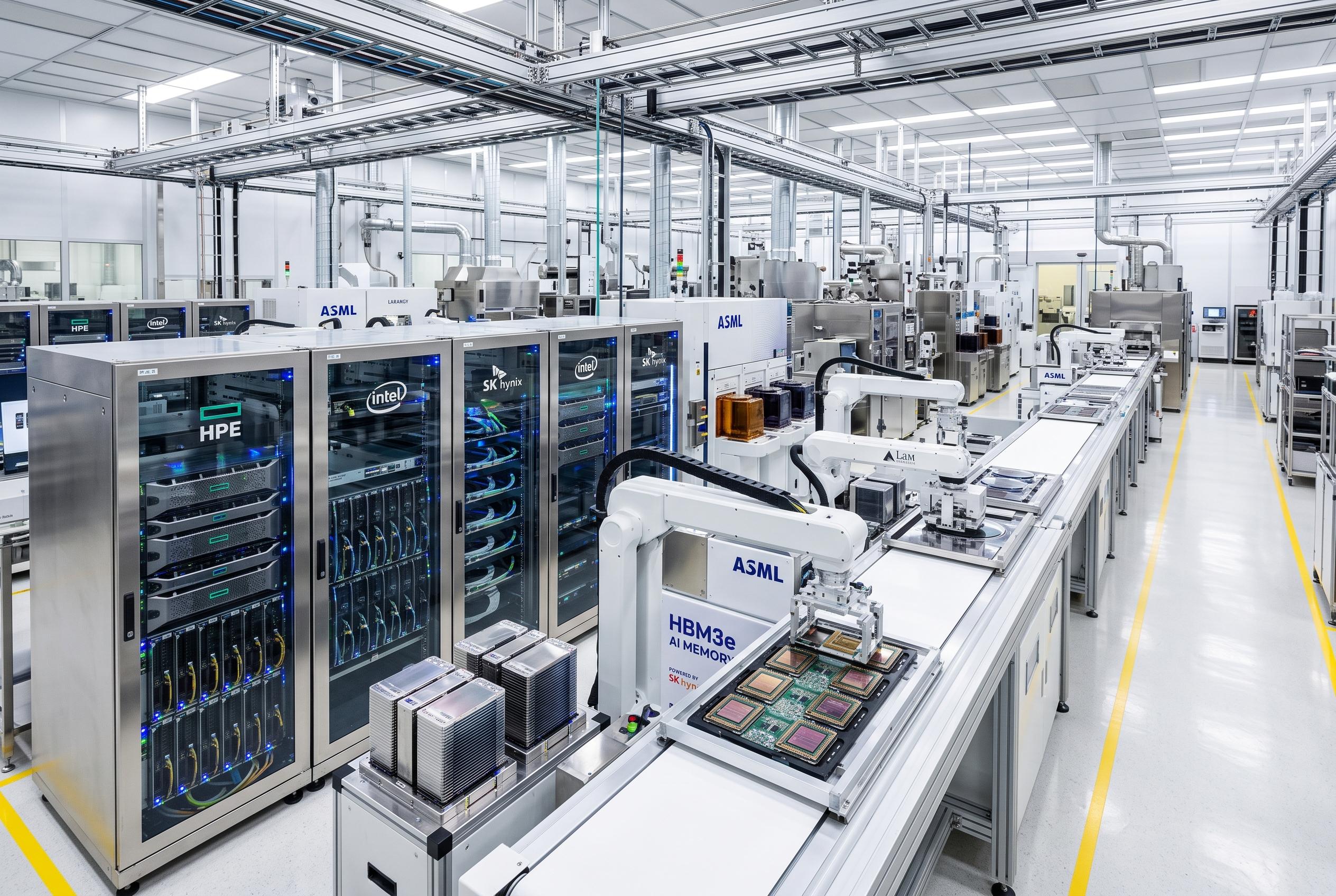

Micron’s share price surge reflects not only momentum but an evolving landscape where AI-driven memory demand exceeds supply, prompting a strategic pivot and long-term outlook amidst market volatility.
Micron Technology’s latest share-price surge reflects more than momentum. The memory-chip maker has gained strongly this year as investors have been drawn to record profitability, long-dated customer contracts and signs that artificial-intelligence demand is keeping supply under pressure. Reuters reported that the stock has also remained highly volatile, underlining how quickly the market can still re-rate the shares on new supply or pricing signals.
The clearest shift is in visibility. At a recent investor forum, Micron executive Sumit Sadana said AI demand is rising faster than the industry can add capacity and that conditions had tightened further since the company’s last earnings update. Industry reports suggest the squeeze may last well beyond the current cycle, with Samsung, SK Hynix and Micron already booking much of their DRAM and high-bandwidth memory output years ahead. That gives Micron a degree of revenue certainty unusual for a sector that has traditionally lived quarter to quarter.
Micron’s own guidance points in the same direction. The company has said AI-related memory demand still exceeds supply through 2026, while HBM4 production is already shipping and 2026 HBM capacity is sold out. It is also expanding manufacturing capacity through node transitions and new facilities in the US and Asia, but those projects will take time to add meaningful supply. That lag is central to the investment case: demand is accelerating now, while new capacity arrives only gradually.
The financial results have been extraordinary by memory-industry standards. Micron has reported record margins, and recent disclosures point to a data-centre business that now exceeds $25bn, supported by stronger SSD sales and multi-year strategic agreements. The company has also moved to deepen its role in the AI ecosystem, launching a $250m venture fund aimed at investments across the technology stack, from model architectures to compute infrastructure. That suggests a broader push to remain embedded in the AI build-out rather than simply supplying components.
Not all analysts agree on how long the cycle can last. UBS recently raised its target, citing tight HBM supply and strong data-centre demand, while Citigroup trimmed its forecast on the view that pricing gains may moderate later. At the same time, geopolitical risk remains a constant. Reuters reported that a US judge dismissed a lawsuit brought by Yangtze Memory Technologies, closing one legal dispute, but not the wider competition between Micron and China’s domestic memory builders. For now, the market is rewarding Micron for scarcity, scale and visibility; the harder question is how long all three can endure together.
Disclaimer: This content is intended for informational purposes only. Readers are advised to exercise their own judgement, conduct due diligence, or consult a qualified expert before acting on any information provided.