
India’s leading battery manufacturers are accelerating local production efforts but remain heavily reliant on Chinese materials and technology, risking supply disruptions as geopolitical tensions and export controls intensify.
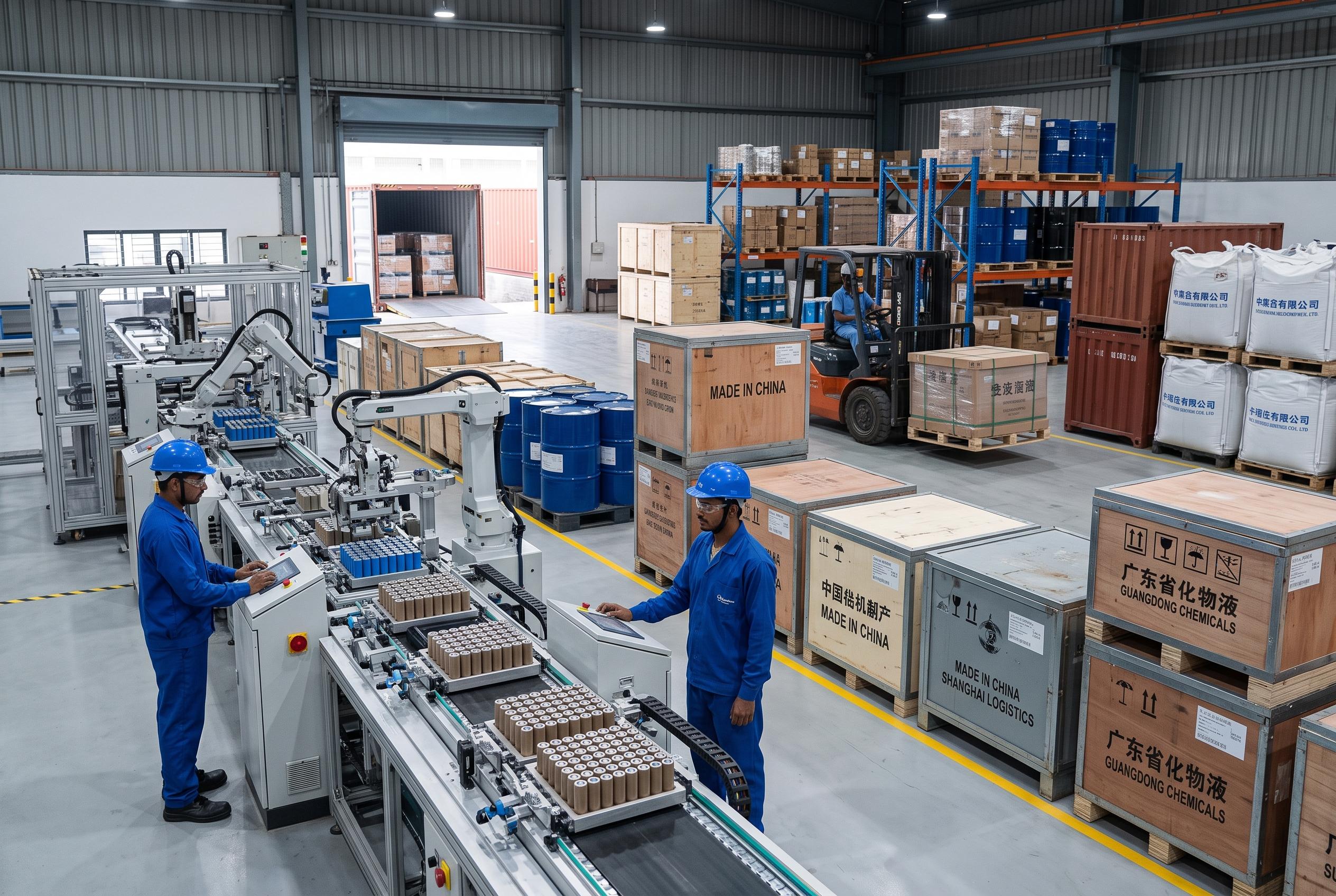
India’s two largest battery makers are moving quickly to build local lithium-ion cell capacity, but they remain deeply dependent on China for the materials that make those cells possible. Exide Industries has installed equipment across all four lines at its Bengaluru gigafactory, while Amara Raja Energy & Mobility has launched a customer qualification plant and is preparing to begin its research facility this quarter. Yet, according to NDTV Profit, the critical inputs still largely come from China, including cathode powder, electrolyte and graphite, leaving India’s battery push vulnerable to external supply and policy shocks. Exide’s chief executive, Avik Kumar Roy, said on the company’s earnings call that local sourcing would take another three to five years to develop.
The immediate pressure comes from Beijing’s tightening export controls. Roy said China’s new rules do not amount to a full ban, but will require additional approvals from November, forcing Exide to consider holding more inventory to avoid disruption. The company is also trying to localise parts of its bill of materials, with Roy saying it is targeting 50% to 60% localisation over the next two to three years and expects electrolyte to be one of the first components that could be produced domestically. But he also argued that India still lacks the industrial base for a full supply chain, from lithium refining to cathode-active materials and graphite production, and said government support will be needed to build that ecosystem.
Amara Raja’s challenge is not only materials but technology. Batteries International reported that the company’s planned partnership with China’s Gotion High-Tech for LFP cell technology did not proceed as intended, after which Amara Raja leaned more heavily on its own engineering capability. On its latest earnings call, chief financial officer Delli Babu Y said the company had de-risked its technology strategy by building in-house capacity to adapt and develop cells further. He added that a broad technology arrangement with a Chinese partner was not realistic under current geopolitical conditions, although the company may still seek outside help on a case-by-case basis.
The commercial case for local manufacturing remains difficult. Livemint has reported that Indian-made batteries could still cost 15% to 30% more than Chinese imports because of supply-chain depth and China’s cell overcapacity. Roy said Chinese suppliers currently enjoy a structural cost advantage of around 15% to 20%, though he pointed to two factors that could narrow the gap: the end of China’s export rebate on cells from January 1, 2027, and tighter domestic supply in China as local electric vehicle demand absorbs more output. For now, both companies are pressing ahead with factory build-outs while still depending on Chinese raw materials, and in Amara Raja’s case, Chinese technology as well.
Disclaimer: This content is intended for informational purposes only. Readers are advised to exercise their own judgement, conduct due diligence, or consult a qualified expert before acting on any information provided.