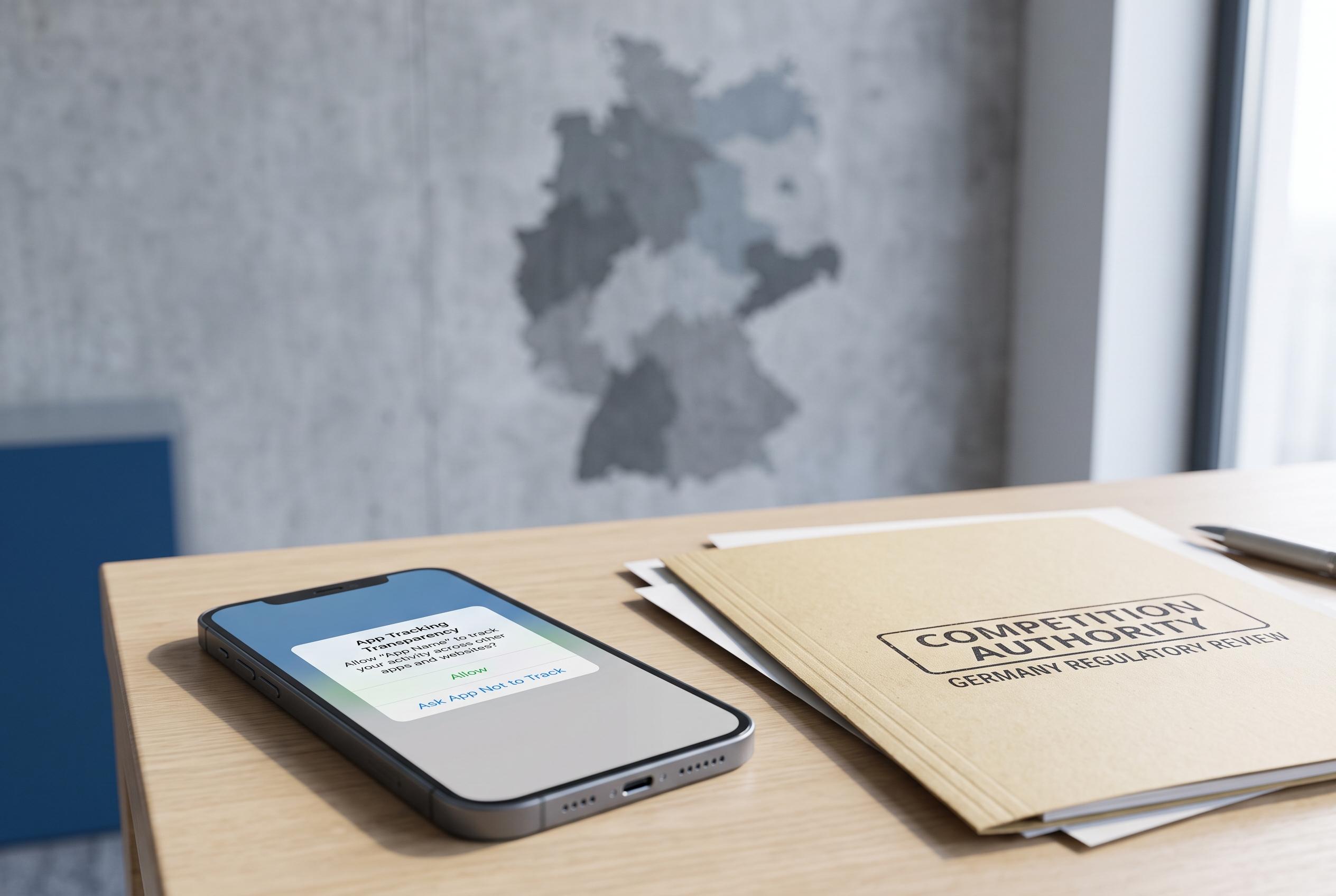

Germany’s competition authority demands further changes to Apple’s app-tracking consent framework following a lengthy antitrust investigation, intensifying regulatory pressure on the tech giant’s privacy policies.
Germany’s competition authority has moved to reshape Apple’s app-tracking consent rules after a long-running antitrust probe, increasing pressure on the company’s privacy framework on the iPhone and iPad. According to the Bundeskartellamt, Apple has agreed to revise the wording and presentation of its consent prompts after regulators concluded that the company’s own services benefited from more favourable treatment than outside developers. German publishers and advertisers have already argued that the proposed changes still fall short of fixing the problem.
The dispute centres on App Tracking Transparency, Apple’s system for asking users whether apps may track them across services. The watchdog’s concern is not the existence of consent prompts itself, but the way they are designed. Investigators have said the framework may steer users more strongly towards Apple’s own apps while placing third-party developers under tighter restrictions, a distinction that could amount to self-preferencing under German competition law. TechCrunch reported that the inquiry has been running since 2022.
The case has now entered a more contentious phase. According to reporting by Investing.com, the Bundeskartellamt has sought views from publishers, media groups and other regulators on Apple’s revised approach, effectively testing whether the changes are enough to satisfy competition rules. German publishers and advertisers have called for a fine, saying the alterations do not adequately address their concerns and that Apple still controls a crucial layer of advertising-related data.
For Apple, the regulatory fight comes alongside renewed scrutiny from investors over valuation and shareholder behaviour. GuruFocus says the shares are trading above its GF Value estimate, while its broader scoring system still gives Apple a high mark for profitability, growth and momentum, offset by only middling financial strength. The same data shows no insider buying over the past three months and net insider selling of $16m, a mixed backdrop as Apple faces a fresh challenge to one of its most prominent privacy features.
Disclaimer: This content is intended for informational purposes only. Readers are advised to exercise their own judgement, conduct due diligence, or consult a qualified expert before acting on any information provided.