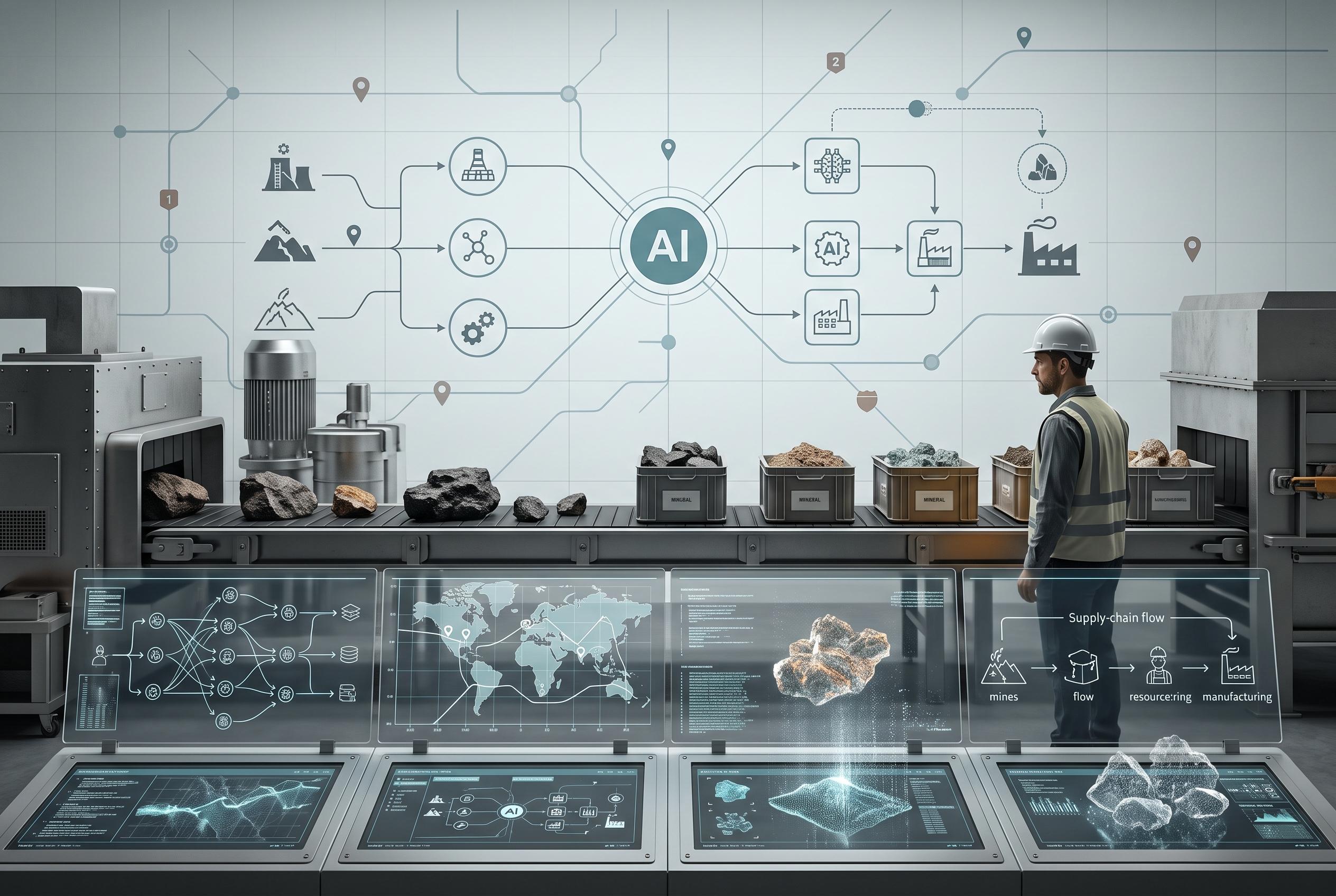

The US government is combining investments in AI and critical mineral supply chains into a cohesive industrial strategy aiming to secure technological and resource dominance amid escalating global competition.
Washington is treating artificial intelligence and critical minerals as part of the same strategic contest. In June, the White House said President Donald Trump signed a National Security Presidential Memorandum on AI in the national security enterprise, aimed at speeding the use of advanced systems by military and intelligence agencies. A separate June order pushed agencies to expand AI-enabled cyber defence across federal systems and critical infrastructure. Taken together, those moves suggest the administration is no longer treating AI as a normal commercial technology, but as a strategic capability tied to national security.
That framing helps explain the scale of the investment cycle now under way. The White House has said Trump secured trillions of dollars in new commitments, including large pledges linked to Apple, Meta and the Stargate project. The administration has also published material arguing that the United States must accelerate innovation, build out domestic supply chains and defend its lead in advanced manufacturing and AI. In that context, the push into compute, energy, chips and minerals looks less like a series of separate announcements than a single industrial policy.
The economic case being made around this build-out is that capital spending is doing more than supporting growth; it is increasingly producing it. The White House’s January report on “Artificial Intelligence and the Great Divergence” cast AI as a technology with industrial-revolution scale consequences, while arguing that nations leading in investment and adoption will pull away from those that do not. That is the logic behind the claim that AI infrastructure, data centres, grids and power systems now sit at the centre of U.S. growth, not on the margins of it.
Critical minerals are the other half of that story. According to the White House, Trump also signed a presidential determination in July delegating authority under the Defence Production Act to restrict exports of recoverable critical minerals and materials, citing supply-chain risks and national defence needs. That follows earlier efforts to use federal powers to speed domestic mining and processing. The policy signal is clear: the government sees mineral supply as an input to industrial capacity, not just a commodity issue.
What emerges is a wartime-style economic model, even if it lacks the obvious markers of one. The state is prioritising strategic sectors, private capital is being channelled into infrastructure that cannot easily be delayed, and policy is being used to secure the inputs needed to sustain the race. Whether that is ultimately bullish for markets will depend on execution, but the underlying direction is unmistakable: Washington is trying to make AI dominance, energy security and mineral control mutually reinforcing objectives.
Disclaimer: This content is intended for informational purposes only. Readers are advised to exercise their own judgement, conduct due diligence, or consult a qualified expert before acting on any information provided.