
PlayStation, Xbox, and Nintendo increase hardware prices in 2026 driven by soaring memory costs, challenging traditional notions of console affordability despite steady game prices.
PlayStation, Xbox and Nintendo have all pushed hardware prices higher in 2026, turning a familiar assumption in games retail on its head. Sony lifted the US price of the standard PlayStation 5 to $649.99, the Digital Edition to $599.99 and the PS5 Pro to $899.99 from 2 April, citing continued pressure in the global economic landscape. Microsoft followed with a global Xbox Series increase from 1 August, taking the 512GB Series S to $499.99 and raising 1TB Series X and Series S models by $150. Nintendo has also flagged a Switch 2 rise from 1 September, from $449.99 to $499.99, linking the change to the wider memory crunch.
The result is a rare moment in the console business: prices are moving up not only at launch, but well into the generation. Sony said the April adjustment reflected persistent global cost pressure, while Microsoft’s June announcement made clear that Xbox hardware had already gone through multiple increases before the August revision. Nintendo’s warning to buyers was unusually direct, effectively telling consumers that waiting may no longer be the cheaper option.
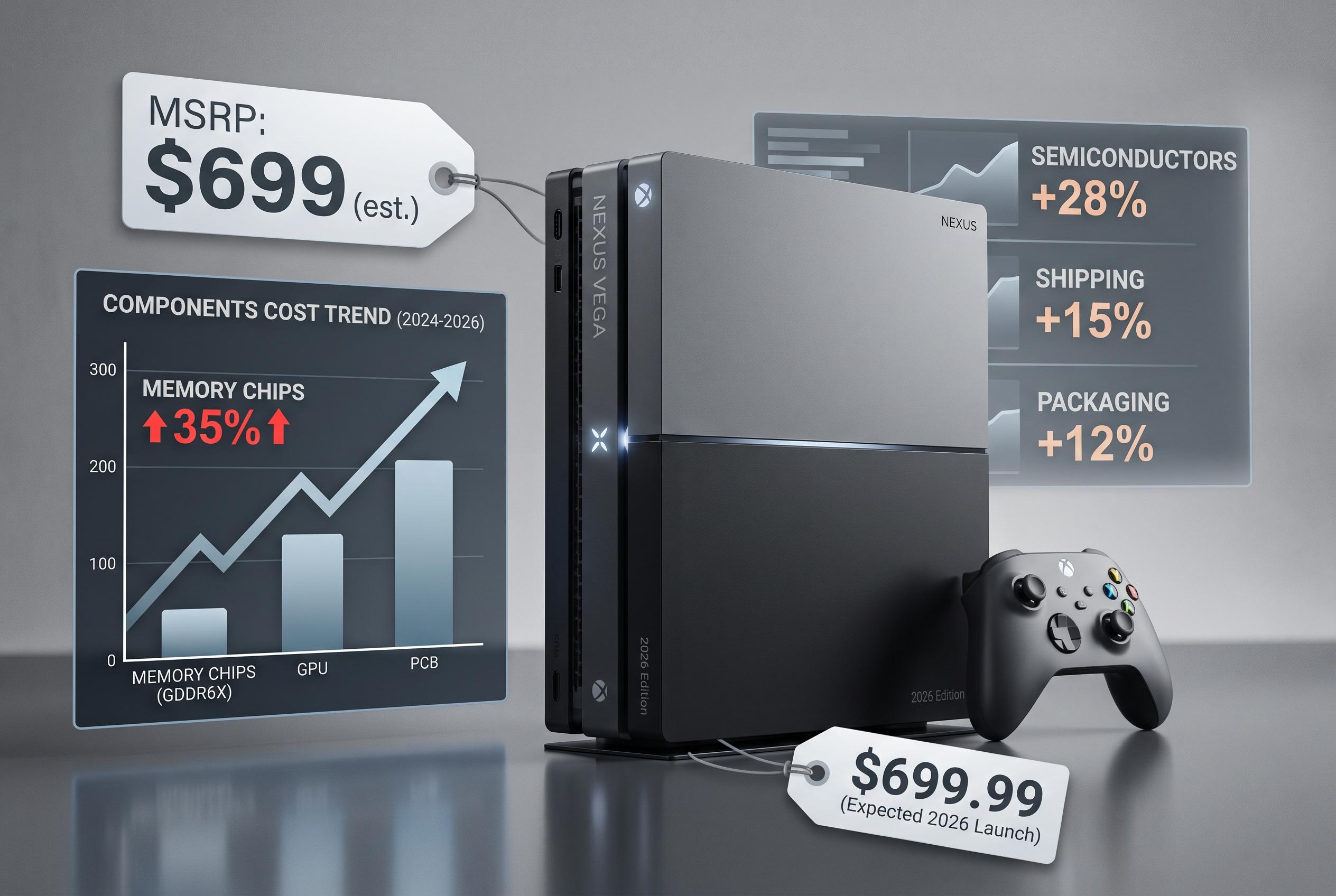
At the centre of the shift is memory. Industry trackers say the AI build-out has tightened supply of DRAM, as major producers such as Samsung, SK hynix and Micron have prioritised high-bandwidth memory for accelerators used in data centres. TrendForce reported sharp price jumps in conventional DRAM through the first half of 2026, with further increases still forecast in the third quarter. That matters because consoles are tightly costed products, and memory is a major line item alongside chips, storage and cooling.
That cost pressure lands on an industry that has long relied on thin, or even negative, hardware margins. Platform holders make money from game sales, subscriptions and store fees rather than the box itself. Once component costs rise enough, the old subsidy model becomes harder to sustain. Microsoft has already pointed to soaring storage and memory prices in explaining its own changes, while Nintendo’s rationale suggests it expects the squeeze to last, not fade quickly.
The strange counterpoint is that games themselves have not risen nearly as fast in real terms. Publishing costs are high, but digital distribution has stripped out much of the expense of cartridges, discs, shipping and retail handling. Large installed bases also let publishers spread development budgets across millions of sales, while downloadable content, subscriptions and premium editions recover more money after the initial purchase. In practical terms, the software business has become more flexible even as the hardware side has become less forgiving.
For buyers, the near-term lesson is straightforward. Waiting for a console to become cheaper may no longer make sense in this cycle, especially if memory prices remain elevated into 2027, as industry commentary suggests. The more important questions are whether a player values digital-only convenience, how often they buy games, and whether bundles or subscription services deliver better value than buying hardware on its own. The broader market is still digesting a reversal that would once have seemed improbable: consoles are becoming more expensive just as publishers continue to make the case that the games attached to them can still be sold at comparatively modest headline prices.
Disclaimer: This content is intended for informational purposes only. Readers are advised to exercise their own judgement, conduct due diligence, or consult a qualified expert before acting on any information provided.