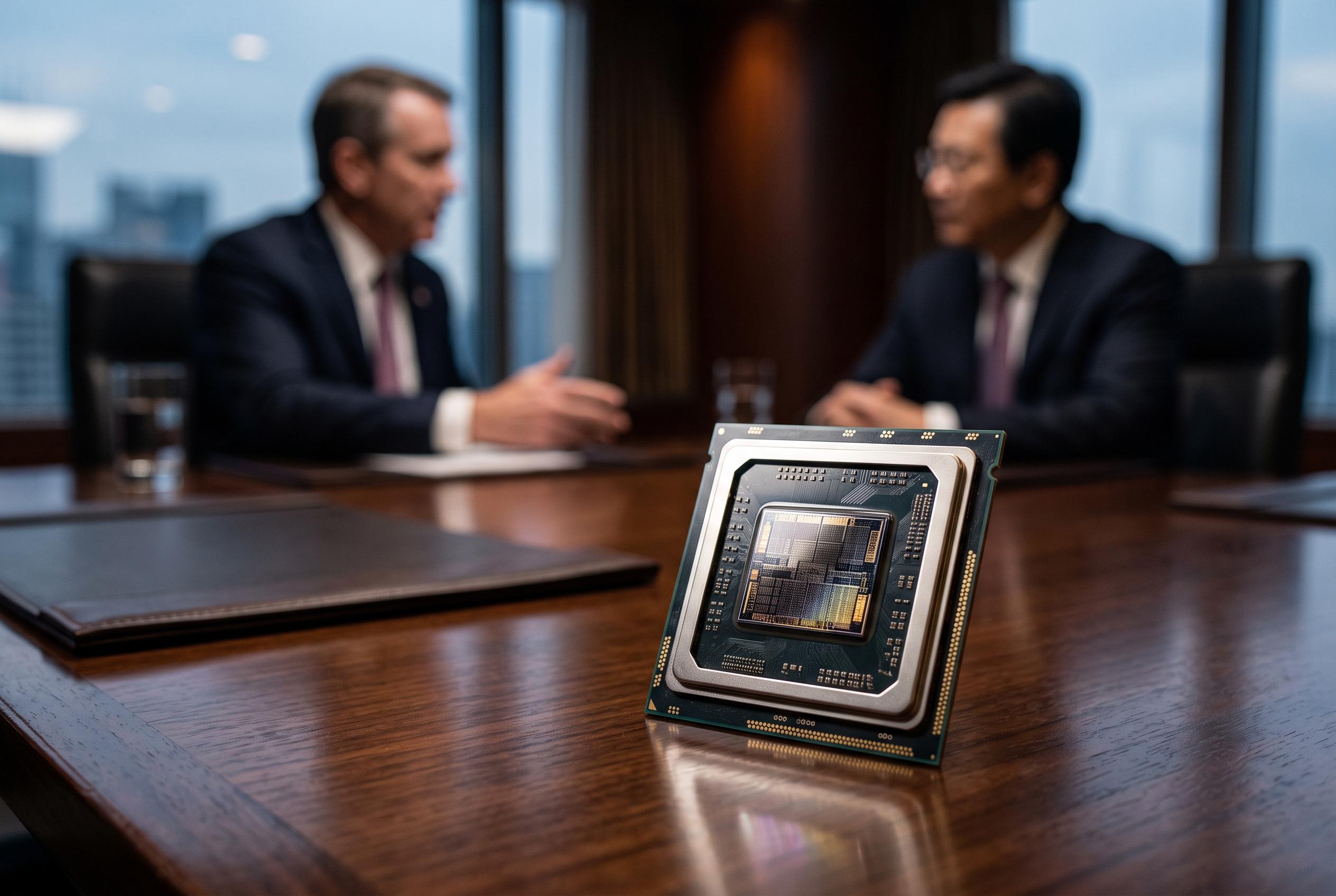

The Biden administration is considering a new 7.5% tariff on Chinese semiconductors, escalating trade tensions amid ongoing negotiations and a broader industrial capacity investigation, just weeks before a pivotal summit with Beijing.
Washington is moving closer to a new tariff layer on Chinese semiconductors as trade policy once again becomes part of a wider negotiation over technology, supply chains and diplomacy. Bloomberg reported that the administration is preparing a 7.5% duty tied to an excess-capacity investigation, a move that would sit on top of existing China-specific charges and bring the effective Section 301 burden on some chips to about 70%. The timing matters as much as the rate: the proposed measure would come only weeks before a planned summit expected to shape the future of the current trade truce.
The policy shift stems from a broader Section 301 strategy launched by the U.S. Trade Representative in March 2026. According to law firm summaries of the action, the investigations cover 16 economies and focus on structural overcapacity in 22 manufacturing sectors, including semiconductors. USTR’s move followed the Supreme Court’s February 2026 decision that invalidated earlier tariff regimes, prompting the administration to seek a different legal route for protecting domestic industry.
For semiconductors, the new duty would not stand alone. Trade guidance published by Thompson Hine says USTR had already made an affirmative determination in its China semiconductor Section 301 case, adding to the long-standing 50% tariff imposed during the first Trump administration. The new 7.5% rate would then stack on top of the 12.5% forced-labour-related duty introduced in July 2026, producing a combined Section 301 exposure of roughly 70% before normal customs duty is added.
The legal and political logic appears to be as important as the economics. Chinese officials have said the United States agreed during consultations to cap replacement tariffs at 20%, and the reported 7.5% overcapacity duty would take the second-term tariff total to that level when combined with the July rate. That makes the measure look less like an open-ended escalation and more like a ceiling the administration believes Beijing had already accepted in principle.
The overcapacity case itself is unusually broad. Guidance from Hogan Lovells, White & Case and other trade specialists says the probe targets sectors ranging from batteries and machinery to electronics, steel and solar modules, with Washington arguing that state-backed excess production abroad is suppressing prices and crowding out U.S. manufacturing. The semiconductor focus sits within a larger campaign aimed at industrial policy, not just one product line.
Legal risk remains, however. Trade-law counsel note that a coalition of 25 state attorneys general and governors has already sued over the existing Section 301 tariffs in the Court of International Trade, arguing that the duties exceed statutory limits and violate administrative law. That challenge does not directly decide the new overcapacity tariff, but it underlines how contested the administration’s tariff reconstruction remains.
The wider diplomatic backdrop is also shaping the timing. The planned Washington summit comes before the November 10 expiry of the current truce, which both sides are said to want extended. If the administration finalises the new tariff before that meeting, it would remove one bargaining chip from the table while locking in a cost structure that importers of Chinese chips, solar products and other strategic inputs will have to absorb immediately.
Disclaimer: This content is intended for informational purposes only. Readers are advised to exercise their own judgement, conduct due diligence, or consult a qualified expert before acting on any information provided.