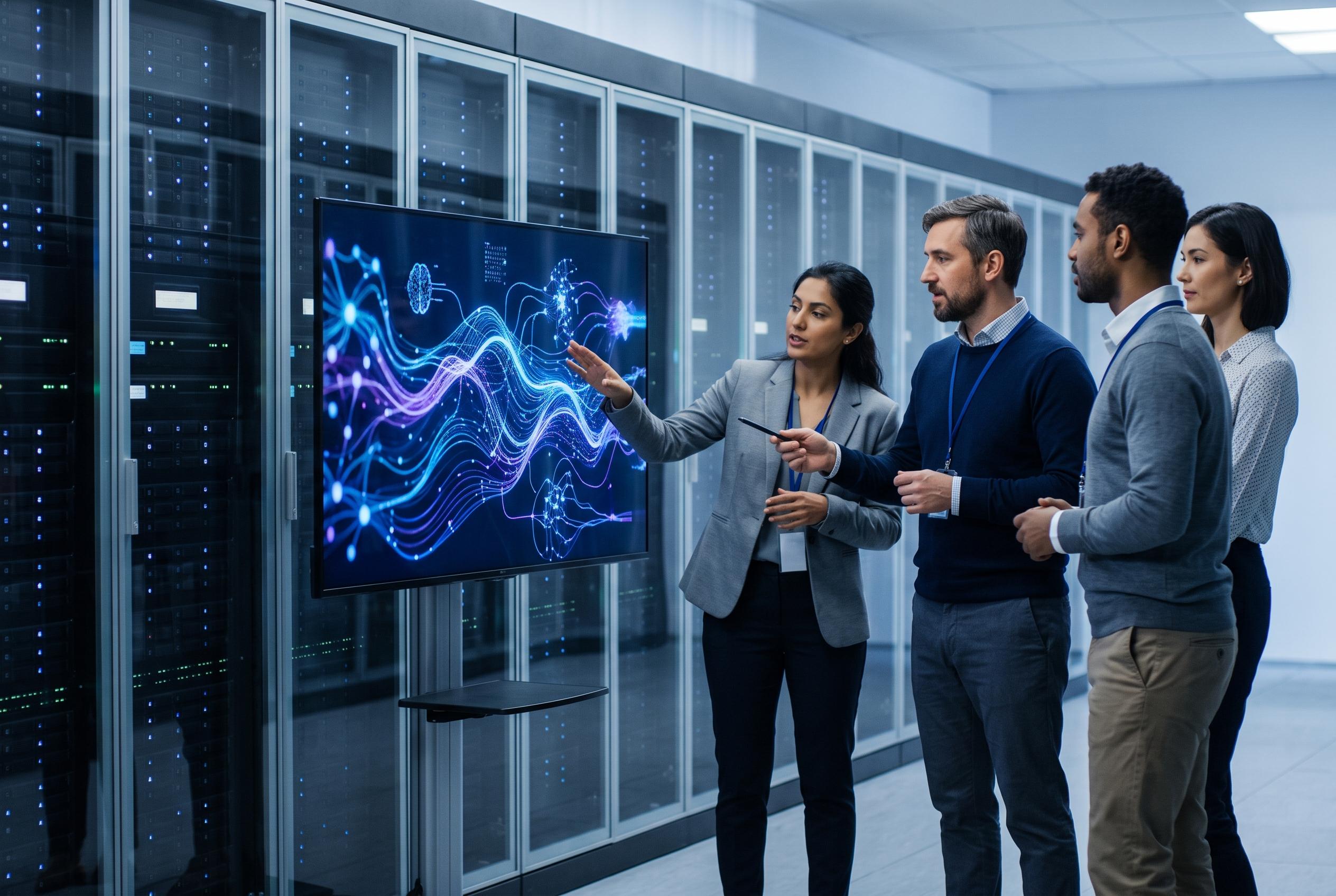

Dell Technologies forecasts a 3,400% surge in global token consumption by 2030, highlighting a pivotal shift from AI model training to inference, with agentic AI becoming central to enterprise operations and hardware costs falling sharply.
Dell Technologies has put a striking figure on the rise of enterprise AI infrastructure demand, projecting that global token consumption will increase by 3,400% by 2030 as companies move agentic systems from pilot projects into routine operations. The forecast, unveiled at Dell Technologies World, reflects a broader shift in the market: the real computational burden of AI is moving from model training to inference, the stage at which systems generate answers, take actions and process live workloads.
That transition matters because Dell expects inference to account for nearly two-thirds of all AI computing needs over the next few years. The company argues that agentic AI, which can carry out multi-step tasks with limited human supervision, will become the main source of AI demand by 2028. More than 5,000 enterprises are already running production AI workloads on Dell infrastructure, according to the company, with clients said to include Lilly, Samsung and Honeywell.
The scale of that bet is also showing up in Dell’s financial outlook. Tom’s Hardware reported that the company has lifted its long-term growth expectations through fiscal 2030, raising its annual revenue growth target to 7%-9% from 3%-4%. Dell has also increased its fiscal 2027 AI server revenue forecast to about $60bn, up from $50bn, after reporting $16.1bn in AI server revenue in the first quarter of fiscal 2027 and an AI backlog of $51.3bn.
Dell is coupling those numbers with new hardware designed to make AI inference cheaper. The company introduced the PowerEdge XE9812 and says it can cut cost per token by up to 10 times on large-scale inference workloads. It also announced Deskside Agentic AI systems for on-premises use, which it claims can reduce token spending by 87% over two years versus public cloud APIs. Tom’s Hardware reported that Dell and Nvidia are positioning the latest AI Factory systems, including infrastructure based on the Vera Rubin platform, as a way to improve economics for enterprise deployments.
The wider industry context makes Dell’s emphasis on efficiency unsurprising. Gartner has forecast that global data-centre electricity consumption will climb sharply as AI workloads expand, with AI servers overtaking conventional hardware in power use by 2027 and drawing nearly half of all data-centre electricity by 2030. Against that backdrop, Dell’s hybrid model, built around its AI Factory platform with Nvidia, is aimed at organisations that want more control over cost, security and performance than a cloud-only approach can offer.
Disclaimer: This content is intended for informational purposes only. Readers are advised to exercise their own judgement, conduct due diligence, or consult a qualified expert before acting on any information provided.