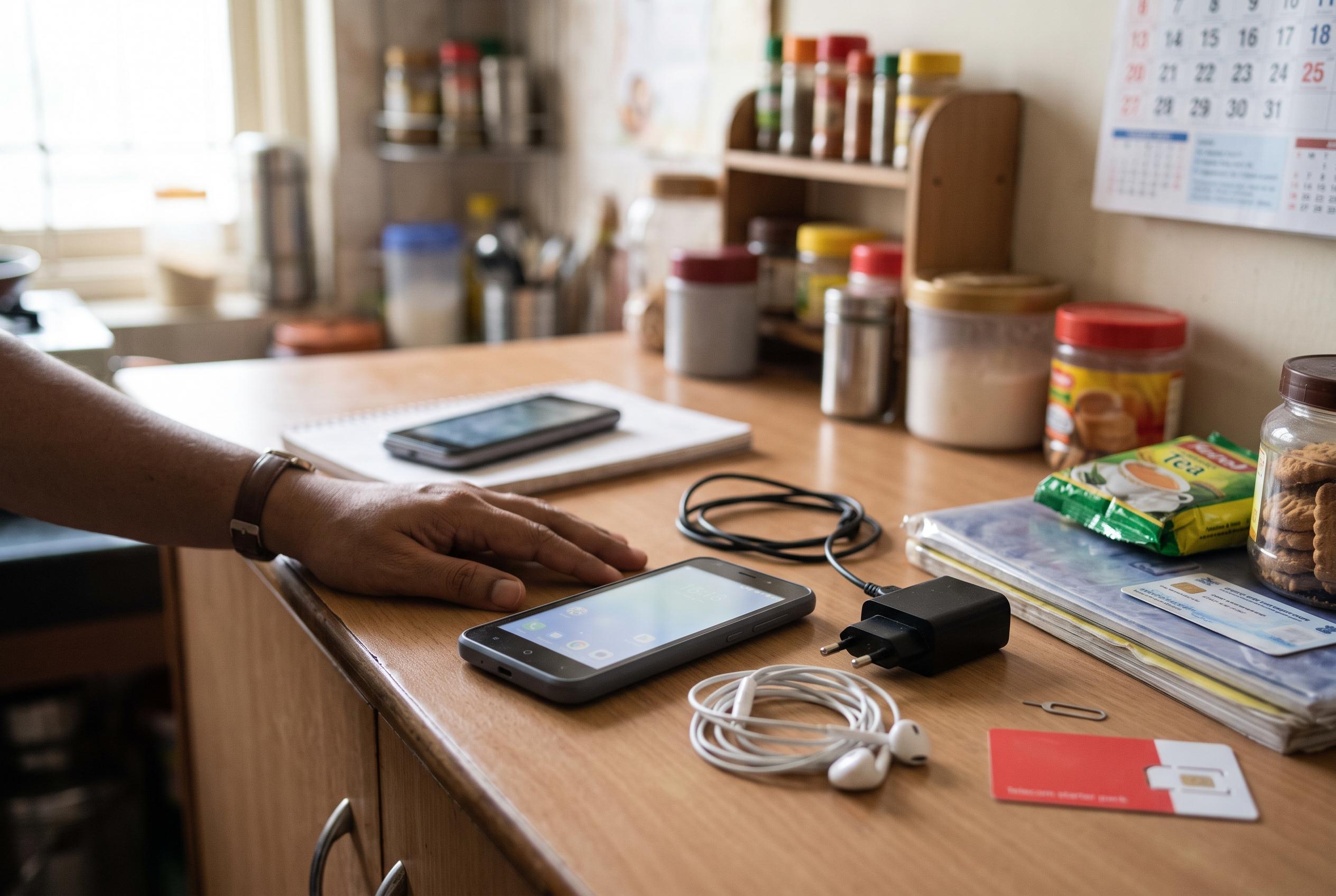

Rising memory prices are prompting Indian manufacturers to revert to 4G devices at the budget end, reversing recent 5G growth trends and raising questions about the future of affordable 5G handsets.
India’s budget smartphone market is seeing an unusual shift back towards 4G devices as rising memory costs make entry-level 5G models harder to afford. Counterpoint Research said shipments of smartphones priced below ₹15,000 fell 45% year on year in the June quarter, even as manufacturers broadened their 4G line-ups to protect volume in the lowest-priced part of the market.
The wider market also weakened. According to Counterpoint, overall smartphone shipments in India declined 10% year on year in the April-June quarter, the steepest fall for a June quarter in six years. The research firm linked the drop chiefly to record-high memory prices, which have lifted handset costs and softened consumer demand.
The pressure comes from both DRAM and NAND prices, which Counterpoint said have pushed memory’s share of the bill of materials in the sub-₹15,000 category from below 20% to more than 45%. The firm said memory prices had risen nearly fourfold since September 2025 and could climb further. Almost every major handset maker raised prices several times during 2026, leaving average smartphone prices about 15% higher by the end of the second quarter.
That has created a clear gap between 4G and 5G handsets at the budget end. Moneycontrol, citing IDC data, reported that the average selling price of a 5G phone in Q2 2026 was $341, compared with $109 for a 4G device. IDC analyst Upasana Joshi said several brands had responded by bringing back or extending 4G models to defend their position in the budget segment, lifting 4G’s share to 11.1% in Q2 2026 from 5.8% in Q1 and 9.2% a year earlier.
Manufacturers are also using older components to hold down costs, including LCD panels and LPDDR4x memory. Moneycontrol said brands such as Vivo, Oppo, Itel, Infinix, Motorola and Samsung were among those benefiting from the renewed demand for cheaper 4G phones, particularly in smaller cities and towns where the price difference between 4G and 5G models remains significant.
Even so, the rebound may prove temporary. In another July report, Counterpoint said the memory shortage could hasten the transition to 5G chips in mainstream phones priced below $300, with 5G penetration expected to exceed 50% in 2026. The firm said memory makers are moving away from LPDDR4 towards newer standards such as LPDDR5, and that redesigning older 4G chipsets for the new interface would be costly. In other words, the current preference for 4G looks less like a permanent reversal than a response to short-term affordability pressure.
Disclaimer: This content is intended for informational purposes only. Readers are advised to exercise their own judgement, conduct due diligence, or consult a qualified expert before acting on any information provided.