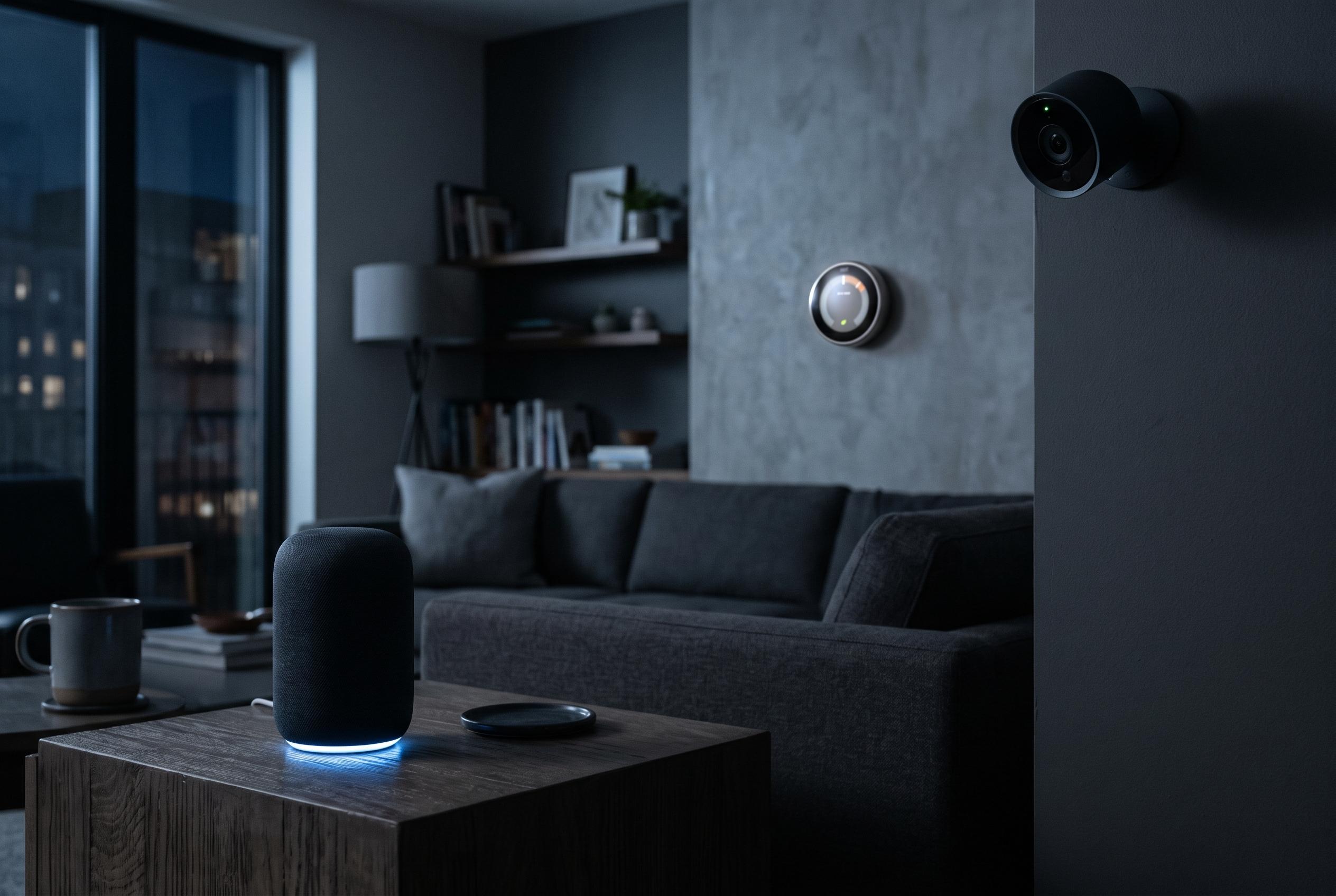

Connected devices inside homes are increasingly being used by law enforcement as digital witnesses, revealing detailed activity patterns that can influence criminal cases, raising new privacy and legal questions about personal data.
Smart-home devices are increasingly acting as witnesses to daily life, and sometimes to crime. As Legal Reader notes, doorbells, locks, speakers and cameras can all leave behind time-stamped records that investigators may use to build a sequence of events inside and around a property. That can make a home far more revealing than a traditional crime scene, especially when several devices are used together. According to CriminalDefenceLawyer.com, police are already treating this data as potentially evidential, while researchers at the University of Edinburgh describe connected devices as “invisible witnesses” because they quietly record activity in the background.
The appeal of these systems is straightforward: they offer convenience, security and automation. But that same functionality can generate a detailed digital trail. A doorbell camera may record arrivals, a smart lock may log entry or exit, and a voice assistant may preserve interaction history. Taken separately, each record may appear unremarkable. Combined, they can help investigators test a timeline, challenge an account or support a charge. That is why, as legal commentators have observed, the legal significance of smart-home data often lies not in any single event, but in the pattern it creates.
That pattern can also work in a defendant’s favour. Legal Reader points out that smart-home records can support an alibi, undermine an eyewitness or show that a person left a location earlier than police first believed. Researchers in Edinburgh note that these devices are often designed to be unobtrusive, which makes their records easy to overlook at the outset of a case. Yet that same overlooked data may later prove decisive if it shows when a person arrived home, when a garage door opened or whether a command was issued to a voice assistant at a key moment.
Privacy remains the central problem. A camera pointed at a front path is one thing; a device that reveals routines inside the home is another. Legal Reader notes that U.S. courts must consider Fourth Amendment limits, while Canadian courts face similar questions under section 8 of the Charter. The article also cites Carpenter v. United States, where the US Supreme Court recognised the sensitivity of historical location records. In Canada, R. v. Reeves and R. v. Bykovets underline the wider point: modern digital systems can expose more personal information than their surface appearance suggests, and courts are still defining how those protections apply.
The evidential value of smart-home material also depends on where it is stored and how it was obtained. Some data sits locally on the device, but much of it is kept in the cloud by the manufacturer or service provider. That can draw in warrants, production orders or subpoenas, depending on the jurisdiction. For the defence, the practical questions are often basic but crucial: what exactly was collected, who controlled the account, whether the device clock was accurate and whether the record proves who actually triggered the event. A precise timestamp can look compelling without necessarily being conclusive.
There are also broader concerns about reliability and scope. Legal Reader notes that doorbell cameras can capture far more than expected, including pedestrians, vehicles and activity on neighbouring properties. That means one home may inadvertently record a crime elsewhere on the street. Academic work on smart-home policing suggests this creates both opportunity and risk: the devices may reconstruct incidents with unusual clarity, but they can also produce incomplete or misleading records if investigators misunderstand how the system works or overread a single timestamp.
The wider technology industry has added another layer of unease. Reporting by Tom’s Hardware shows how quickly privacy fears arise when consumers believe smart devices may be collecting more than intended, while separate reporting on restricted security cameras has raised questions about transparency, security and supply-chain risk. Together, these debates reinforce the same point: as homes become more connected, they also become more legible to outsiders. The result is a domestic environment that can no longer be treated as purely private in the old sense. It now generates evidence, and that evidence may help either side in a criminal case.
Disclaimer: This content is intended for informational purposes only. Readers are advised to exercise their own judgement, conduct due diligence, or consult a qualified expert before acting on any information provided.