
Chinese automaker BYD is ramping up the use of locally sourced components in its Indonesian-built cars, targeting a significant increase in domestic content to meet government goals and bolster local supply chains amid continued expansion plans.
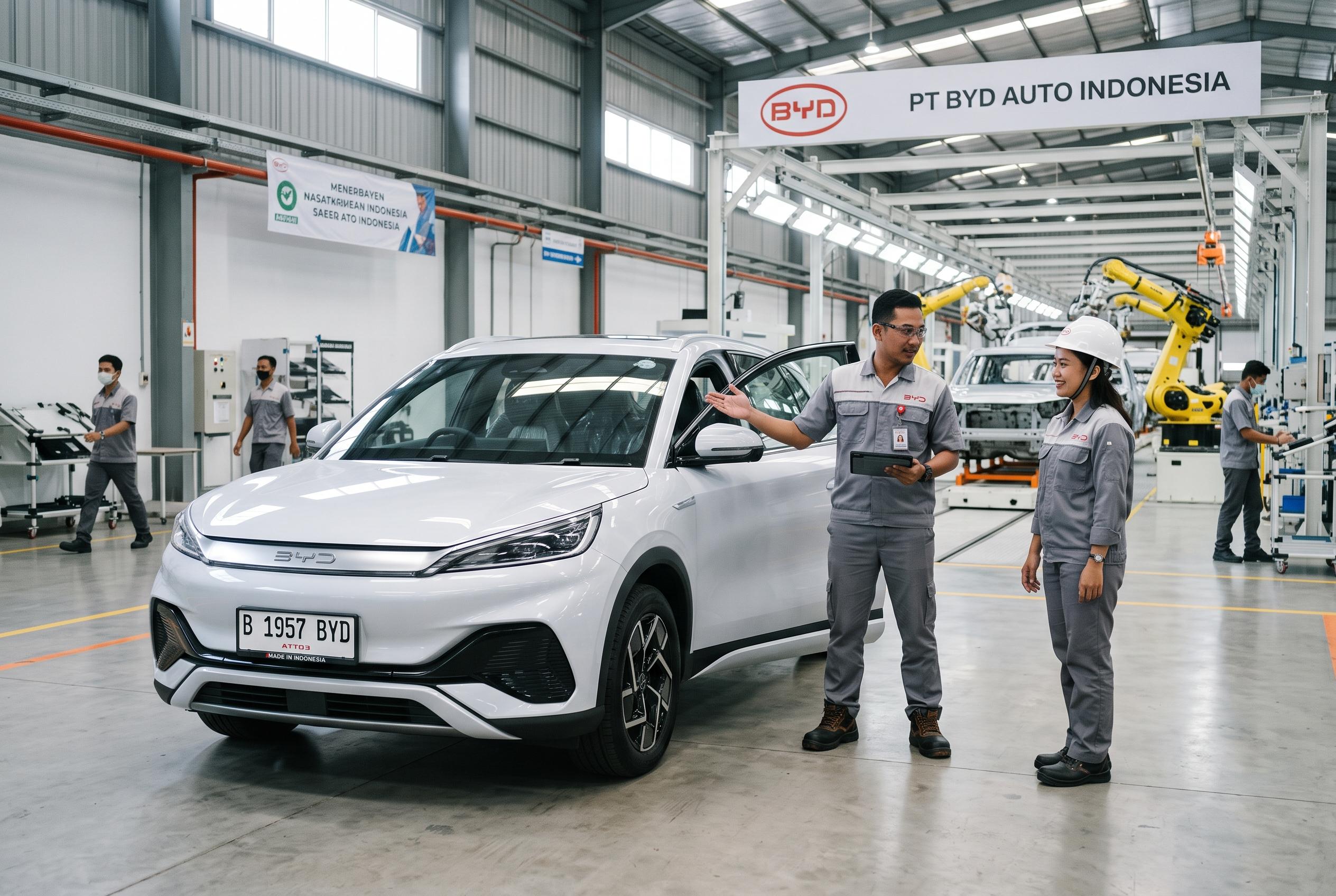
BYD is widening the use of locally made parts in its Indonesian-built vehicles as it works towards higher domestic content levels and a broader supply chain in the country. The shift comes as the Chinese electric vehicle maker tries to move beyond assembly alone and deepen its manufacturing base in Indonesia, where its plant in Subang, West Java, is already in operation.
Luther Panjaitan, BYD Indonesia’s head of marketing, public relations and government relations, said the company is now working with domestic suppliers at both tier-1 and tier-2 level. He said tyres and glass are among the local components already in use, although he did not give a full list of other parts because those details sit with the manufacturing team. KatadataOTO had previously reported criticism from industry groups that BYD had not yet meaningfully tapped local component makers, despite meetings arranged with more than 100 suppliers by Indonesia’s Industry Ministry.
The company says its strategy depends on raising output first. Panjaitan said the priority is to expand manufacturing volume and make better use of capacity before bringing in more supporting industries. BYD’s Subang facility currently carries out the four main stages of car production: stamping, welding, painting and assembly. KatadataOTO has also reported broader concern among Indonesian parts makers that Chinese EV brands have been slow to source locally, despite incentives and domestic content rules designed to support the sector.
BYD says local content in its vehicles has now passed 40%, a level that would mark an early step towards the government’s longer-term target of 60% for electric vehicles. Industry observers, including the Association of Indonesian Automotive Parts and Components Industries, have argued that stricter rules may be needed to encourage deeper local sourcing. Another report on BYD’s Indonesian operations said the company is planning for higher output and a gradual rise in local content, with some estimates pointing to more than 60% by the end of 2027 as its supply base develops.
Disclaimer: This content is intended for informational purposes only. Readers are advised to exercise their own judgement, conduct due diligence, or consult a qualified expert before acting on any information provided.