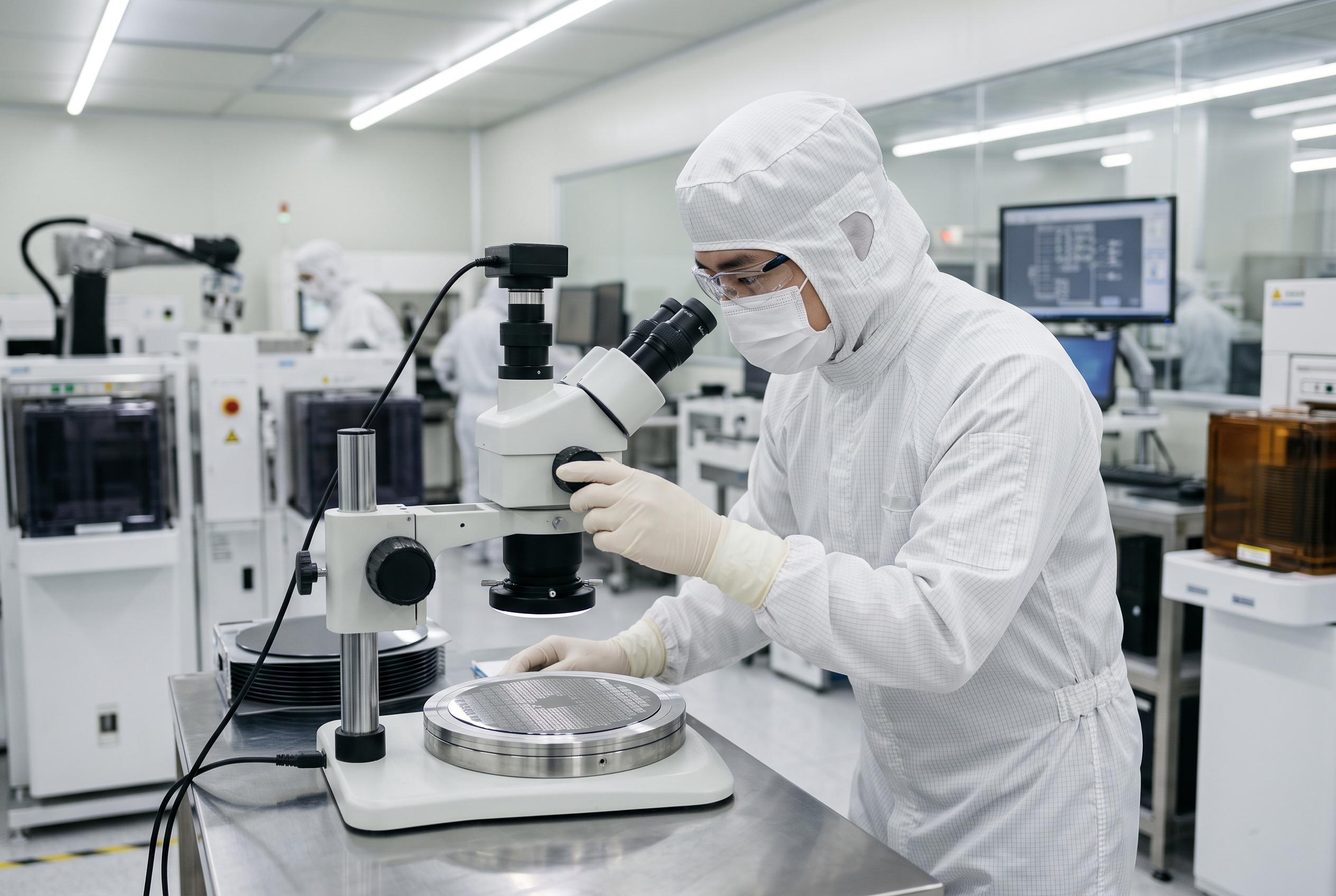

South Korea’s latest decade-long production tax incentive aims to bolster domestic semiconductor supply chain components rather than directly supporting major export-focused firms like Samsung Electronics and SK Hynix, signalling a shift towards regional industrial resilience and localised growth.
South Korea’s new decade-long production tax credit for strategic industries is being sold as a major break for Samsung Electronics and SK Hynix, but the policy appears to be aimed more at the firms behind them in the supply chain than at the export champions themselves. The measure, part of the 2026 tax reform package, is scheduled to run from January 1, 2027 to December 31, 2036 and is meant to reward domestic output rather than capital spending. In practice, that design favours local materials, parts and equipment suppliers over the two memory giants that dominate Korea’s semiconductor headlines. According to the policy summary, companies must both manufacture and sell the relevant products in South Korea to qualify.
That distinction matters because Samsung and SK Hynix ship the vast majority of their chips overseas. Their high-bandwidth memory, DRAM and NAND production is already committed to foreign customers, chiefly in the United States and other major technology markets. The credit therefore does little for the companies most closely associated with Korea’s AI semiconductor strength. Their larger advantage still comes from the country’s existing semiconductor investment incentives, which remain far more useful for their massive fab programmes than a production credit tied to domestic sales.
The contrast is sharpened by SK Hynix’s latest spending plans. On August 7, the company approved ₩54.3 trillion in new semiconductor investments, including a NAND flash plant in Cheongju and a second fab in Yongin, in what was described as its largest single-day capital commitment. BusinessAsiaTimes reported earlier this year that South Korea’s K-Chips framework already offers some of Asia’s most generous facility-investment tax relief, with credits of up to 25% for large companies and 35% for small and medium-sized enterprises on qualifying spending. For groups such as Samsung and SK Hynix, that investment-based support is likely to remain the more valuable incentive.
The new production credit is modelled on the output-based systems used in the United States and Japan, but Seoul has added its own constraints. The benefit is not limited to semiconductors; it also covers secondary batteries, solar power, wind power, core materials and parts, and AI robot components. Yet the key filter is domestic sales, which means the clearest winners are the suppliers that sell chemicals, precision tools, gases, photomasks and other production inputs directly into Korean chip plants. These firms, often grouped as materials, parts and equipment suppliers, are far more likely to meet the eligibility rules because their products are consumed at home rather than exported.
That is why the policy is better understood as an industrial resilience measure than as a direct subsidy for HBM production. High-bandwidth memory remains one of the most strategically important components in AI accelerators, and Samsung and SK Hynix are central to that market. But their global customer base makes them poor fits for a programme built around domestic final sales. Trade reporting has also noted that their overseas expansion plans are being shaped by the United States’ tariff and investment pressure, which further reduces the likelihood that this Korean credit will alter their core business decisions.
The broader policy design also reflects regional development aims. Credits are weighted more heavily outside the Seoul capital region, with the highest multiplier reserved for specially designated non-capital priority zones. That structure is intended to steer investment away from the centre and towards regional industrial clusters. The scheme is also set to taper in its final three years, reducing the credit rate in 2034, 2035 and 2036 to soften the fiscal cost. South Korea’s finance ministry says the package as a whole is still expected to deliver a net increase in tax revenue, helped by the narrow eligibility rules.
For now, the most important details remain unresolved. The government is due to finalise the list of qualifying products and the per-unit credit amounts in an enforcement decree scheduled for February 2027. Until then, the exact economic impact of the programme is hard to measure. What is already clear is that the Korean IRA is unlikely to be the windfall some assumed for Samsung and SK Hynix. Its immediate prize is more likely to go to the domestic suppliers that keep Korean chip manufacturing running. According to the business groups that welcomed the plan, that is precisely the point: to protect local production and jobs in strategic industries rather than to hand a direct subsidy to the country’s best-known chip exporters.
Disclaimer: This content is intended for informational purposes only. Readers are advised to exercise their own judgement, conduct due diligence, or consult a qualified expert before acting on any information provided.