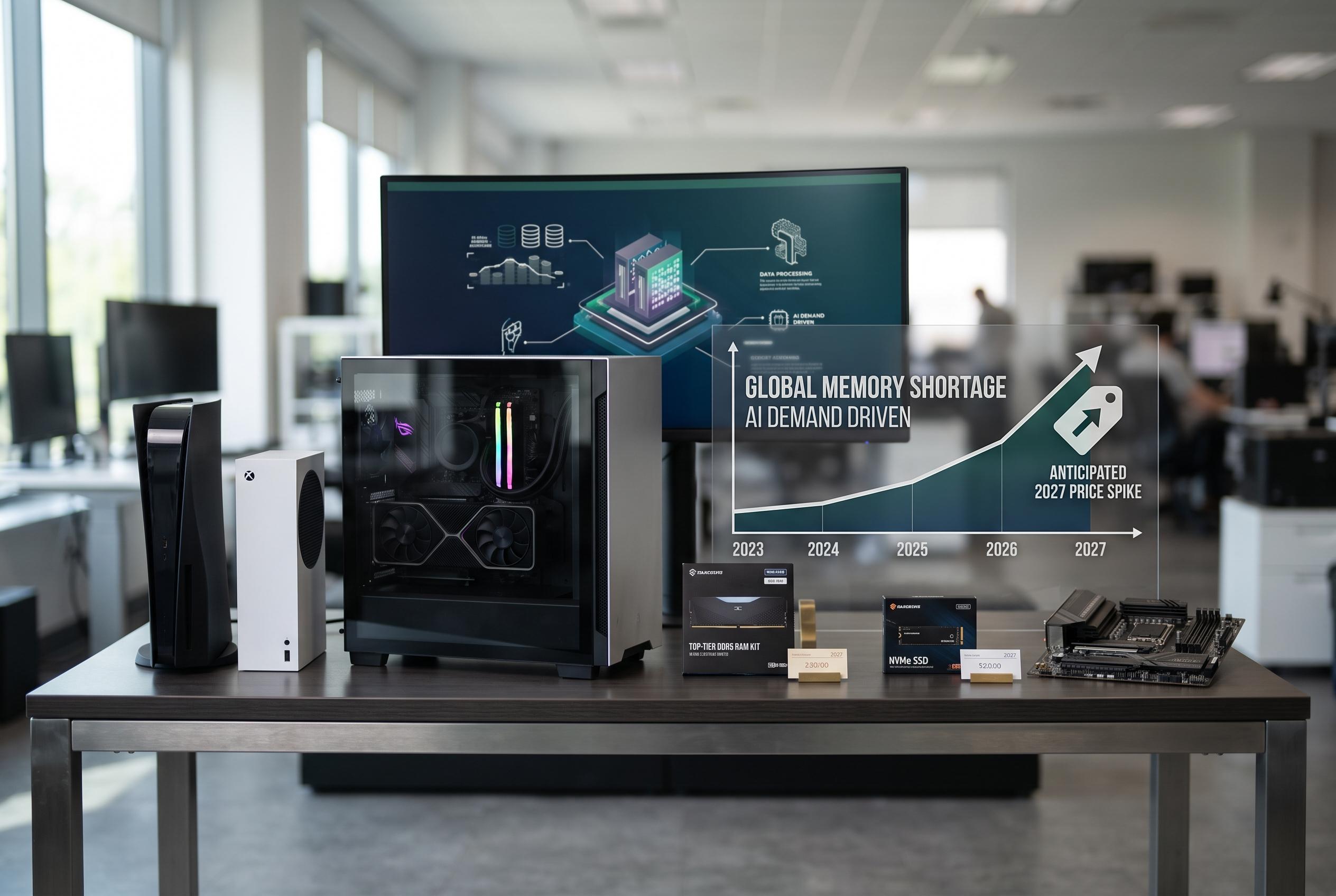

A global memory crunch lasting until 2027, propelled by AI data centre demand, is pushing up prices across gaming consoles, PCs, and components, reshaping the hardware market landscape.
The market for computer memory is tightening again, and the latest warnings suggest the strain may last far longer than many buyers expected. According to DigiTimes, cited by Kotaku, Samsung, SK hynix and Micron have effectively committed their DRAM and high-bandwidth memory output through 2027, leaving little room for near-term relief. That shortage matters well beyond servers: it is already feeding through to gaming PCs, consoles and other devices that depend on the same components. TechRadar reported that Samsung sees no meaningful increase in memory supply through 2028, with 2027 likely to be the most constrained year.
The pressure is being driven largely by artificial intelligence infrastructure, which is absorbing huge volumes of memory for data centres. GamesRadar said a US analyst has estimated gaming hardware prices rose 16% in the first half of 2026, from an average of $452 to $525, as manufacturers passed on higher component costs. The same report said Samsung’s memory division has been benefiting from record server and AI sales even as consumers face higher prices for consoles and pre-built PCs. Tom’s Hardware also reported that memory makers are prioritising high-bandwidth memory, or HBM, because it is essential for AI accelerators, further squeezing supply for ordinary DRAM.
For buyers, the result is a more expensive market with little sign of a quick correction. TechRadar noted that shortages have already lifted prices for RAM kits, consoles such as the PlayStation 5 and Xbox Series X/S, and even some pre-built systems. GamesRadar added that the effect is spilling into new hardware launches, with higher costs helping to push up prices across the sector. SK hynix chief executive Kwak Noh-jung told Reuters, as relayed by Tom’s Hardware and Investing.com, that 2027 could be the worst year in the industry’s history from a supply perspective and that demand may exceed production into the next decade.
Against that backdrop, Kotaku’s roundup also highlighted how the games industry is still adjusting to a more expensive hardware environment. Alinea Analytics estimated that the surprise PlayStation 4 and PlayStation 5 releases of Call of Duty: Black Ops 1 and 2 sold 11.2 million copies combined, far outpacing the estimated 351,000 copies sold in July of Halo: Campaign Evolved on PlayStation 5. Meanwhile, GamesBeat reported that claims of mass layoffs at Halo Studios were inaccurate, saying the cuts involved external contractors rather than full-time staff. Kotaku also quoted John Romero recalling how Doom’s early shareware era depended on piracy in Taiwan to widen distribution, a reminder that gaming’s business models have always adapted to the realities of how software reaches players.
Disclaimer: This content is intended for informational purposes only. Readers are advised to exercise their own judgement, conduct due diligence, or consult a qualified expert before acting on any information provided.