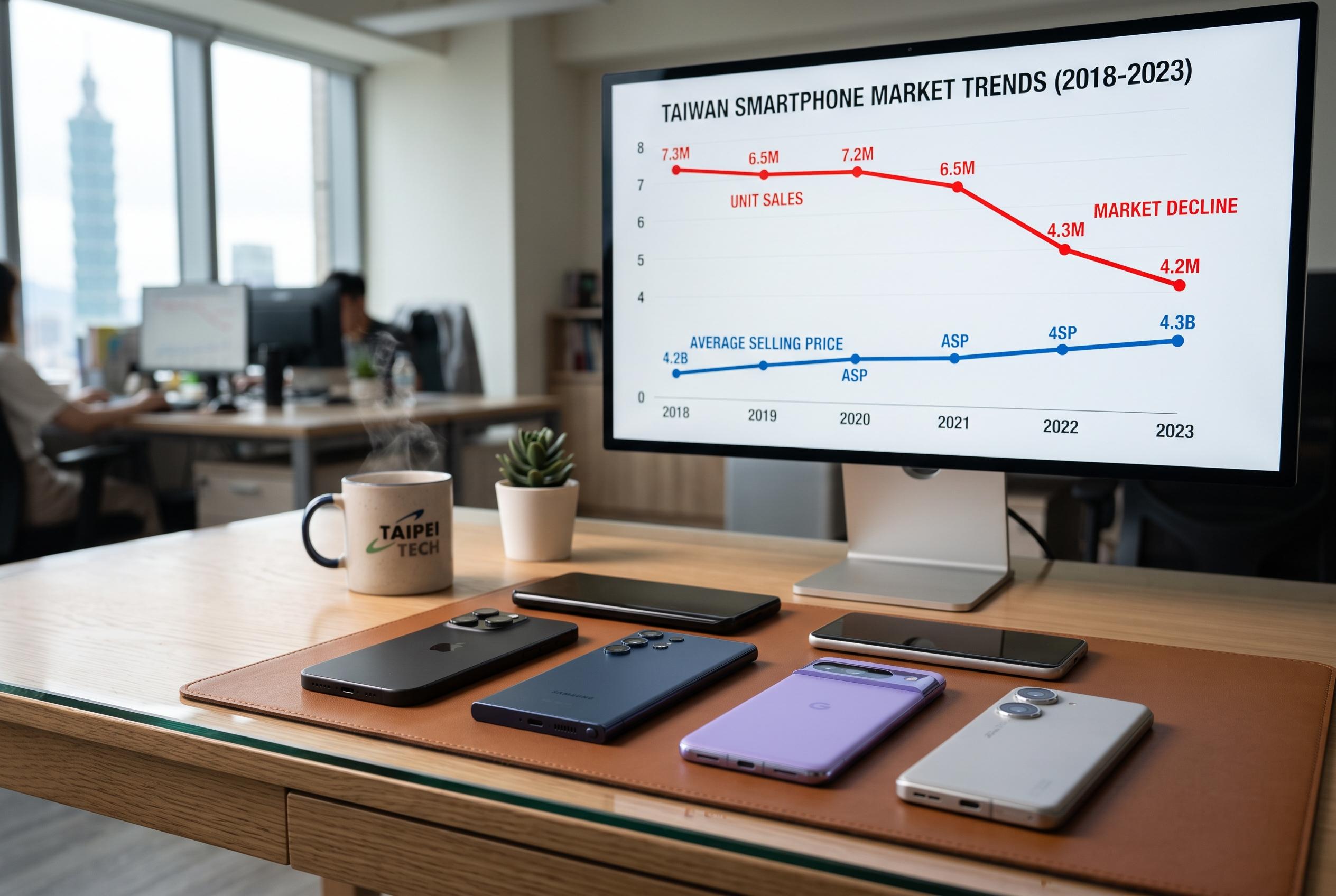

Taiwan’s smartphone sales dropped in June due to increased component costs and weakening upgrade demand, reflecting a broader regional slowdown and mounting price pressures on manufacturers.
Taiwan’s smartphone market weakened in June as rising component costs and softer upgrade demand combined to squeeze sales. According to local market data cited by Liberty Times, handset sales on physical retail channels fell to 395,000 units from 429,000 in May, while overall revenue also dropped, pointing to a clear retreat in both volume and value. The trend comes as memory and other parts remain more expensive, pushing manufacturers to lift prices just as consumers grow more cautious about replacing their phones.
The June decline was broad-based. Liberty Times reported that the market’s five biggest brands all posted lower sales, with Apple remaining first on 39% share, followed by Samsung at 26.2%, OPPO at 11.1%, vivo at 7.1% and Google at 4%. OPPO experienced the sharpest setback, with sales down 14% and revenue falling by more than 40%, even though entry-level models such as the A6x continued to move. That contrast suggests discounting at the low end is no longer enough to offset weakness in higher-priced devices.
The slowdown also fits a wider pattern in the region. Forbes reported that China saw smartphone sales fall 13% year on year during the 618 shopping period, blaming higher handset prices and fewer promotions, with memory and storage demand from AI servers helping drive up costs. In Taiwan, those same pressures are now feeding through to the retail market. Taiwan News reported that Pegatron’s June revenue fell 4.9% month on month, citing weaker ICT demand, even as the company expected a stronger third quarter. That mix of softer consumer electronics demand and a costlier supply chain leaves smartphone makers facing a difficult second half.
For now, the key issue is pricing. As Reuters-style market analysis across the supplied reports suggests, brands are being forced to balance higher bill-of-materials costs against consumers’ reluctance to pay more. With Apple’s autumn launch cycle approaching and Android vendors already testing higher price points, competition for value-conscious buyers is likely to intensify rather than ease.
Disclaimer: This content is intended for informational purposes only. Readers are advised to exercise their own judgement, conduct due diligence, or consult a qualified expert before acting on any information provided.