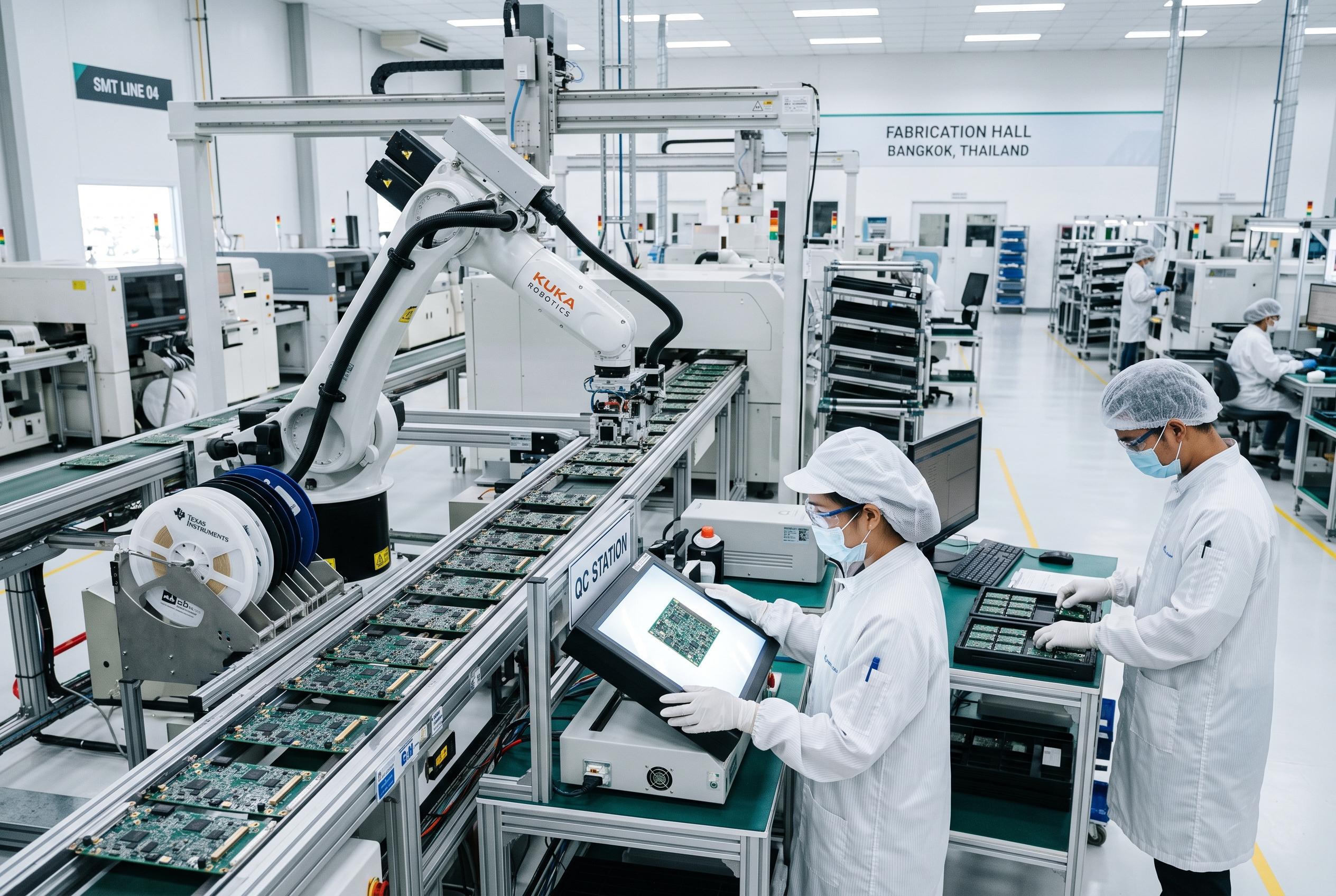

Thailand is rapidly positioning itself as a regional hub for advanced electronics, attracting over $26.8 billion in investment applications for high-tech projects including semiconductors, PCB manufacturing, and electric vehicles, amid efforts to transition from assembly to innovation.
Thailand’s push to become a regional centre for advanced electronics is gathering pace, with the Board of Investment saying the country has received more than $26.8 billion in investment applications across 880 high-tech projects from 2023 to mid-2026. The pipeline spans semiconductors, advanced electronics, electric vehicles and high-performance computing, reflecting how manufacturers are redrawing supply chains away from established production bases. The printed circuit board segment has been the standout, accounting for $9.85 billion across 224 projects, and the BOI says more than half of the world’s top PCB makers are now operating in Thailand. According to Narit Therdsteerasukdi, the BOI’s secretary general, the country has become a major manufacturing base as global supply chains are reorganised.
The latest figures build on a rapid expansion already under way in 2025 and 2026. The Nation reported that by October 2025 Thailand had attracted 180 PCB projects worth more than 200 billion baht, while the country’s February 2026 tally had risen to more than 200 billion baht in PCB investment since 2022. In March 2026, the Thai government approved four new projects worth more than 65 billion baht by China’s leading PCB maker, with production planned for smartphones, AI servers, data centres and electric vehicles. That expansion is expected to create more than 5,600 jobs in Prachin Buri and deepen ties between foreign investors and Thai universities.
Officials are also trying to move Thailand beyond assembly into higher-value parts of the electronics stack. In January 2026, the government unveiled a 25-year semiconductor strategy that aims to attract more than 2.5 trillion baht in investment and develop strengths in chip design, wafer fabrication and other advanced activities. The plan includes incentives, infrastructure upgrades, research support and training for 230,000 engineers. It is focused on power semiconductors, sensors, photonics and other chips tied closely to electric vehicles, data centres, industrial systems and artificial intelligence.
The labour constraint may prove as important as the capital inflows. The BOI and the Office of National Higher Education, Science, Research and Innovation Policy Council are building a talent-matching framework to align local engineers and technicians with the standards required by multinational manufacturers. The initiative reflects a broader challenge for Thailand: translating investment applications into durable industrial capacity while ensuring that domestic skills, supplier quality and technical training keep pace with the demands of a more complex electronics industry.
Disclaimer: This content is intended for informational purposes only. Readers are advised to exercise their own judgement, conduct due diligence, or consult a qualified expert before acting on any information provided.