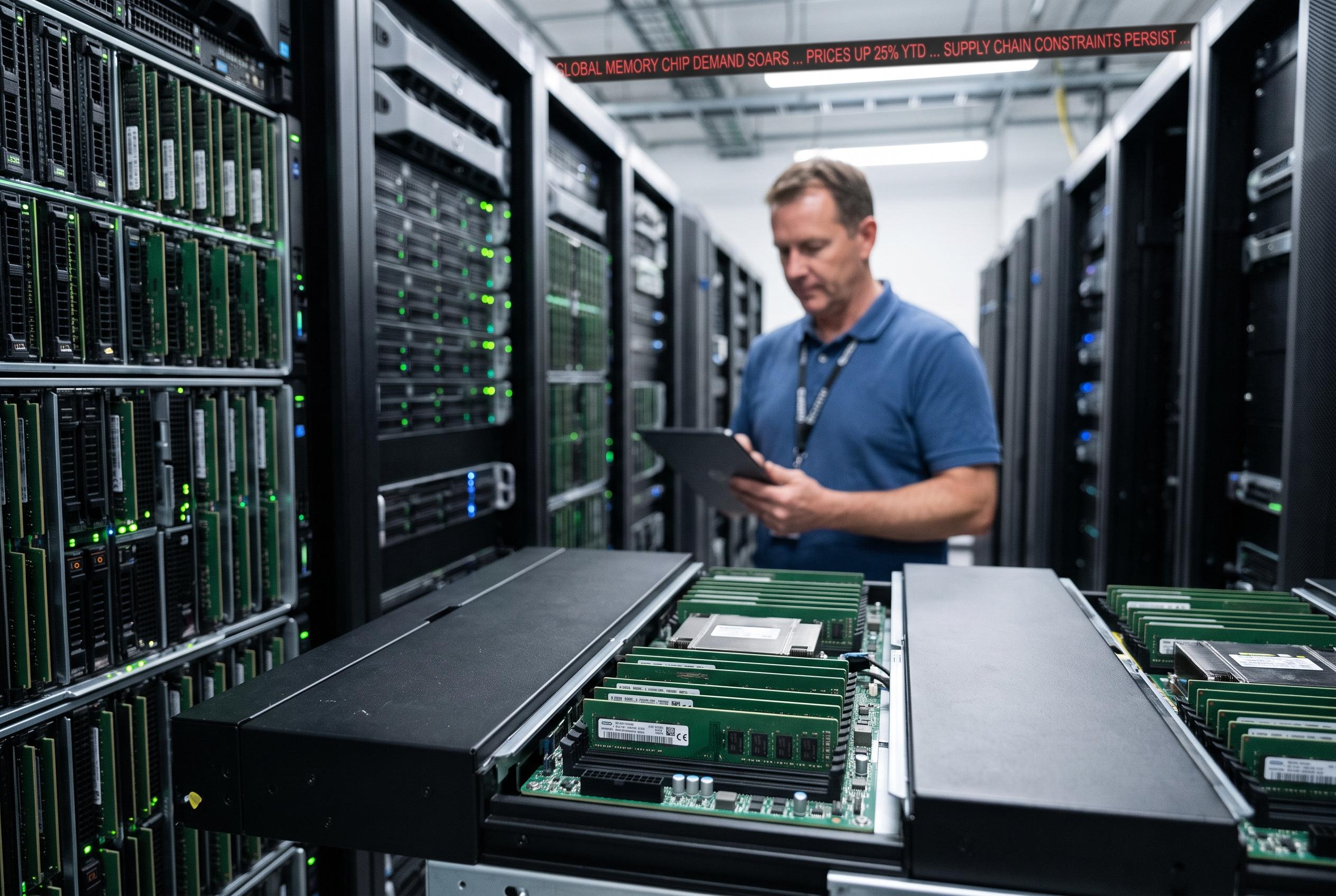

Memory costs have reversed decades of decline, returning to 2007 levels amid a surge in AI-driven demand and supply constraints, prompting global hardware price increases and industry concerns over lasting inflation.
Memory prices have climbed far enough to erase a long period of steady declines, according to software performance expert Daniel Lemire, who has been tracking the market’s reversal through charts and historical pricing data. TechSpot reported that memory costs have now returned to roughly 2007-era levels on a per-unit basis, a striking change after decades in which denser manufacturing and process improvements made RAM progressively cheaper for consumers.
The shift reflects a broader shortage across the memory industry, driven largely by demand from artificial intelligence systems. Tom’s Hardware reported that third-party data from the Stanford DAM Project shows DDR5 memory now costing about $11.41 to $13.28 per GB, a level comparable with DDR2 prices from 2008. In practical terms, that means one of computing’s most reliable deflationary trends has been reversed in a matter of months.
The pressure is not limited to DRAM. Industry reports cited by TechSpot say NAND flash prices have also risen sharply, pushing up the cost of SSDs, USB drives, memory cards and other storage products. That inflation is already feeding through into consumer hardware, with companies including HP, Dell and Apple having raised laptop and MacBook prices, while Sony and Nintendo have also increased the prices of the PlayStation 5 and Switch 2.
Executives in the sector are warning that the squeeze may last well beyond the current cycle. Tom’s Hardware reported that SK Group chairman Chey Tae-won described RAM prices as “abnormally high” and linked the rise to constrained supply and AI demand, while also saying the group is considering a US memory plant to expand production. Separately, other industry commentary suggests the market may not fully normalise soon, with some executives predicting structurally higher prices through 2030 and beyond. For consumers and manufacturers alike, the key question is whether supply can catch up before AI demand reshapes the market permanently.
Disclaimer: This content is intended for informational purposes only. Readers are advised to exercise their own judgement, conduct due diligence, or consult a qualified expert before acting on any information provided.