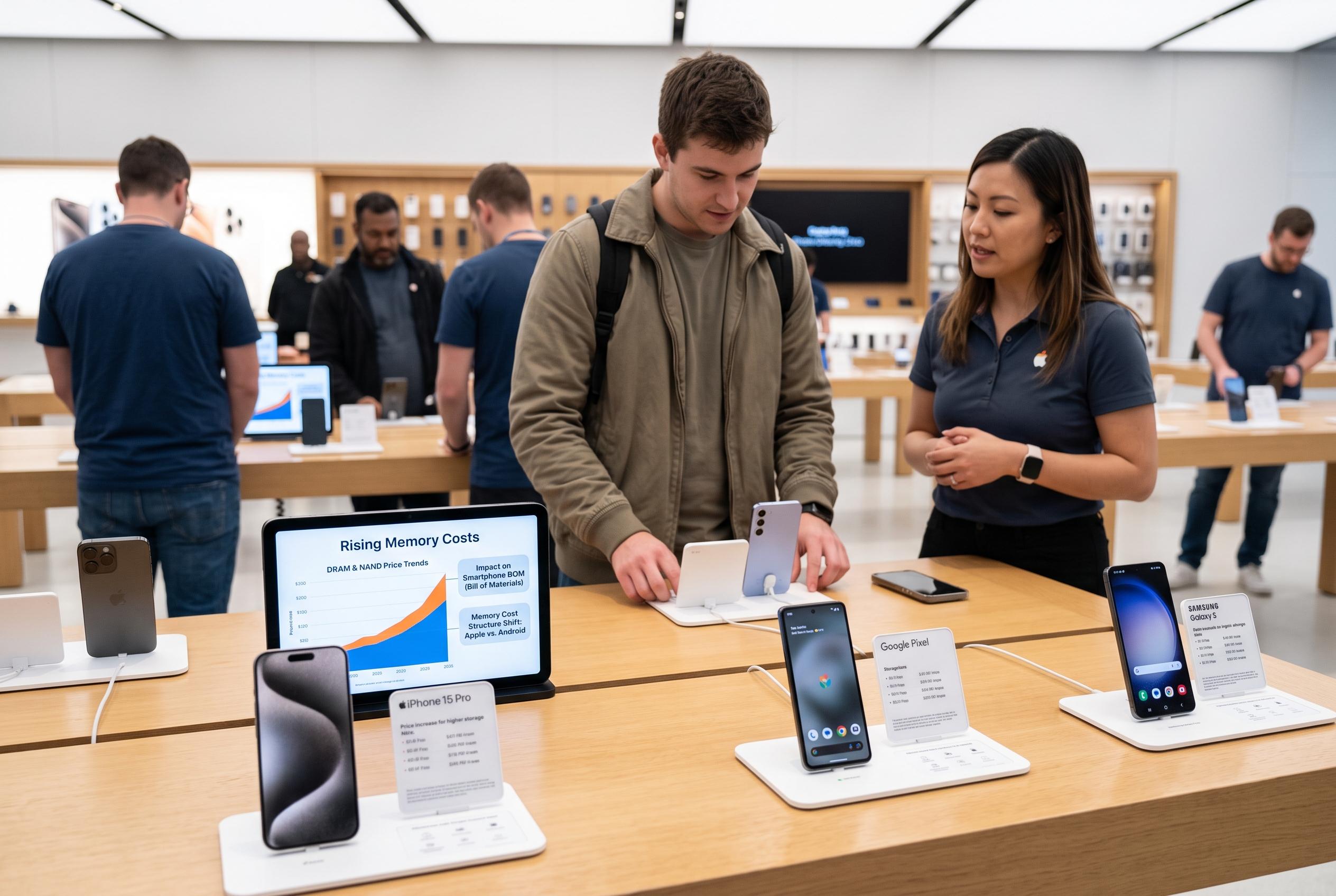

Rising memory costs are reshaping smartphone pricing strategies, with Apple and Android manufacturers facing increased BOM costs, supply constraints, and potential model downgrades amid a surge in memory’s share of device expenses.
Memory inflation is beginning to reshape smartphone pricing, and Apple is no exception. TrendForce says the bill of materials for the iPhone 18 Pro 256GB model could rise about 38% year on year, driven largely by sharply higher memory costs. The market researcher argues that Apple may try to limit the visible impact on consumers by accepting lower margins rather than passing the full increase straight through to retail prices.
The change is striking because memory is taking up a far larger share of handset costs than it did a year ago. TrendForce says memory accounted for roughly 10% of the iPhone Pro BOM a year earlier, but had climbed to about 34% by the third quarter of 2026 and could exceed 40% in the first half of 2027. That would mark a clear shift away from the long-standing cost structure in which application processors and displays tended to dominate.
The pressure is not limited to Apple. TrendForce says Android manufacturers face a harsher squeeze because many of them have less room to absorb cost increases without damaging margins. In the lower- and mid-tier market, where profitability is already thin, brands may have little choice but to lift prices, reduce specifications or discontinue some models altogether. The firm expects that sustained memory inflation could force a further downgrade in global smartphone production forecasts for 2026 and 2027.
Separate reporting from Tom’s Hardware suggests the supply strain may already be affecting Apple’s launch planning. The publication reported that roughly $1 billion worth of iPhone 18 Pro chips could be waiting for packaging because of DRAM shortages, with Apple said to be working through constraints involving Micron, SK Hynix and Samsung. It also said Apple has explored additional suppliers, including China’s CXMT, although that option carries regulatory complications.
TrendForce has been warning for months that memory prices are rising sharply across consumer electronics. In earlier research, it said memory’s share of smartphone BOM costs had increased from the traditional 10% to 15% range to about 30% to 40%, and that many brands would have no choice but to raise prices or cut specifications. For Apple, that may mean rethinking not only the iPhone 18 Pro’s launch price but also the pricing of older models if it wants to protect sales volume.
Disclaimer: This content is intended for informational purposes only. Readers are advised to exercise their own judgement, conduct due diligence, or consult a qualified expert before acting on any information provided.