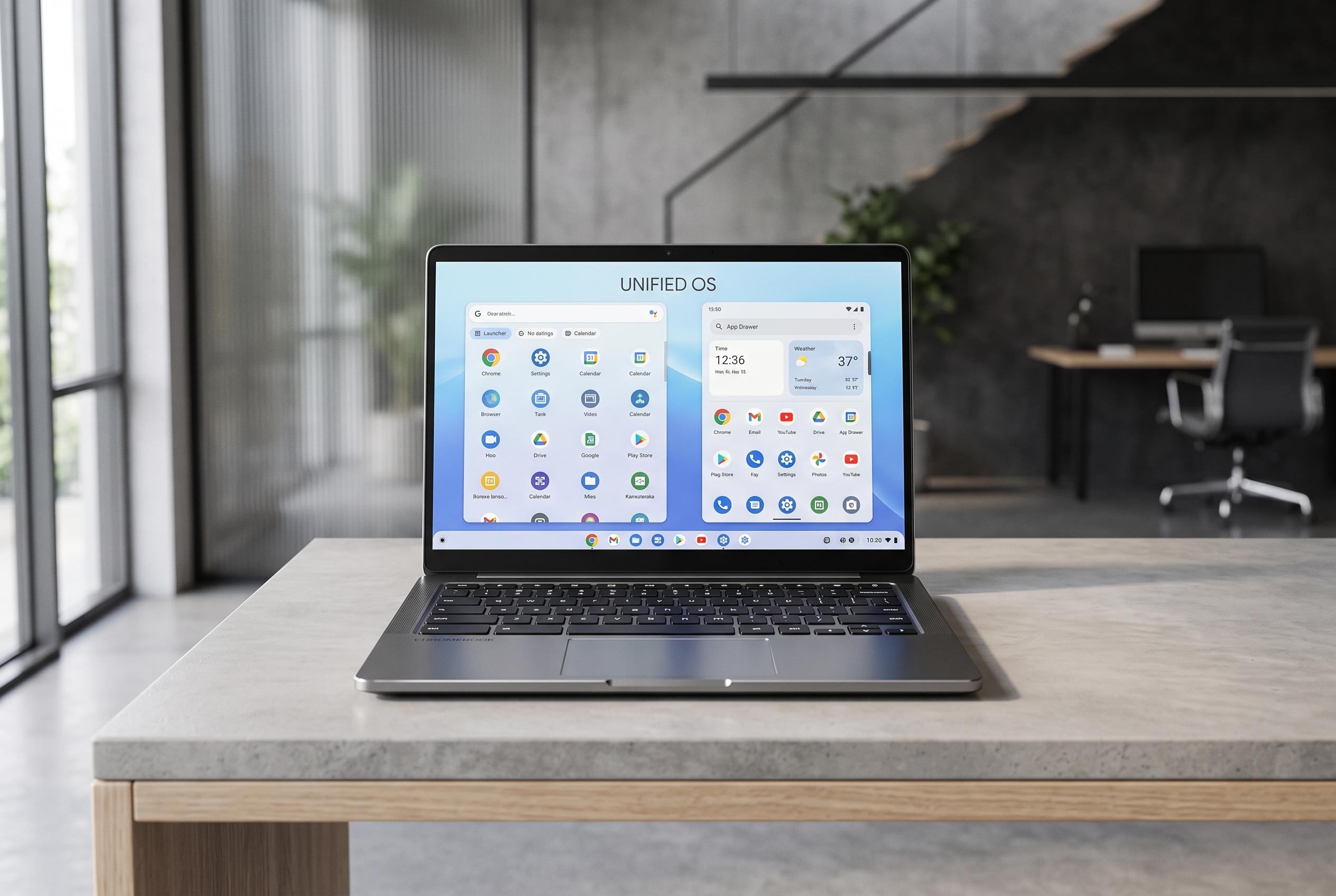

Google is developing a new line of premium devices, dubbed Googlebook, featuring advanced hardware and a unified Android-ChromeOS environment, signalling a strategic shift beyond its traditional low-cost, web-focused Chromebooks.
Google’s next laptop line appears to be moving far beyond the low-power, browser-first formula that defined Chromebooks. The new devices, reportedly being developed under the internal name Googlebook, are being positioned as premium machines with more ambitious hardware, broader app support and a deeper blend of Android and ChromeOS. That would mark a sharp change in strategy for a category long associated with inexpensive school and everyday web-use computers.
Recent leaks and code references suggest the first wave of models will include larger displays, more storage and far more memory than most Chromebooks have ever offered. Chrome Unboxed reported that an Acer-branded model could come with a 14-inch OLED panel, as much as 512GB of SSD storage and 16GB of RAM. The same reporting pointed to Intel Core Ultra 5 325 and Core Ultra 7 355 chips, both part of Intel’s Panther Lake family aimed at thin-and-light laptops.
The hardware mix may be broader than the early Intel leaks implied. Android Central reported that Qualcomm has confirmed Snapdragon X chips for the platform, while MediaTek is also expected to supply processors. That would mean Googlebook is not being built as an Intel-only project, but as a multi-chip family that could span x86 and Arm designs. The wider spread of hardware suggests Google wants the platform to compete in the premium notebook market rather than remain a niche successor to budget Chromebooks.
That shift makes sense only if the software layer can keep up. Google’s plan is said to involve a single environment combining Android and ChromeOS, internally referred to as AluminumOS. Google has not publicly detailed how app support will work, but the key question is whether Googlebook will offer enough native software to justify the stronger hardware. Some leaked imagery has already pointed to creative apps such as Adobe Premiere Pro, hinting that Google may be targeting more than browsing, streaming and cloud work.
The stakes are higher because the laptop market has changed. Mid-range machines are no longer cheap by default and 16GB of RAM has become a far more common baseline for serious workloads, especially as AI features and heavier multitasking push memory demands higher. ChromeOS traditionally ran well on 4GB to 8GB, and Google’s own tiers still reflect that split, with base Chromebooks at 4GB and Chromebook Plus devices at 8GB or more. Googlebook may be trying to occupy the space above that line: still lighter than Windows, but powerful enough to serve as a true mid-range alternative.
Disclaimer: This content is intended for informational purposes only. Readers are advised to exercise their own judgement, conduct due diligence, or consult a qualified expert before acting on any information provided.