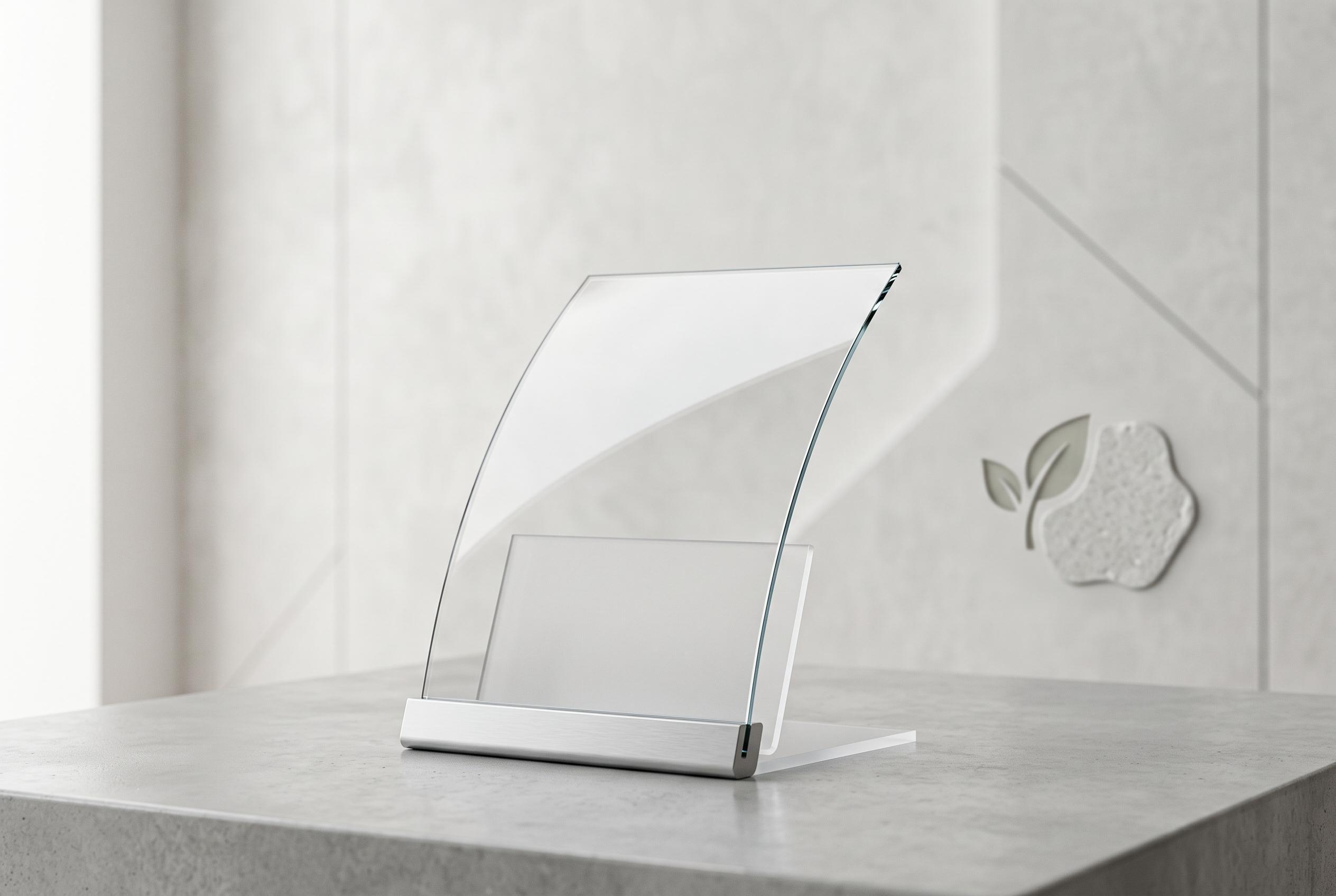

Strategic Revenue Insights projects the ultra-thin glass market will surpass $5 billion by 2034, propelled by innovations in foldable displays, eco-friendly demands, and expanding applications across electronics and automotive sectors.
Strategic Revenue Insights estimates that the ultra-thin glass market will more than double over the next decade, rising from $1.8 billion in 2025 to $5 billion by 2034. The London-based firm says the category is being pushed by foldable and flexible displays, smaller device designs and demand from automotive electronics, while also pointing to sustainability pressures that favour lighter materials with a lower carbon footprint. According to the company’s assessment, consumer electronics remains the largest end-use segment and Asia Pacific the dominant regional market.
The report links the outlook to a broader shift in display engineering. Ultra-thin glass is valued for its strength, optical clarity and ability to support compact device layouts, making it useful in smartphone cover glass, touch panels and foldable screens. Strategic Revenue Insights says manufacturers are improving output through fusion draw and float processes, which help produce thinner and more uniform glass. It also identifies a range of thickness bands and glass types, with aluminosilicate used heavily in consumer electronics and borosilicate and specialty formulations finding roles in healthcare and energy applications.
Other market research points to a larger industry than Strategic Revenue Insights suggests, but with a similar direction of travel. Grand View Research values the global market at $21.7 billion in 2024 and sees it reaching $37.7 billion by 2030, while IMARC Group projects $29.4 billion by 2034. Fortune Business Insights and OG Analysis also forecast strong growth through 2034, underscoring a consistent view that demand is being driven by electronics, automotive displays, semiconductors and advanced packaging. These reports also highlight the same themes of miniaturisation, flexibility and durability, while noting a growing emphasis on eco-friendly materials.
The competitive field is led by established glass makers including Corning, AGC and Nippon Electric Glass, according to Strategic Revenue Insights. The report says Corning’s Gorilla Glass technology gives it an advantage in durable consumer-device applications, while AGC is positioning itself around sustainable manufacturing and customer partnerships. Nippon Electric Glass is described as a major supplier with deep technical expertise. Even so, the market faces clear constraints. High production costs, specialised equipment needs and volatile input prices for materials such as silica and alumina continue to limit margins and make scaling more difficult.
Disclaimer: This content is intended for informational purposes only. Readers are advised to exercise their own judgement, conduct due diligence, or consult a qualified expert before acting on any information provided.