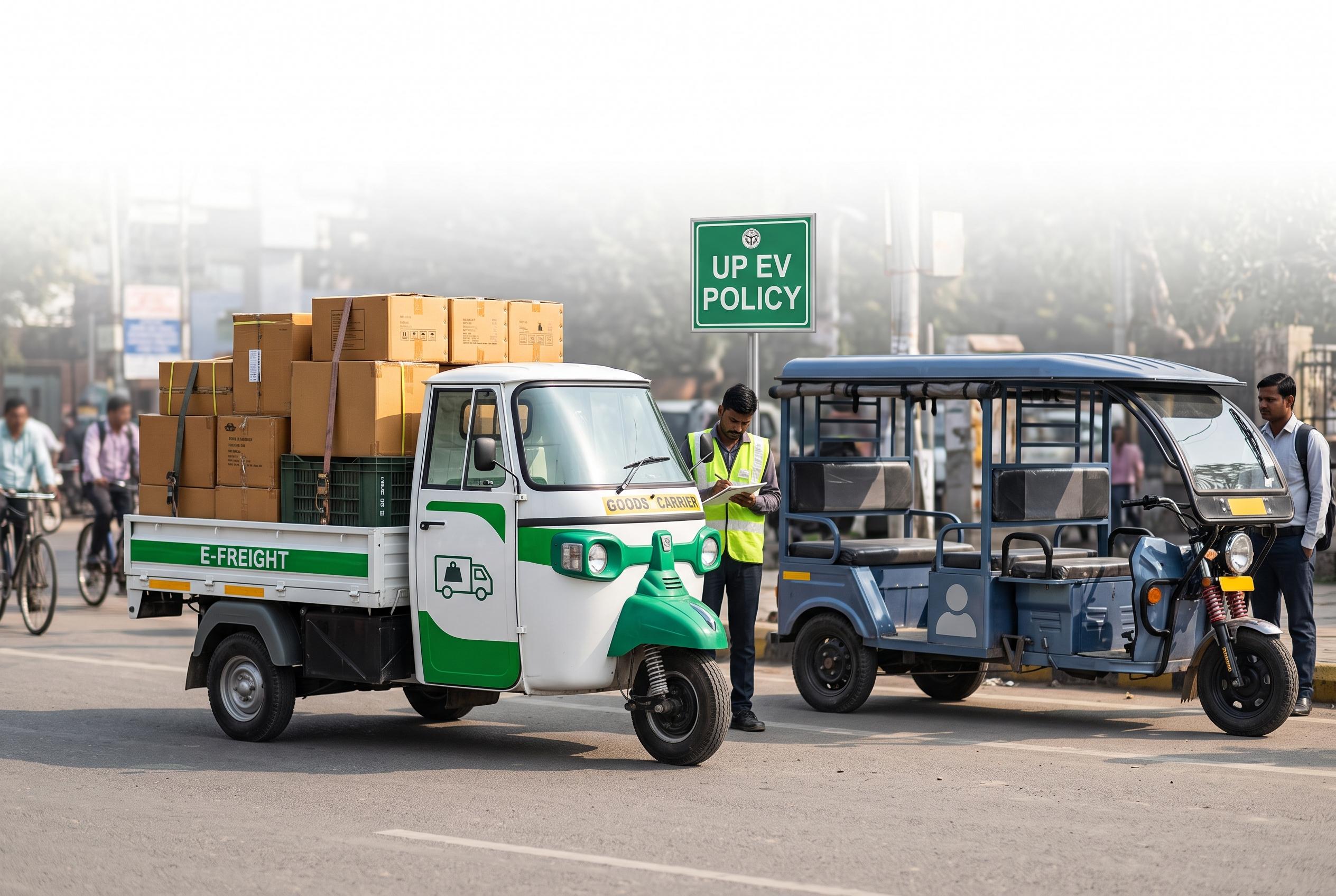

The Uttar Pradesh government’s latest electric vehicle policy distinguishes sharply between passenger and cargo three-wheelers, offering incentives only to freight vehicles while removing subsidies for passenger e-rickshaws, affecting buyers in 2026.
Uttar Pradesh’s electric vehicle policy draws a sharp line between passenger three-wheelers and electric goods carriers, and that distinction matters for buyers in 2026. According to the policy summaries, the subsidy once available for passenger e-rickshaws has effectively fallen away, while cargo three-wheelers registered as e-goods carriers can still qualify for a purchase incentive. That makes vehicle category, not just powertrain, the deciding factor for anyone weighing a commercial EV purchase in the state. The result is a policy that is far more favourable to freight use than to passenger transport.
For passenger electric three-wheelers, the current position is that no purchase subsidy is available. Earlier policy documents had offered support, including a 15% subsidy capped at ₹12,000 per vehicle, but later government orders extended the broader EV policy without restoring that benefit for three-wheelers. By contrast, electric goods carriers can still receive a subsidy worth 10% of ex-factory cost, up to ₹1 lakh per vehicle, under the allocation for 1,000 vehicles.
The incentive framework has also been tightened around timing and localisation. Reports on the November 2025 notification say Uttar Pradesh extended its 100% road tax and registration fee exemption for eligible pure EVs until October 13, 2027, but only vehicles purchased and registered within the state can benefit. Several summaries add that during the later phase of the policy, eligibility depends on a stricter local chain: the vehicle must be manufactured, purchased and registered in Uttar Pradesh. That is especially relevant for commercial operators planning purchases in 2026.
The practical takeaway is straightforward. A passenger e-rickshaw buyer should not assume the old ₹12,000 subsidy is still live, because the current policy position says it is not. An operator buying an electric cargo three-wheeler, however, may still secure a meaningful incentive, provided the vehicle is classified correctly and the purchase meets the state’s registration and localisation conditions. In a policy that increasingly rewards formal fleet use and domestic manufacturing, classification is now as important as the vehicle itself.
Disclaimer: This content is intended for informational purposes only. Readers are advised to exercise their own judgement, conduct due diligence, or consult a qualified expert before acting on any information provided.