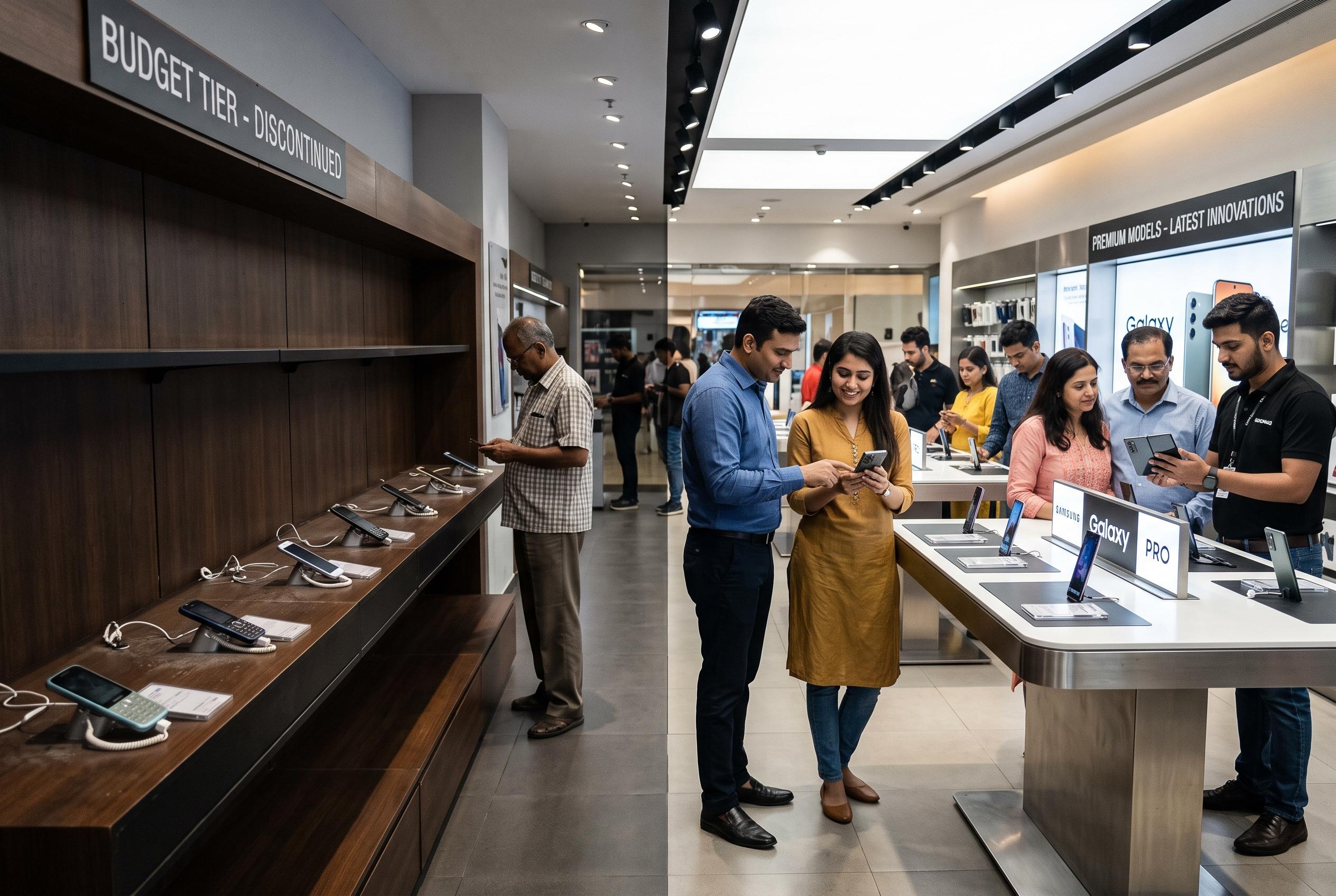

The Indian smartphone market faces a significant transformation, with sales of affordable devices plummeting and consumers increasingly opting for higher-priced models as the market’s lowest tier contracts sharply amid rising costs and changing buying habits.
India’s smartphone market is under clear pressure, and the weakest point is the low-cost end. According to IDC, shipments fell in the June quarter while average selling prices rose sharply, reflecting a market in which demand is softening just as devices are becoming more expensive to build. The result is a notable shift away from volume and towards higher-value models.
IDC said the market declined by 4.1% in the first quarter of 2026 to 31 million units, with the average selling price hitting a record $302, up 10.4% from a year earlier. A separate June-quarter update described the market as having its steepest fall in six years, with shipments down 10% year on year. Both reports point to the same forces: weaker consumer spending, longer replacement cycles and rising handset prices.
The sharpest drop has been in phones priced below ₹10,000. TV9 Hindi reported that this segment saw sales fall 59% year on year in the first quarter, cutting its market share from 18% to 8%. The pressure appears to be coming from higher memory costs, particularly for DRAM and NAND, which have made it harder for vendors to keep entry-level devices affordable while protecting margins.
That is changing the way manufacturers sell into India. Companies are trimming discounts, leaning into premium models and, in some cases, bringing back lower-priced 4G phones as a cheaper alternative to 5G handsets. TV9 Hindi said 4G devices’ share of total sales rose from 5.8% in the first quarter to 11.1% in the second quarter, even as demand for more expensive phones remained steadier.
The weakness has hit the biggest brands unevenly. TV9 Hindi reported that Vivo, India’s largest smartphone seller, saw second-quarter sales fall 13.9%, while Xiaomi dropped 10%, Oppo 8.5% and Realme 14.2%. iQOO recorded a far steeper decline. By contrast, Samsung and Apple posted modest gains, with market shares of 16.4% and 8.5% respectively. Motorola and OnePlus also held up better than many rivals.
Buying habits are shifting as well. TV9 Hindi reported that online smartphone sales fell 19.8%, while offline sales declined only 3.6%, pushing the retail channel’s share of the market to 58.1%. IDC’s latest outlook suggests the pressure may persist, with another drop in India’s smartphone sales expected in the second half of 2026. For consumers, that likely means fewer genuinely cheap phones with strong specifications, and a market that increasingly rewards those willing to spend more.
Disclaimer: This content is intended for informational purposes only. Readers are advised to exercise their own judgement, conduct due diligence, or consult a qualified expert before acting on any information provided.