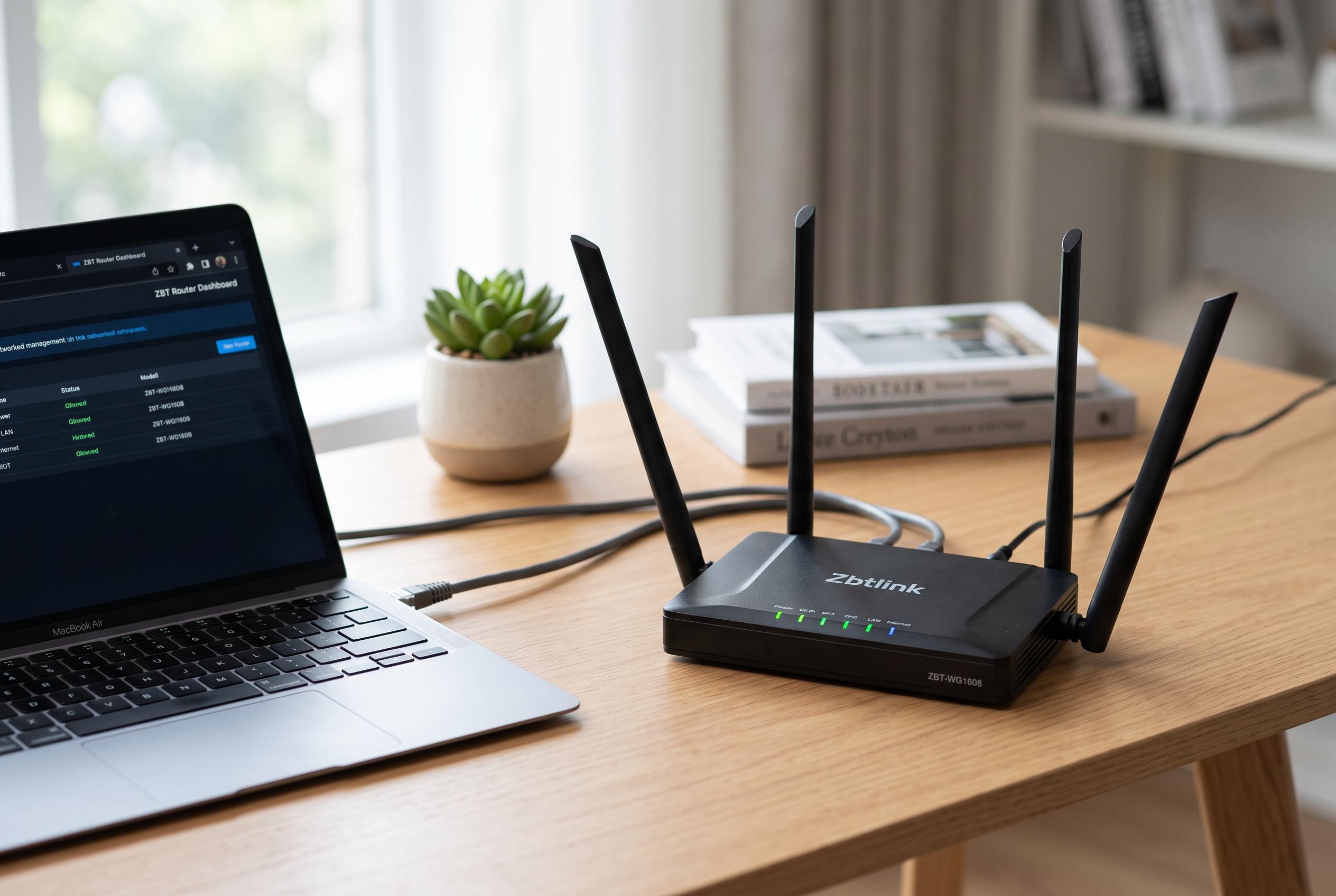

A newly revealed vulnerability in Zbtlink routers highlights persistent security flaws in inexpensive networking hardware, raising concerns amid broader regulatory efforts and global threats.
A newly disclosed flaw in routers made by Zbtlink has raised fresh questions about the security of low-cost networking equipment sold in the US and elsewhere. Research from VulnCheck, detailed by Jacob Baines, says several Zbtlink devices and routers sold under the Wiflyer name repeatedly contact a hard-coded list of remote servers, including one domain that appears to reference the company. If one of those servers responds, the router can hand over full root access without any authentication, effectively allowing a remote operator to take control of the device.
That finding lands at a moment of wider concern about router security. Earlier this year, the Federal Communications Commission announced a ban on the authorisation of new foreign-made routers and similar devices, saying the move was intended to address national-security risks. The Zbtlink case gives that policy fresh relevance, but it also underscores a limit of the approach: the FCC action applies to new equipment, while older models already on the market can remain in circulation.
According to the model list compiled by VulnCheck, the affected devices include CPE2801, WE1026-5G-WD, WE1326, WE2007, WE2008-DSIM, WE2416, WE3326, WE5927, WE5931, WE5931AC, WE826-T3-DSIM, WG108, WG1602, WG1608-DSIM, WG209, WG2105, WG2107, WG259, WG3526 and Z8102AX-2DSIM. Owners can reduce risk by blocking the routers’ outbound connections to the suspect servers, but the discovery is another reminder that network hardware can hide serious flaws for years before they are identified publicly.
The broader pattern is not limited to Zbtlink. In recent years, security researchers and vendors have repeatedly disclosed serious router bugs, from command-injection flaws that allow unauthorised changes to settings to authentication-bypass problems that expose administrative functions. In separate cases, companies including ZBT and D-Link have issued firmware fixes, while threat actors have continued to exploit router weaknesses for botnets, persistent access and movement across networks. That history suggests the Zbtlink issue is less an isolated curiosity than part of a persistent and global problem in consumer networking gear.
Disclaimer: This content is intended for informational purposes only. Readers are advised to exercise their own judgement, conduct due diligence, or consult a qualified expert before acting on any information provided.