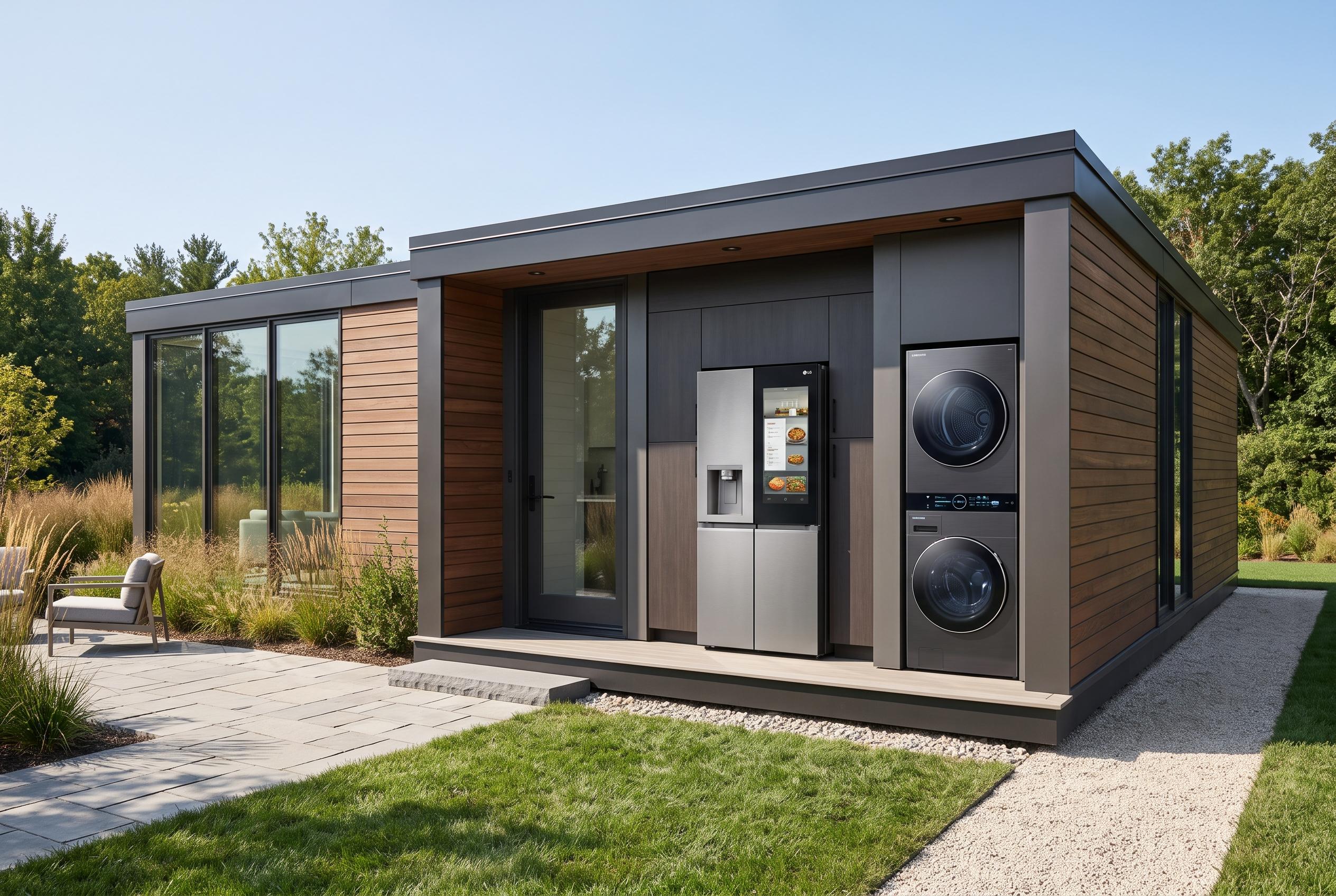

Samsung and LG Electronics are pioneering the integration of appliances and smart systems into factory-built modular homes, signalling a disruptive shift in the housing market driven by off-site construction and connected technologies.
Large home appliance makers are moving into modular housing as they search for new growth beyond a maturing market for TVs, refrigerators and washing machines. In South Korea, Samsung Electronics and LG Electronics are treating factory-built homes not simply as buildings, but as a route to sell appliances, AI-based home systems and energy-management services as a package.
LG Electronics’ “LG Smart Cottage” has drawn especially strong interest. According to eDaily, a launch broadcast on CJ OnStyle on 2 August generated about 1,000 purchase enquiries in an hour, the first time a domestic home-shopping channel has showcased modular housing. A subsequent live stream on 5 August attracted as many as 50,000 simultaneous viewers, while a YouTube video featuring the product passed 2.5 million views. Interest is said to be strongest among people in their 50s and 60s looking towards retirement homes or weekend properties, where fixed pricing and lower exposure to construction overruns are attractive.
The appeal of modular housing lies in its production model. Major structural elements are made in a factory and then assembled on site, a method known as off-site construction. Industry sources say more than 70% to 80% of key components can be pre-manufactured, which reduces exposure to weather, labour shortages and long on-site build times. The market potential is substantial. The Korea Research Institute for Construction Policy expects the domestic modular construction and housing market to expand from 607.4 billion won last year to between 1 trillion and 4 trillion won by 2030. Market research firm MarketsandMarkets forecasts the global modular construction market will rise from $109.6 billion last year to $142.9 billion by 2030.
The sector is also broadening beyond private buyers. eDaily reported that demand could extend to companies, schools, military facilities and rental apartment projects. LG Electronics already supplied smart cottages to SM Entertainment’s training centre in Gangwon Province in 2024. For appliance groups, the strategic logic is clear: if homes are sold with built-in air conditioners, heat pumps, refrigerators, televisions, IoT devices and energy systems, the customer relationship begins at the point of construction and can last for years.
Samsung and LG are pursuing that opportunity in different ways. Samsung launched “Samsung AI Modular Home” in June with modular specialist Gonggan Jejakso, pre-installing AI appliances and SmartThings-connected devices in homes that are more than 80% factory-made. Pricing starts at about 5 million won per pyeong, depending on options, and Samsung plans to extend the concept to mid-rise buildings. LG, by contrast, is positioning itself as a full housing provider. It expanded its line-up in June to eight models, from studio-style units to duplex layouts, with prices ranging from about 100 million won to 390 million won, depending on specification. The company says it oversees design, production, installation and quality checks, and even helps customers without land by linking them to land purchase advice and site inspections. As Professor Seo Jin-hyung of Kwangwoon University told eDaily, modular housing can become an appliance sales channel from the moment it is built in. He added that as technology improves and construction costs fall, wider commercial use is likely to become a structural trend.
Disclaimer: This content is intended for informational purposes only. Readers are advised to exercise their own judgement, conduct due diligence, or consult a qualified expert before acting on any information provided.