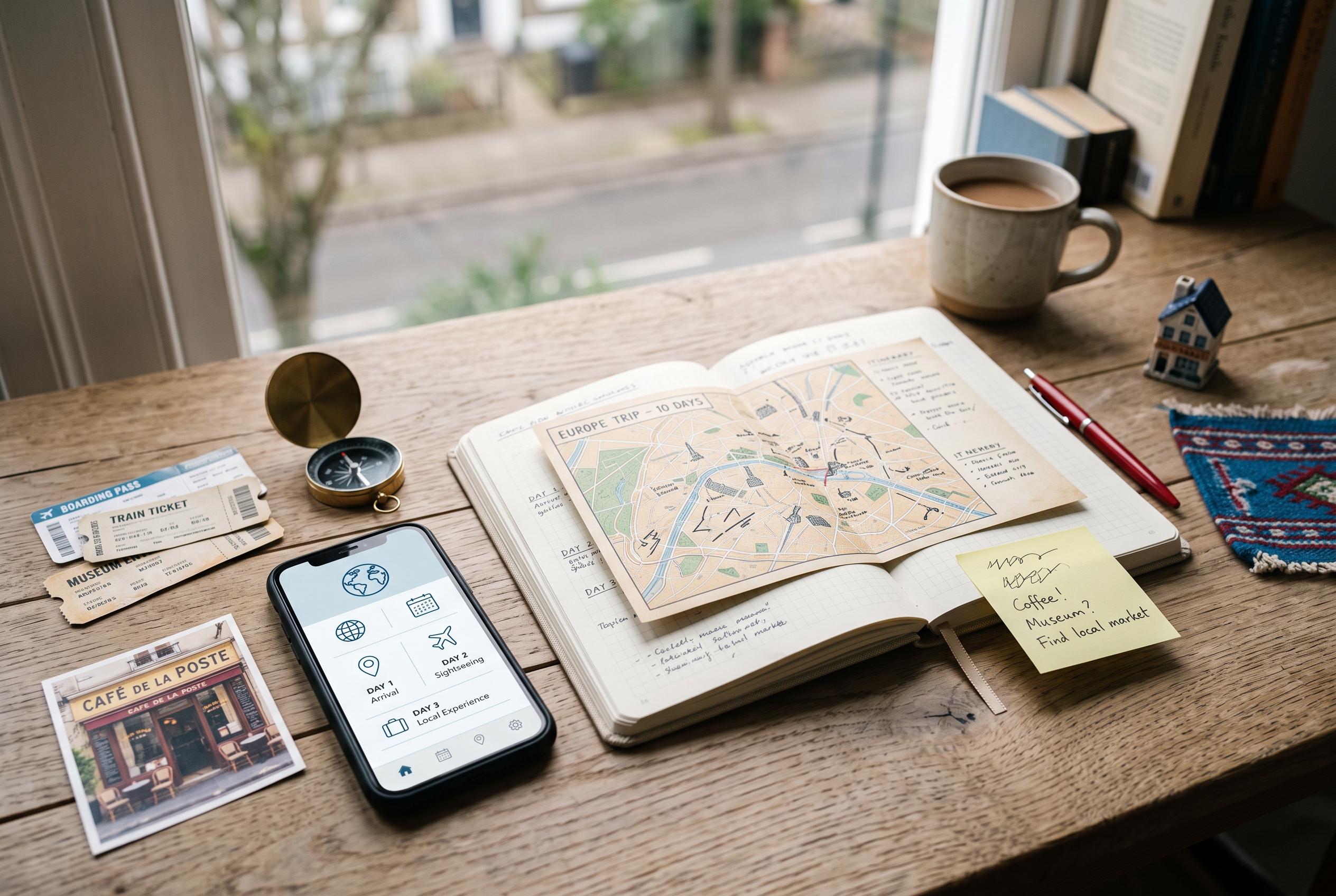

A new test reveals that while AI can effectively filter options based on clear constraints, it remains limited in capturing the subtlety of human taste and local authenticity in travel recommendations.
The exercise set out by The Digital Travel Expert Hub is less a list of restaurant tips than a stress test for how artificial intelligence handles travel judgement. Across five cities, the simulated workflow tried to move from vague intent to specific recommendations by combining language parsing, candidate discovery, filtering and ranking. The result is a useful demonstration of what these systems can do well: remove noise, weigh practical constraints and surface options that fit a traveller’s stated priorities. It also shows where they remain limited, because the best choice is not always the best-scoring one.
The New York case is the clearest example of optimisation at work. A traveller with three hours in Midtown, a dinner booking in the Lower East Side and a requirement for WiFi and step-free access was narrowed to a short list that favoured quiet, locally oriented coffee shops over tourist-heavy chains. Everyman Espresso stands out in the supplied material as a compact, design-light space in downtown Manhattan, with a reputation for precise espresso, a steady local crowd and conditions that suit remote work. The workflow’s preference for a practical, neighbourhood venue rather than a more recognisable brand is consistent with the venue descriptions from Everyman Espresso’s own site and third-party coffee listings.
London shows a different strength: the ability to separate genuine local character from famous but less suitable locations. The model rejected the sort of pub that might impress on a postcard if it failed the user’s stated test for authenticity. The Pembury Tavern, in Hackney, fits the profile described in the related material: a long-running pub with real ale, a substantial beer range, a community role and a location that serves residents rather than day-trippers. CAMRA’s local listing and the pub’s own account both emphasise its heritage, while review material points to its space, cask beer selection and regular local use. That makes it a credible answer to a request for a proper pub rather than a tourist attraction with beer attached.
Taken together, the five city tests reveal a consistent pattern. The system is strongest when the task can be broken into hard requirements: access, opening hours, transit time, food style, neighbourhood character, or whether a place is likely to feel local rather than staged. It is weaker when the question turns on atmosphere, surprise or social chemistry. In Paris, the best answer may be not a venue but a neighbourhood to wander. In Tokyo, it may be the difference between a specialist and a chain. In Dubai, it may be whether the money spent supports local people. Those are all valuable distinctions, but they also depend on judgement that no ranking system can fully own.
That is the central lesson of the workflow test. AI can handle the tedious work of comparing options and enforcing constraints, and the supplied examples show it doing so with some care. Yet the most meaningful travel decisions often involve taste, mood and trust in local advice. The strongest recommendations are therefore the ones that stay transparent about uncertainty and know when to stop short of pretending to understand the full human context.
Disclaimer: This content is intended for informational purposes only. Readers are advised to exercise their own judgement, conduct due diligence, or consult a qualified expert before acting on any information provided.