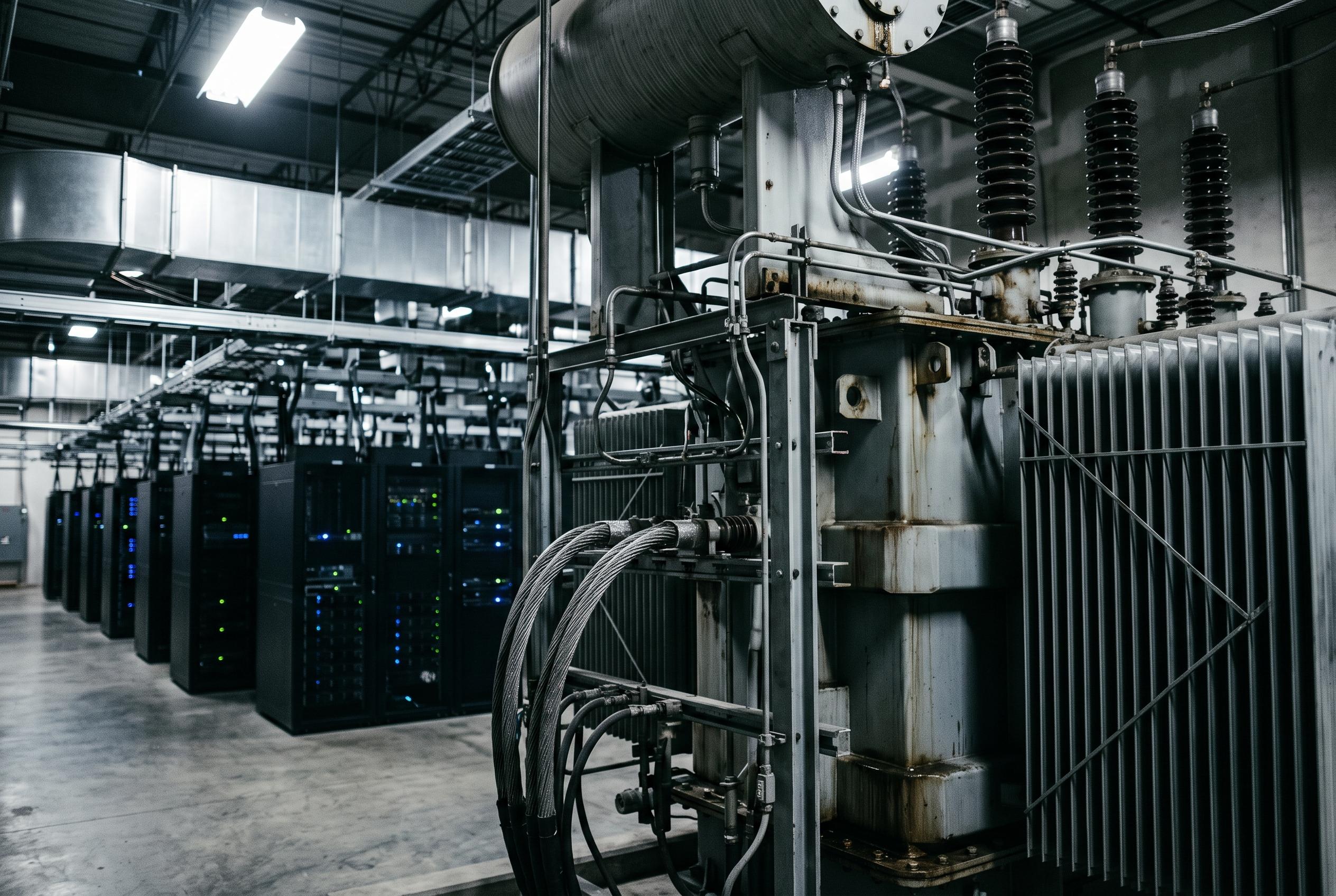

The surge in AI data centre investment is highlighting a critical shortage of power infrastructure components, with transformers, substations, and cooling systems now in chronic short supply, threatening major project delays worldwide.
Artificial intelligence is driving far more than chip demand. According to Oilprice, the real pressure point is shifting to the physical systems that keep data centres running: transformers, substations, generators and cooling equipment. The consultancy Wood Mackenzie has said transformer shortages have already emerged, while substation capacity is also tight, underscoring that the bottleneck is not only silicon but grid hardware itself.
The scale of the build-out helps explain why. PwC projects that global investment in AI data centres could reach $31.6 trillion by 2050, with the United States accounting for $15.1 trillion of that total. The same report warns that data centre hardware turns over quickly, with GPUs and related systems often needing replacement every one to three years, which makes the infrastructure cycle unusually capital-intensive and difficult to plan around.
That demand is colliding with a manufacturing system that cannot expand overnight. Reuters has reported that one digital infrastructure chief executive is already being asked more about lead times for generators and transformers than about graphics processors. Hyundai Electric told Reuters that its order backlog now stretches beyond three years, with its backlog rising 23% in the first half of the year to $8.5 billion, a sign that major equipment suppliers are booked well into the future.
Bloomberg has also reported that shortages of power-delivery equipment are delaying or cancelling some planned US data centre projects, with trade tensions and supply-chain constraints adding to the strain. Tom’s Hardware, citing that reporting, notes that China remains a major producer of electrical equipment used in grid and data centre infrastructure, even as US firms have reduced dependence on Chinese server manufacturing. The result is a broader industrial squeeze: as AI expands, the limiting factor is increasingly the speed at which power can be generated, moved, cooled and connected.
Disclaimer: This content is intended for informational purposes only. Readers are advised to exercise their own judgement, conduct due diligence, or consult a qualified expert before acting on any information provided.