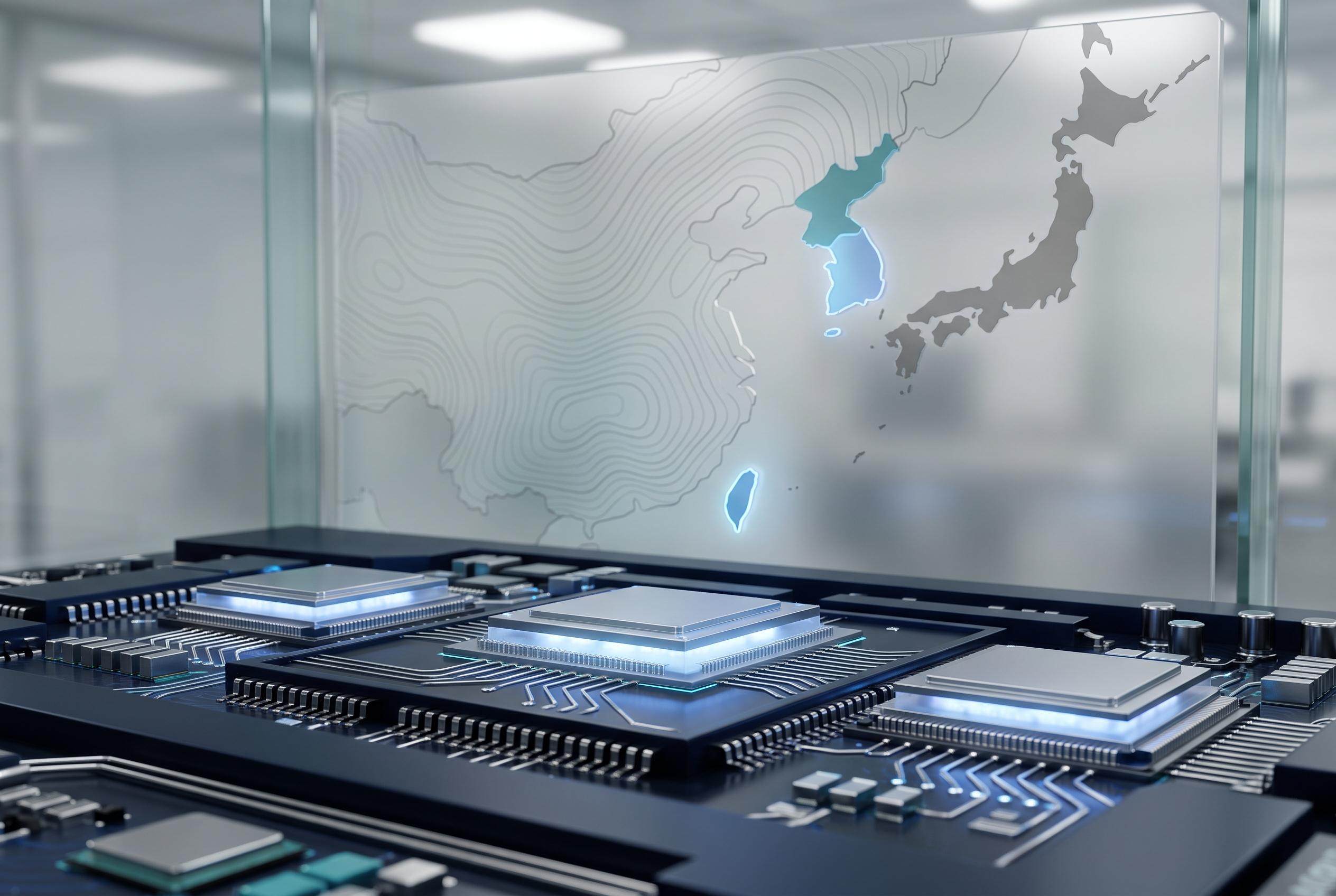

Taiwan and South Korea have overtaken Japan in export value for the first half of 2024, driven by soaring AI-related semiconductor demand, reshaping regional trade dynamics.
AI demand has pushed Taiwan and South Korea past Japan in export value for the first time in the first half of this year, according to BusinessKorea, which cited Nikkei Asia’s analysis of trade data from Taiwan, South Korea and Japan. South Korea exported $496.3bn, while Taiwan shipped $416.6bn, both rising by more than 50% year on year. Japan’s exports totalled $384.4bn, up about 10%, leaving it behind its two regional rivals.
The main driver was the sharp rise in demand for advanced semiconductors used in artificial intelligence systems. BusinessKorea said the export gains were led by South Korea’s Samsung Electronics and SK Hynix, together with Taiwan Semiconductor Manufacturing Co and Hon Hai Precision Industry, better known as Foxconn. The analysis also drew on data from the Japan External Trade Organisation and the United Nations Commodity Trade Statistics Database.
Semiconductors now account for about 30% of total exports in both Taiwan and South Korea. In the first half of the year, South Korea’s integrated circuit exports reached $149bn and Taiwan’s $133.2bn. For South Korea, that was already more than the value of its chip exports for the whole of last year. Japan’s integrated circuit exports were far smaller, at $21.2bn, or about 5% of total exports, although the country remains a major supplier of chipmaking equipment and materials.
Taiwan News reported that Taiwan overtook South Korea in semiconductor shipments in the third quarter of 2024, helped by AI-related demand and mature technologies. Korea JoongAng Daily later reported that Taiwan’s exports rose 34.1% in 2025, while South Korea’s increased 2.8%, underscoring the scale of the shift. Yet analysts quoted by Nikkei Asia said a weak yen does not fully explain the gap, because the Taiwan dollar and the won were also soft against the dollar. They also warned that Taiwan and South Korea’s heavy exposure to one high-growth sector brings its own risk, even as Japan retains advantages in chipmaking equipment and materials.
Disclaimer: This content is intended for informational purposes only. Readers are advised to exercise their own judgement, conduct due diligence, or consult a qualified expert before acting on any information provided.