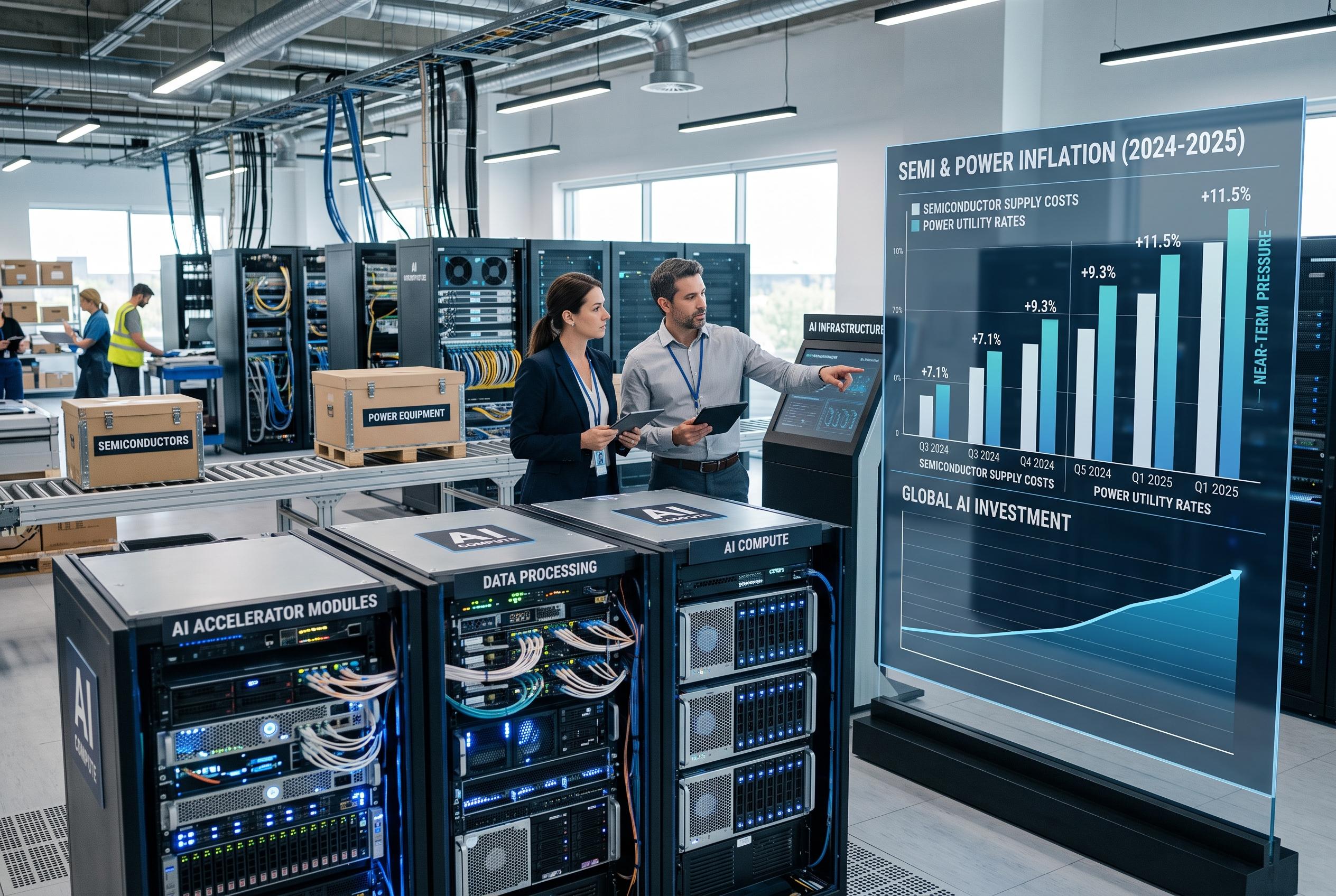

While AI promises future cost reductions, soaring investments are currently driving inflationary pressures in sectors such as semiconductors and power, with experts cautioning about the divergent economic impacts.
Artificial intelligence is increasingly being framed as a force with two distinct economic effects: a possible long-term drag on costs and a near-term lift to inflation. On August 12, Silicon Valley executives including Tesla chief Elon Musk and OpenAI chief Sam Altman said the technology could eventually lower prices by improving productivity, but they also acknowledged that the scale of current investment is still running ahead of adoption. That gap is helping to keep costs elevated for now, especially in chips, electricity and skilled labour.
Goldman Sachs has estimated that AI-related capital expenditure in the US will reach $581 billion this year, a level that helps explain why the build-out is adding to inflationary pressure. Northern Trust said the rush to expand AI infrastructure is straining supply chains, while Charles Schwab noted that the demand is feeding through into semiconductors, power and construction materials. An analysis from Investing.com went further, estimating that the boom could add about 0.4 percentage points to annual inflation in 2026.
At the same time, the macroeconomic gain from AI may be more muted than some headlines suggest. Goldman Sachs chief economist Jan Hatzius said the direct effect on US growth in 2025 was “basically zero”, according to Tom’s Hardware, arguing that much of the spending is tied to overseas manufacturing and supply chains rather than broad domestic output. The Federal Reserve Bank of Richmond has separately said AI and data-centre investment have supported GDP, but have also pushed up prices in sectors linked to computers and semiconductors.
Nvidia sits at the centre of that boom. The company makes the graphics processing units that power many AI workloads and also sells the Cuda software platform used to build and train models. GuruFocus says the stock remains below its estimated GF Value, with a score that reflects strong profitability and growth, although valuation is less favourable. The same report pointed to mixed sentiment among large investors and net insider selling of $410.6 million over the past three months, a reminder that even the main supplier to the AI cycle is not immune to concerns about pricing, supply and timing.
Disclaimer: This content is intended for informational purposes only. Readers are advised to exercise their own judgement, conduct due diligence, or consult a qualified expert before acting on any information provided.