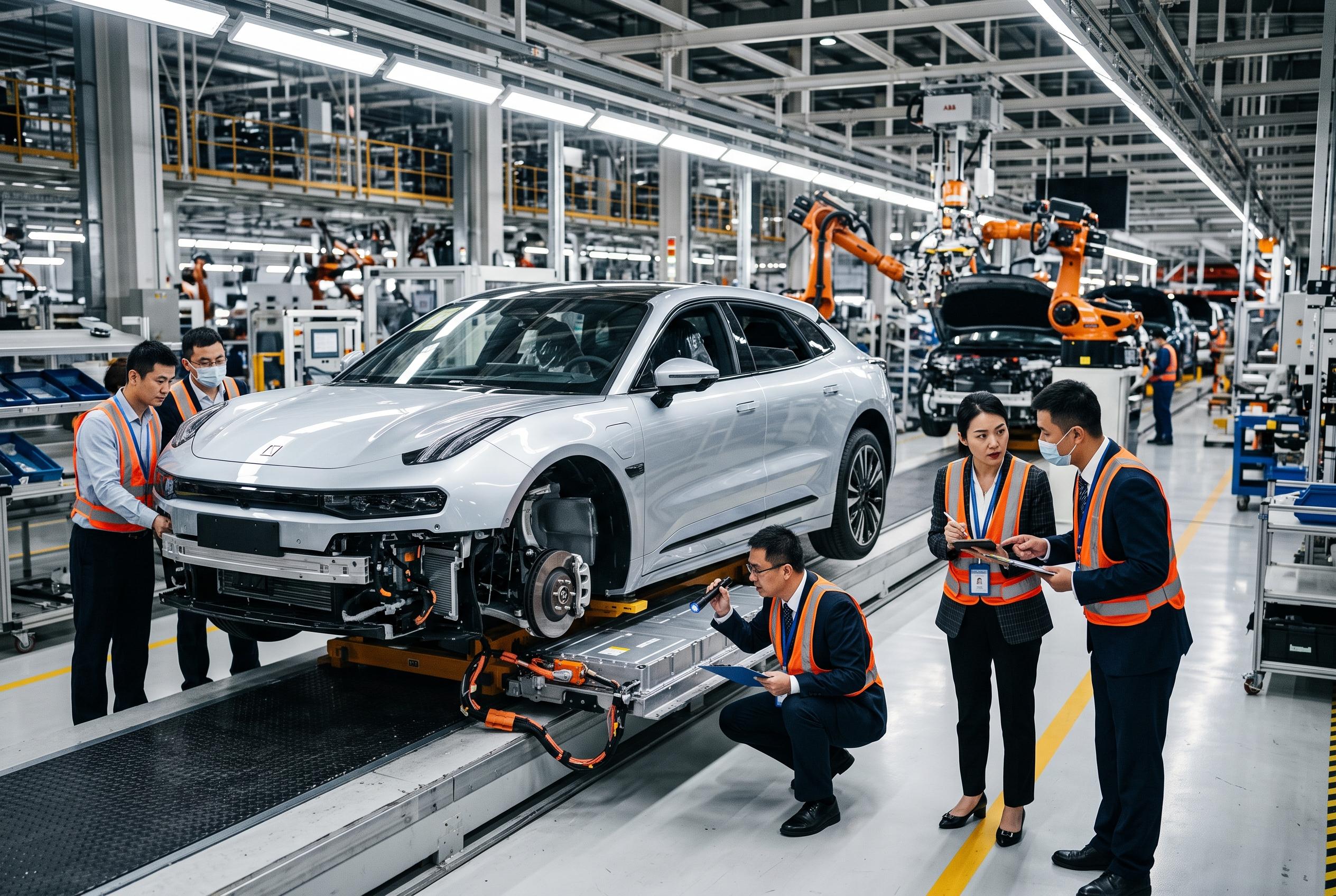

China’s industry ministry launches a year-long nationwide quality inspection of domestic automakers amid falling EV deliveries and rising safety concerns, signalling a shift towards stricter regulation in a slowing market.
China’s industry ministry has begun a year-long nationwide quality inspection campaign across the auto sector, in a move that follows a sharp slowdown in the country’s electric vehicle market. RetailNews Asia reported that domestic EV deliveries fell 12.5 per cent in the first seven months of 2026, adding pressure to an industry already facing weaker demand and tighter regulatory scrutiny.
The review will cover roughly 100 domestic manufacturers and focus on smart driving systems, vehicle design standards and battery hardware. At a Beijing briefing, Vice-Minister of Industry and Information Technology Xin Guobin said authorities would block new auto technologies from the market if they failed stricter verification checks. The campaign comes after a string of fatal crashes and a rise in complaints about software faults and battery defects, including a Xiaomi SU7 crash in Anhui province that killed three people after a driver-assistance system warning came only seconds before impact.
The wider market backdrop is also deteriorating. Data from the China Passenger Car Association showed overall passenger vehicle deliveries fell 20.9 per cent year on year in July to 1.46 million units, with electric vehicle deliveries down 3.9 per cent on the month’s total. The association said EVs still accounted for 65.1 per cent of passenger car deliveries, but volume has now fallen for seven consecutive months. Separate reporting by the South China Morning Post and Carscoops has pointed to weaker sales after subsidies and tax incentives were reduced, as well as rising production costs and softer consumer demand.
For manufacturers, the immediate effect may be a slower product cycle and heavier compliance costs. Companies that have relied on rapid software updates and experimental driver-assistance features may now have to divert capital towards core quality controls and verification processes. That could favour larger established groups while putting smaller, cash-strapped brands under greater strain, with analysts already warning of consolidation across China’s crowded EV sector.
Disclaimer: This content is intended for informational purposes only. Readers are advised to exercise their own judgement, conduct due diligence, or consult a qualified expert before acting on any information provided.