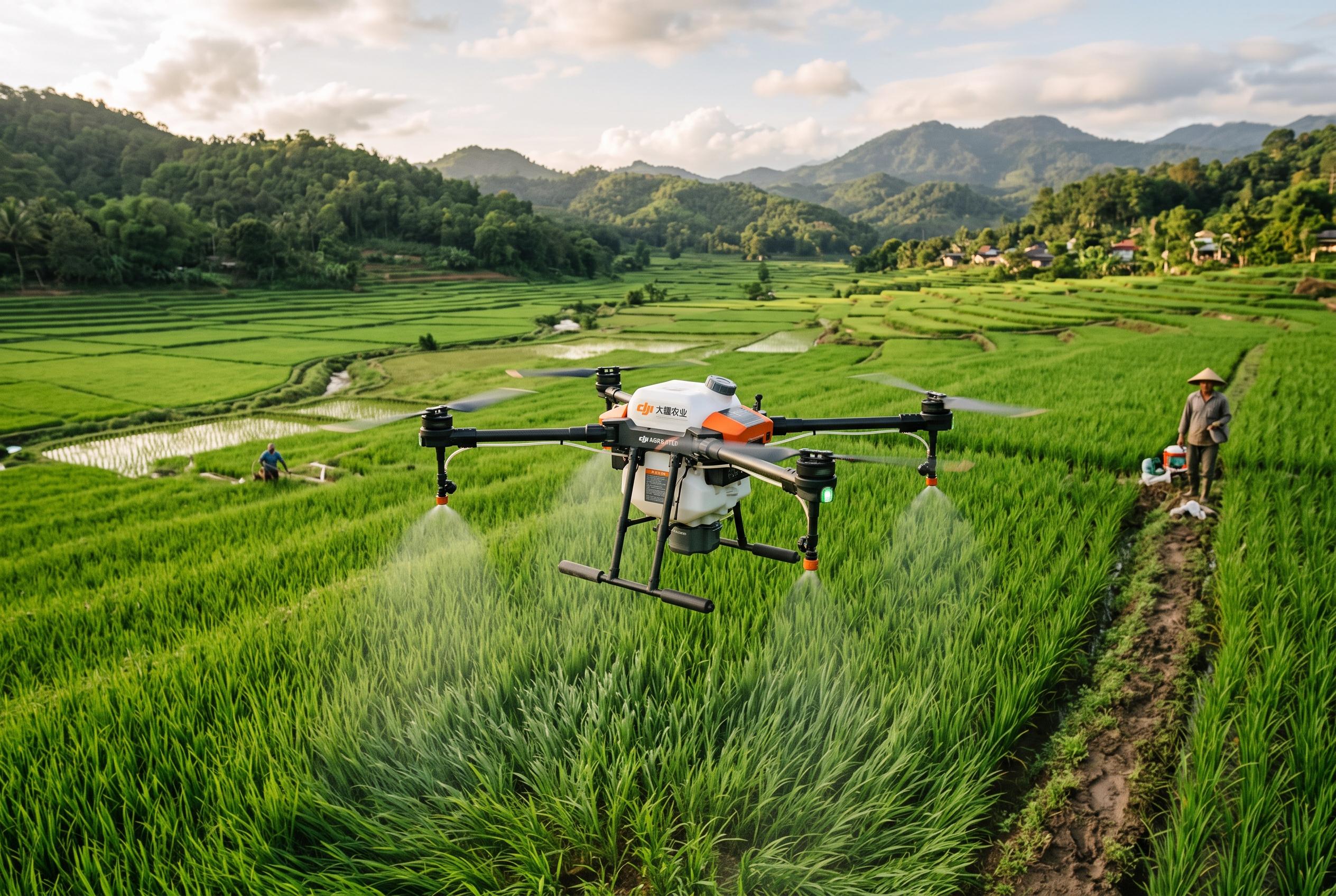

Chinese drone manufacturers are expanding their footprint internationally, especially in Southeast Asia, Africa, and the Middle East, despite tightened US trade controls, signalling a shift towards practical applications in agriculture and infrastructure inspection.
China’s drone exports are rising sharply in emerging markets as demand grows for farming, surveying and industrial inspection, even as sales to the United States weaken under tighter trade controls. According to China’s General Administration of Customs, exports in the first half of the year increased 26% to 2.42 million units, while shipments to the US fell by more than 40%.
The shift reflects Beijing’s push to build a so-called low-altitude economy, a strategy that seeks to expand business in manned and unmanned aircraft below conventional airspace. Chinese manufacturers, led by DJI, are increasing production of finished drones and core components at home while looking to overseas markets, especially countries linked to the Belt and Road Initiative. Industry groups have separately outlined export plans that focus on Southeast Asia for logistics use, the Middle East for pipeline inspection and African markets for agriculture and cargo transport.
Demand is being driven by practical needs rather than consumer enthusiasm alone. In Southeast Asia, drones are increasingly used in agriculture, infrastructure monitoring and logistics, while the Philippines has offered subsidies since 2024 to encourage drone use in rice cultivation. Many of the machines deployed there are made in China. A manufacturer quoted at a Shanghai trade fair said overseas demand was “enormous”, and another Jiangsu-based exporter said it aims to lift foreign sales from 10% to 15% of revenue to 50% within three years.
The clearest gains have come in markets such as the Philippines, Pakistan and Cambodia. Customs data show exports to the Philippines rose 68% in the first half, while sales to Germany and Malaysia more than doubled and shipments to Pakistan rose 13-fold; Cambodia’s imports surged 163-fold. Cambodia’s interior ministry has also signed a cooperation agreement with Nanning Vocational and Technical University on drones and other advanced technologies, including support for public-order and disaster-response use.
By contrast, the US market remains constrained by national-security scrutiny. Reuters has previously reported that Washington has tightened restrictions on foreign-made drones, while industry sources cited by Tom’s Hardware said the Commerce Department has stepped back from a broader import ban even as the Federal Communications Commission continues to withhold authorisations for new foreign models. DJI says more than 700,000 of its agricultural drones were in use worldwide by the end of June, underlining how firmly Chinese manufacturers remain positioned in the global market despite the pressure in the West.
Disclaimer: This content is intended for informational purposes only. Readers are advised to exercise their own judgement, conduct due diligence, or consult a qualified expert before acting on any information provided.