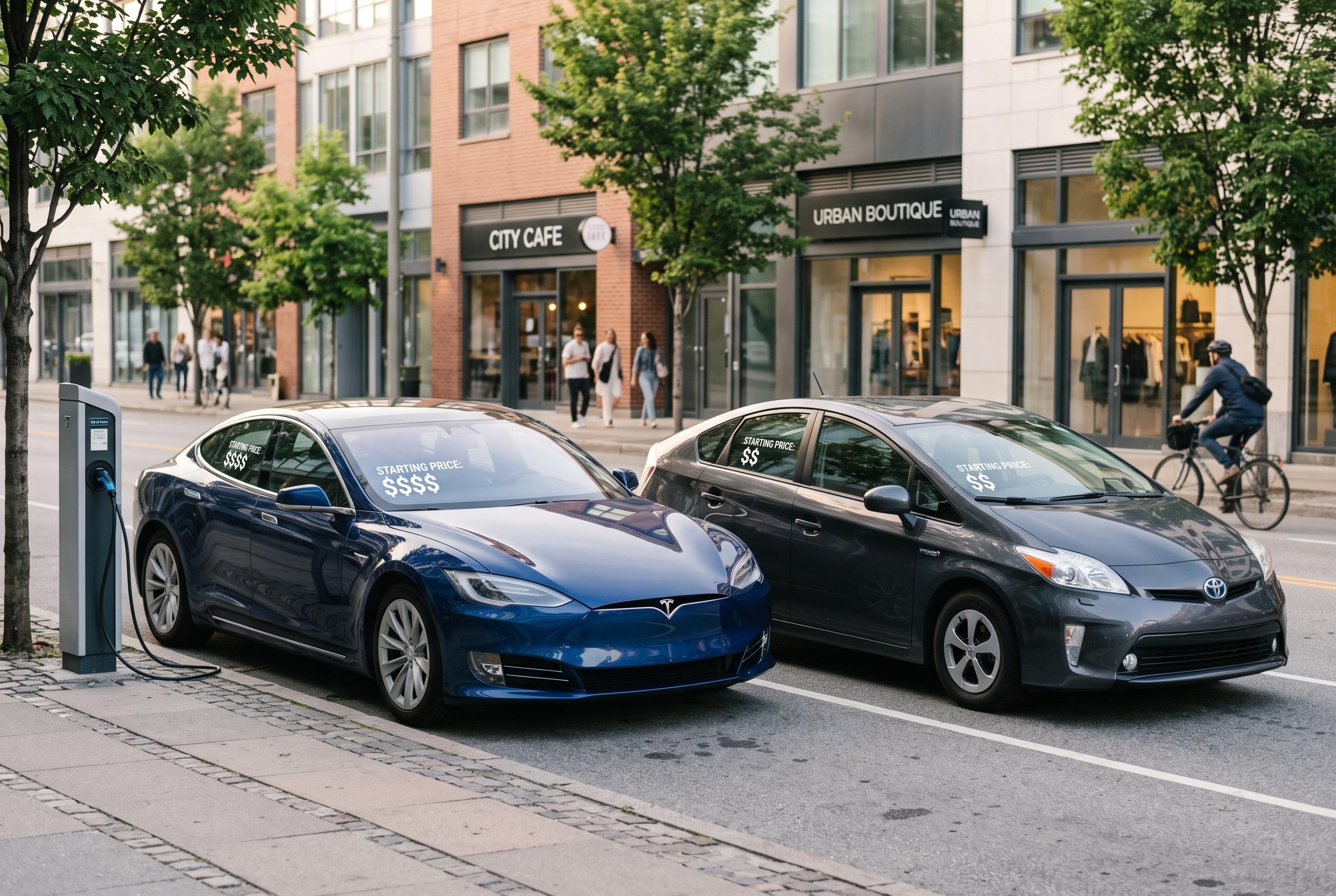

Global electric-vehicle prices have fallen below hybrid models for the first time, driven by cheaper batteries and China’s expanding export market, signalling a major shift in the automotive landscape.
Global electric-vehicle pricing has crossed an important threshold. New industry data reported by Nikkei Asia, based on Mobility Global’s sales-weighted sticker-price analysis, suggests that the average EV sold worldwide last year cost about $37,000, below the average hybrid at $39,000. That marks a reversal of the long-standing pattern in which electrified cars carried a premium over petrol-electric models. The shift has been driven largely by cheaper batteries and the rapid expansion of lower-cost Chinese EVs in export markets.
The biggest structural change has come from battery economics. The International Energy Agency said in its Global EV Outlook 2025 that battery pack prices continued to fall sharply, with China seeing the fastest declines. It said battery prices in China fell nearly 30% in 2024, compared with 10% to 15% in Europe and the United States. The agency also said lithium iron phosphate, or LFP, batteries are roughly 30% cheaper per kilowatt-hour than other chemistries, helping reduce vehicle costs.
China’s role now extends beyond components to finished cars. The Carscoops report said EV exports from China rose from fewer than 100,000 units in 2020 to 1.64 million last year. Le Monde has separately reported that Chinese brands now account for two-thirds of global EV sales, backed by automation-heavy factories, scale in battery production and extensive state support. That industrial base has made Chinese EVs the main force pushing average prices down in many markets.
Hybrids, by contrast, have not followed the same path. Mobility Global’s figures show average hybrid prices rising 16% over the same period in which EV prices fell 9%. In the United States, Recharged estimated that the average new EV transaction price was still about $55,500 in late 2024, above the overall market average of just under $49,800. It also noted that mainstream hybrids often begin in the low $30,000s, while comparable EVs remain several thousand dollars higher before incentives.
Even so, the long-term economics continue to favour electrification for many buyers. Recharged said EVs can deliver lower five-year ownership costs because fuel and maintenance are usually cheaper than for hybrids. That matters more when oil prices rise, as the Carscoops report noted in connection with tensions in the Middle East. The result is a market in which upfront pricing, running costs and battery chemistry are all reshaping the comparison between hybrids and electric cars.
Disclaimer: This content is intended for informational purposes only. Readers are advised to exercise their own judgement, conduct due diligence, or consult a qualified expert before acting on any information provided.