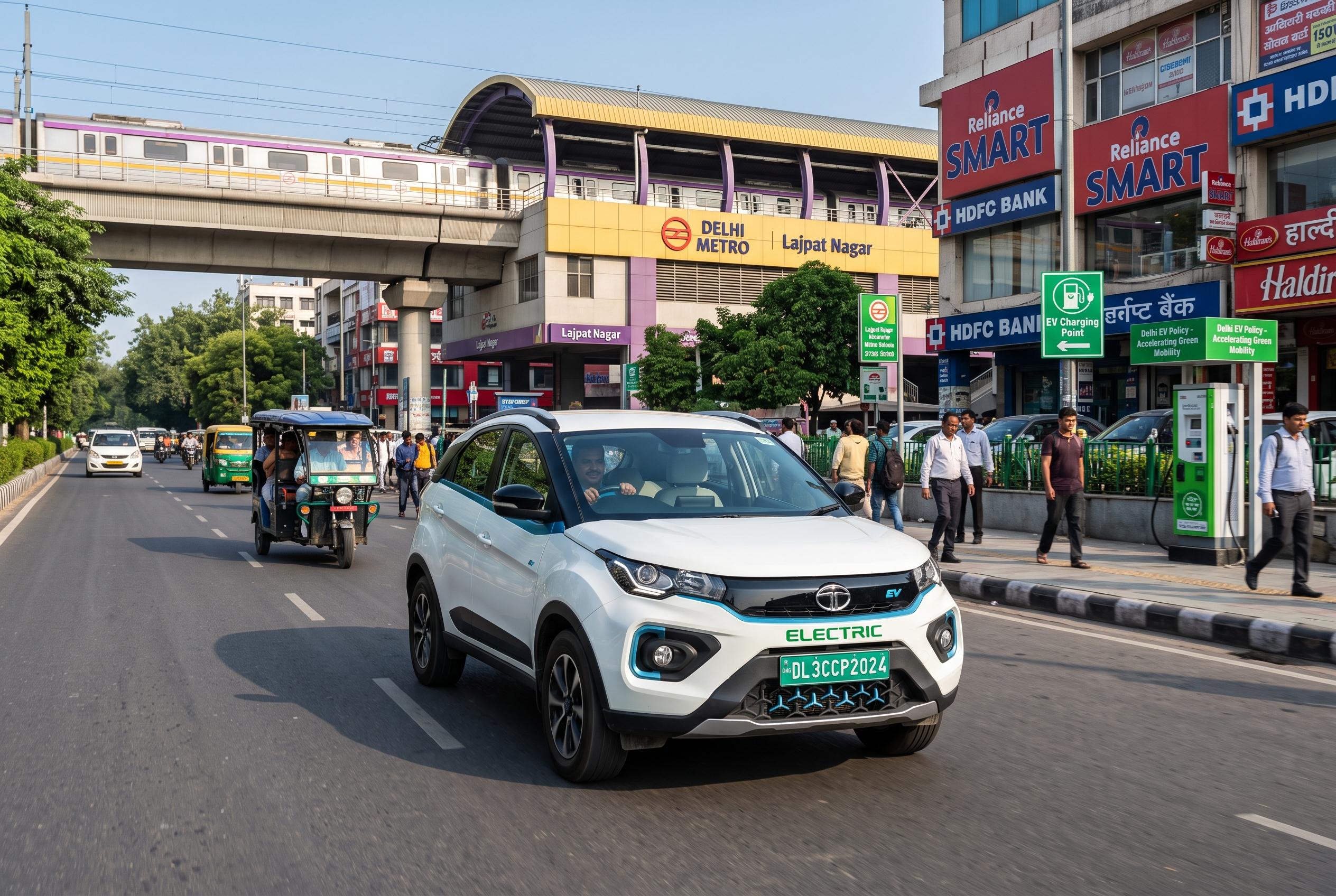

Delhi’s new electric vehicle policy accelerates adoption of clean energy transport, yet its limited scope risks perpetuating existing mobility models instead of reshaping them for a sustainable future.
Delhi’s latest electric vehicle policy is a substantial intervention, but it is also a reminder that cleaner drivetrains do not automatically produce a fairer transport system. The capital has set out a mix of incentives and deadlines designed to speed the shift from petrol and diesel vehicles, with the government saying the policy was notified on June 30 and took effect on July 1, 2026. It is intended to improve air quality and build a stronger electric mobility market, but its real significance lies in how far it goes beyond subsidy and how far it still leaves the underlying structure of travel untouched.
From January 1, 2027, newly registered three-wheelers and light goods vehicles in Delhi are expected to be electric, while the mandate for new two-wheelers is due to follow in April 2028. The policy also offers first-year purchase incentives of up to ₹30,000 for electric two-wheelers and ₹50,000 for e-autos. Electric cars priced up to ₹3 million receive road-tax and registration-fee exemptions, while owners scrapping older cars may get ₹100,000. Charging infrastructure, battery recycling and electric buses are all part of the package, according to reporting on the policy by Indian media.
That mix of carrots and deadlines marks a clear shift from India’s national PM E-DRIVE approach, which relies more heavily on incentives than compulsion. Delhi’s draft and final policy documents, as reported by Livemint, The Times of India, Business Standard and other outlets, show a sharper emphasis on regulatory pressure, particularly for vehicle categories that dominate road use and urban pollution. The government has argued that the policy is aimed at improving air quality, accelerating adoption and building a more reliable EV ecosystem.
The policy’s strongest point is that it focuses on the vehicles that matter most in daily urban traffic: two-wheelers, three-wheelers, light commercial vehicles and buses. Delhi has identified vehicles as a major contributor to winter pollution and says two-wheelers make up roughly two-thirds of its vehicle stock. That focus is sensible. Battery-electric vehicles remove tailpipe emissions and are generally more energy efficient than petrol or diesel equivalents. An India-specific review by the International Council on Clean Transportation and IIT Roorkee, cited in the lead article, supports early deployment of battery-electric vehicles while also showing how much depends on the power mix and actual operating conditions.
Yet electrification does not remove the broader costs of car-centred mobility. The lead article notes that India’s grid still relies heavily on coal, with the Central Electricity Authority saying coal supplied about seven-tenths of electricity during 2025-26 up to January. It also points out that batteries depend on mineral supply chains associated with water stress, land conflict and difficult labour conditions. The International Energy Agency has warned that much of current lithium and copper production is concentrated in stressed regions. That means some environmental harm is moved away from Delhi’s streets rather than eliminated.
There is also a distributional problem. A tax break for an electric car worth up to ₹3 million mainly benefits households that already have income, parking and charging access. By contrast, delivery workers and auto drivers face debt, weak resale values, charging delays and lost earnings while their vehicles are off the road. Delhi’s Gig Workers Association has called for interest-free loans, higher subsidies, affordable charging, battery swapping, social protection and cost-sharing by platform companies. Its argument is straightforward: the costs of transition should not be shifted onto workers least able to absorb them.
Charging access illustrates the same gap between policy design and practical use. More chargers on paper do not help if they are unreliable, too expensive or poorly placed. The Institute for Energy Economics and Financial Analysis found that nearly 84 per cent of the public chargers in one representative Delhi sample were not functioning, mainly because of theft and inadequate maintenance. The policy asks Delhi Transco Limited to develop service standards, but success will depend on uptime, affordability and location, not simply on counting plugs in the ground.
The deeper issue is that Delhi is still trying to improve an existing mobility model rather than reshape it. The policy gives clear weight to replacing internal combustion vehicles with electric ones, but a broader transition would also reduce unnecessary motor travel, shift more trips to buses, the Metro, walking and cycling, and treat mobility as a public service rather than a consumer good. The Intergovernmental Panel on Climate Change has found that moving journeys from cars to buses or rail can cut emissions and costs together. Delhi’s electric bus plans matter, but electrifying buses is not the same as ensuring frequent, affordable and reliable service across the city.
A more complete approach would link support to income and livelihood, expand concessional finance and social protection for workers, require platforms to share conversion costs and make charging reliable outside gated housing. It would also place limits on the size and use of private electric cars through parking and congestion measures, while accelerating grid decarbonisation and supply-chain accountability. The European Union’s 2023 battery regulation offers one model by going beyond tailpipe emissions to include carbon disclosure, recycled content and mineral recovery, although even that framework has been delayed in parts. Delhi’s policy is a serious beginning, but it will remain incomplete unless it changes not only the engine but the direction of travel.
Disclaimer: This content is intended for informational purposes only. Readers are advised to exercise their own judgement, conduct due diligence, or consult a qualified expert before acting on any information provided.