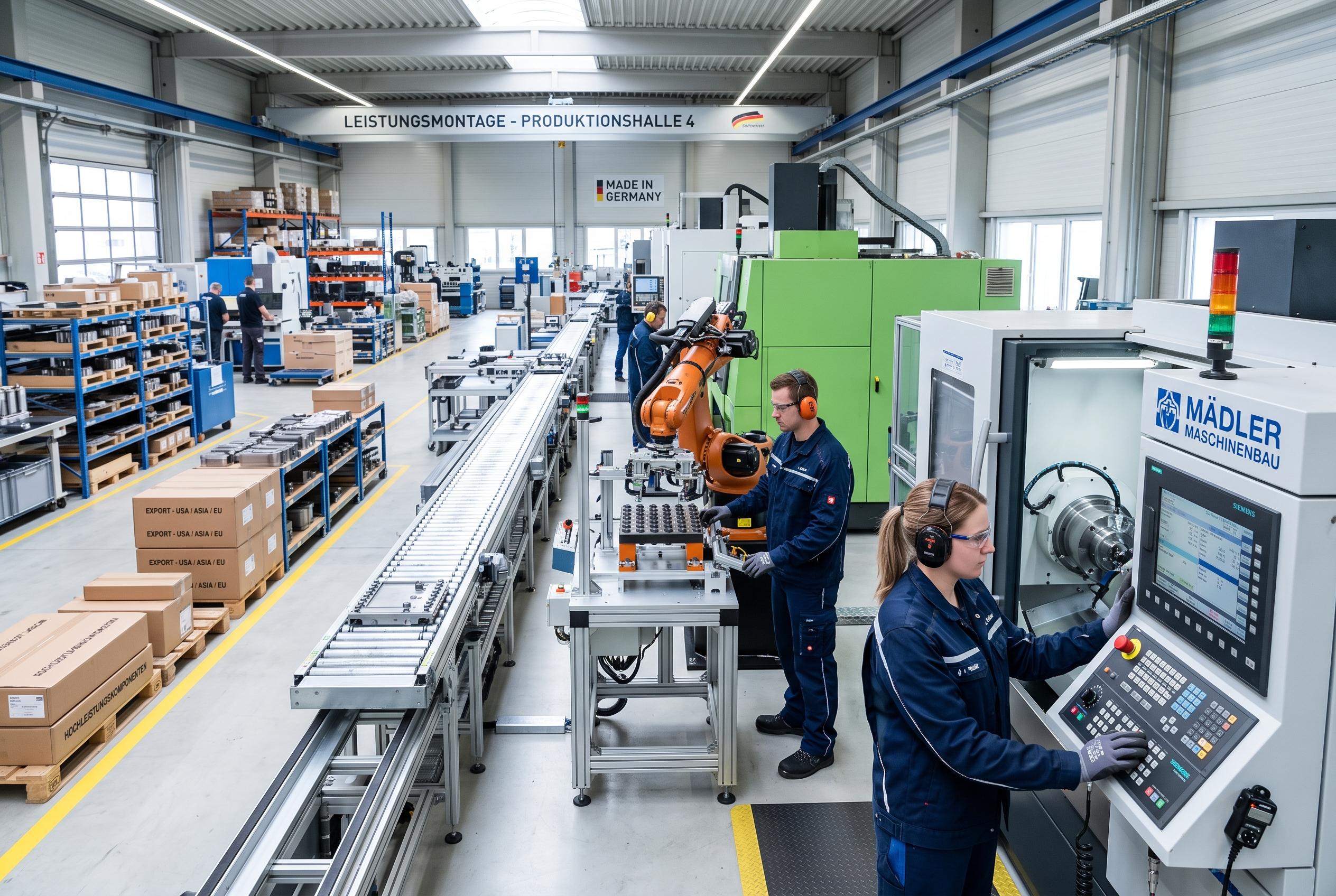

Manufacturing activity across the euro area accelerated in July, with Germany posting its strongest expansion in months, driven by increased output and improved exports, though the outlook remains uncertain amid weak new order growth and staffing declines.
Manufacturing activity across the euro area strengthened in July, with S&P Global’s flash survey showing the Eurozone manufacturing PMI edging up to 52.0 from 51.4 in June. That was the sixth straight month above the 50 threshold that separates expansion from contraction. The stronger reading was driven by faster output growth, which rose at its quickest pace in about four-and-a-half years, while business sentiment improved modestly. Yet the survey also pointed to a less certain near-term outlook, as new order growth remained weak and staffing levels continued to fall, suggesting the recovery may still be fragile.
Germany posted a sharper improvement. The country’s manufacturing PMI rose to 52.2 from 50.3 in June, its strongest reading in four months and above expectations. According to S&P Global, production increased at the fastest pace in nearly four-and-a-half years, helped by stronger order inflows, higher capacity use and front-loading activity. Export demand also improved, with the pace of growth in overseas sales reaching its best level since February 2022. The broader German economy also returned to expansion in July, with the composite output index rising to 51.2, as manufacturing offset continued weakness in parts of the services sector.
Inflation pressures eased even as activity improved. TradingEconomics’ summary of the euro area survey said input cost inflation moderated in July, though it remained elevated, while manufacturers’ confidence edged higher. In Germany, input costs and output prices both rose more slowly than in the previous month. The eurozone survey also showed firms rebuilding inventories for the first time in three-and-a-half years, helped by steadier supply chains. That detail matters for electronics and industrial buyers because it signals that the factory rebound is being supported not only by demand but also by easier logistics and less disruption in sourcing.
The July data fit into a mixed global manufacturing backdrop. The lead digest said US factory activity remained in expansion, with S&P Global’s PMI unchanged at 53.9, while ISM’s separate gauge rose to 55.6. By contrast, China’s official manufacturing PMI slipped back into contraction at 49.2, even as a private-sector measure remained in expansion at 50.9. Taken together, the figures suggest Europe’s industrial recovery is gaining some momentum, but the uneven picture across major economies and the still-muted new order trend leave the outlook for the second half of the year uncertain.
Disclaimer: This content is intended for informational purposes only. Readers are advised to exercise their own judgement, conduct due diligence, or consult a qualified expert before acting on any information provided.