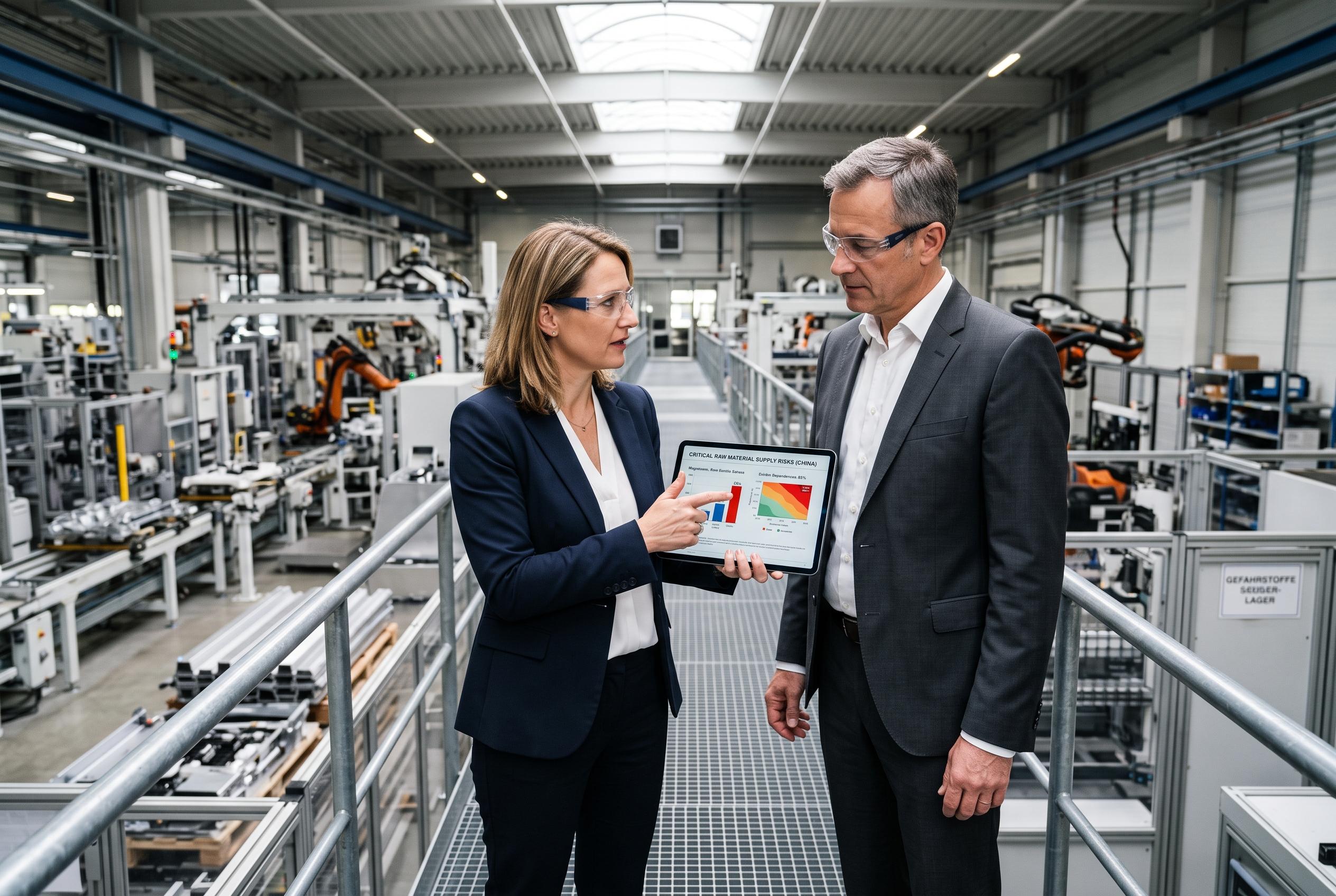

A new survey indicates that six in ten German companies are concerned about potential production disruptions due to China’s increased export restrictions on key raw materials, prompting industry to seek alternative sources and solutions.
China’s tightening grip on key raw materials is deepening anxiety across German industry, with a new survey by the German Economic Institute suggesting that 6 in 10 companies exposed directly or indirectly to critical inputs fear production stoppages or delays if Beijing widens its export controls. The concern centres on materials such as lithium, gallium and rare earths, which are essential to modern manufacturing.
The institute’s poll of about 900 companies found that nearly 90% expect procurement costs to rise further, 7 in 10 anticipate supply bottlenecks and 40% worry they could lose customers if shortages drag on. The pressure is especially acute in metalworking, electrical engineering and vehicle manufacturing, where more than one in four firms depends on rare earths and other critical materials.
China’s leverage stems from its dominant position not only in mining but also in processing. In April 2025, the Chinese commerce ministry imposed export restrictions on seven rare earth elements and magnets, including dysprosium, terbium and scandium, all of which are important to defence, energy and automotive supply chains, according to the Centre for Strategic and International Studies. The think tank also said restrictions on gallium remain a live problem for US industry despite the recent trade truce between Washington and Beijing.
Companies are not waiting passively. The German survey found that 90% of industrial firms have already tried to reduce risk through measures such as better material efficiency, longer-term supply contracts and broader supplier networks. Even so, many say they would pay more for secure supplies outside China, with 41% willing to pay significantly more and another 42% prepared to pay a little more. Adriana Neligan, an economist at the institute, said China is using its resource power strategically and warned that supply failures can quickly turn into production problems. She argued that companies need support from policymakers as well as stronger mining and recycling capacity in Europe.
Disclaimer: This content is intended for informational purposes only. Readers are advised to exercise their own judgement, conduct due diligence, or consult a qualified expert before acting on any information provided.