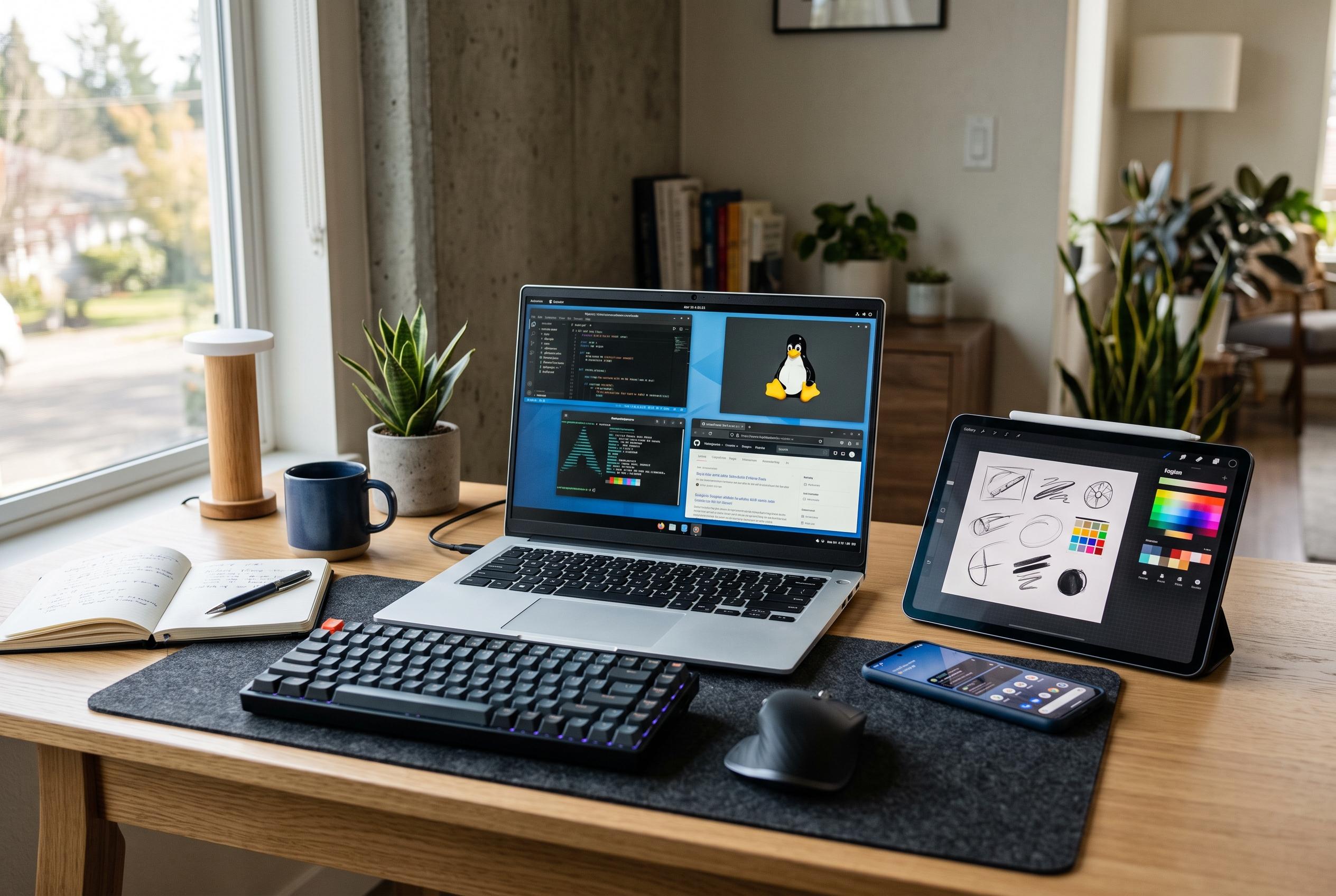

Emerging growth in Linux adoption and the rise of tablets and mobile devices signal a potential decline in Windows’s grip on the next generation of users, challenging Microsoft’s long-held dominance on the desktop.
Microsoft’s long-run dominance on the desktop is no longer as secure as it once seemed. The company still controls the operating system on most work PCs, but the broader computing market has moved on around it. Smartphones reshaped everyday computing years ago, and now the threat is more subtle: younger users may simply reach adulthood without ever needing to learn Windows properly.
One reason is Linux, which is pushing further into mainstream use. Phoronix reported that Steam’s Linux share was 1.38% in December 2022, while Tom’s Hardware said Linux reached 3% of the desktop market in July 2023 and 4.44% by August 2024. That growth is still modest, but it points to a platform that is becoming easier to recommend, helped by better hardware support, more polished distributions and stronger gaming compatibility.
The gaming angle matters because it lowers the barriers for ordinary users. Valve’s Steam Deck and SteamOS have helped normalise Linux on devices people actually buy and use, not just on hobbyist machines. As Tom’s Hardware noted, some analysts even expected Linux to approach 5% desktop share in early 2025. That would still leave Windows far ahead, but it would mark steady erosion rather than a novelty surge.
Apple and Google are also shaping the next generation of computer users. Students increasingly begin with Chromebooks in school, then move to Macs, iPads or Google’s newer laptop ambitions rather than Windows machines at home. Apple’s lower-priced MacBook Neo and Google’s premium Android-based laptops, as described in the supplied material, both aim at buyers who might previously have defaulted to Windows. If those users build familiarity elsewhere, Microsoft risks losing them before they ever become independent PC shoppers.
Windows itself is not standing still, but its problems have been costly. Microsoft has promised to remove some of Windows 11’s more irritating behaviour, including intrusive search, forced-feeling updates and heavier AI promotion, while also improving setup and performance on low-memory systems. Even so, the wider complaints remain: account sign-in requirements, data collection, bloatware from hardware partners and the absence of a clear Windows 12 plan. That combination leaves Microsoft with a familiar danger. It is not merely defending market share; it is trying to avoid becoming irrelevant to a generation that may never see Windows as the default choice.
Disclaimer: This content is intended for informational purposes only. Readers are advised to exercise their own judgement, conduct due diligence, or consult a qualified expert before acting on any information provided.