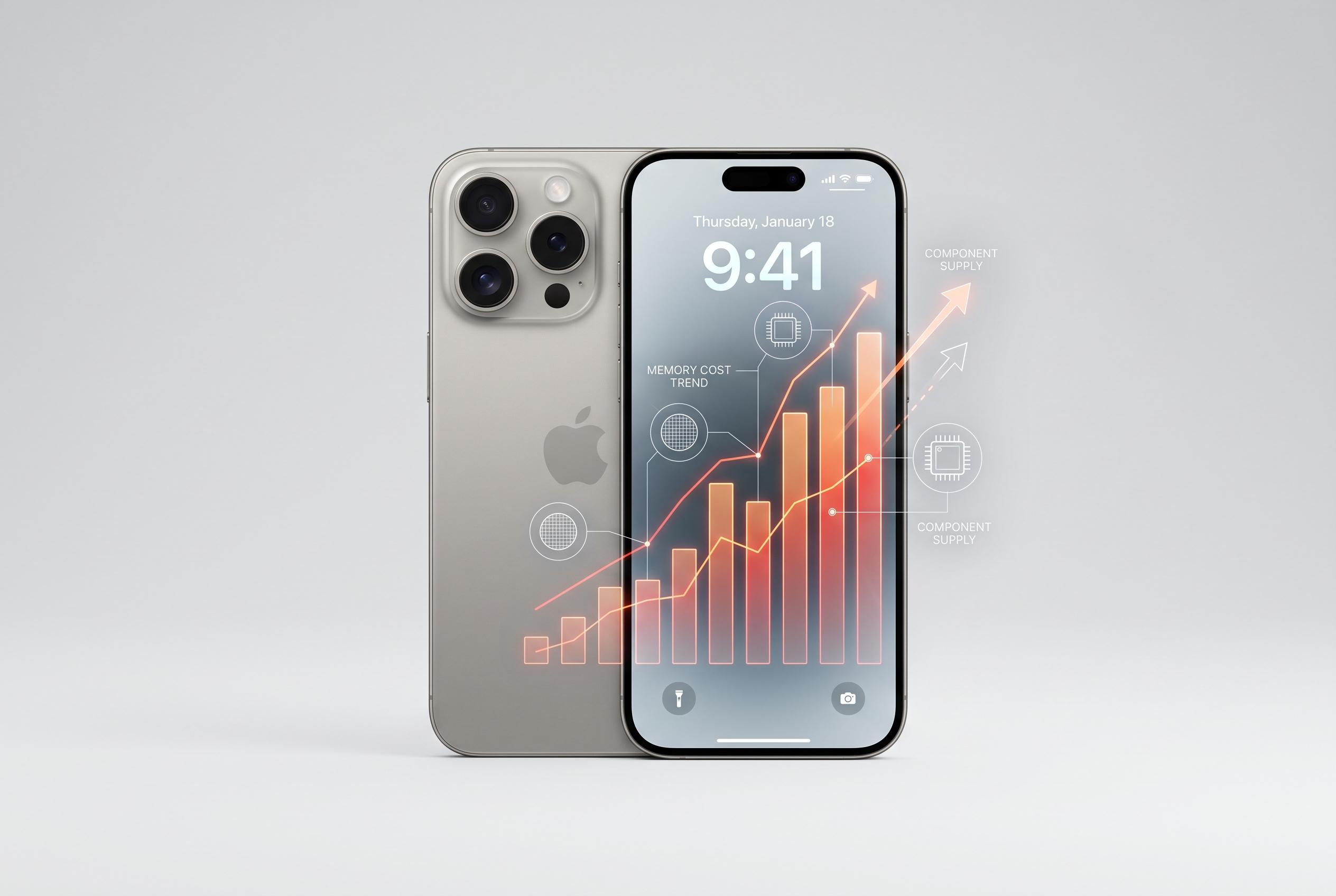

Apple faces unprecedented challenges as memory components become the most expensive part of the iPhone 18 Pro, driven by industry-wide shortages and price surges, potentially affecting performance and pricing strategies.
Apple is heading into the iPhone 18 Pro launch facing an unusual problem: memory now appears to be the most expensive part of the device. TrendForce said on August 10 that memory’s share of the 256GB iPhone 18 Pro’s bill of materials has climbed to about 34% in the third quarter of 2026, overtaking both the A20 Pro processor and the OLED display. The firm estimates the total component cost of that model is roughly 38% higher than the equivalent iPhone 17 Pro, with the increase driven largely by a sharp rise in memory prices.
The pressure is coming from the same industry shift that has reshaped the wider semiconductor market. DRAM makers have channelled more output into high-bandwidth memory for AI accelerators, leaving less capacity for the LPDDR5X chips used in smartphones. Tom’s Hardware reported that Apple is also contending with a packaging bottleneck, with about $1 billion worth of iPhone 18 Pro processor wafers waiting for final assembly because of memory shortages. Apple draws most of its DRAM from Micron, with additional supply from SK Hynix and Samsung, but those suppliers have limited spare capacity.
That shortage is now affecting storage choices as well as memory costs. Supply-chain reports cited by MacRumors, AppleInsider and other industry outlets suggest the 1TB and 2TB iPhone 18 Pro models may use QLC NAND instead of the faster TLC NAND expected in the 256GB and 512GB versions. The distinction matters because QLC stores more data per cell but generally delivers weaker random read and write performance. In other words, buyers paying for the highest-capacity models may be getting slower storage at the same time as manufacturing costs rise.
The cost pressure is not limited to Apple’s Pro line. Counterpoint Research estimated that NAND flash alone could cost more than $250 in a 1TB iPhone 18 Pro Max, while TechInsights has put the DRAM package cost in the 256GB iPhone 18 Pro at about $145, compared with roughly $39 for the same memory in the iPhone 17 Pro. MacRumors also reported that Apple chief executive Tim Cook has acknowledged rising memory costs and that the company is still working through pricing decisions ahead of the September launch. Analysts quoted by the same outlet have said the company may try to absorb some of the increase rather than pass it all on to buyers.
For consumers, the result may be a more complicated buying decision than in earlier iPhone cycles. A higher storage tier may no longer mean better value or better performance, if the premium models do in fact switch to QLC flash. Apple is also said to be exploring alternative supply options, including China’s CXMT, although that route is complicated by US policy debate and export-control issues. TrendForce expects the broader memory shortage to persist well into 2027 and possibly until new capacity arrives later in the decade, suggesting that the pricing pressure is likely to remain a problem well beyond this launch window.
Disclaimer: This content is intended for informational purposes only. Readers are advised to exercise their own judgement, conduct due diligence, or consult a qualified expert before acting on any information provided.