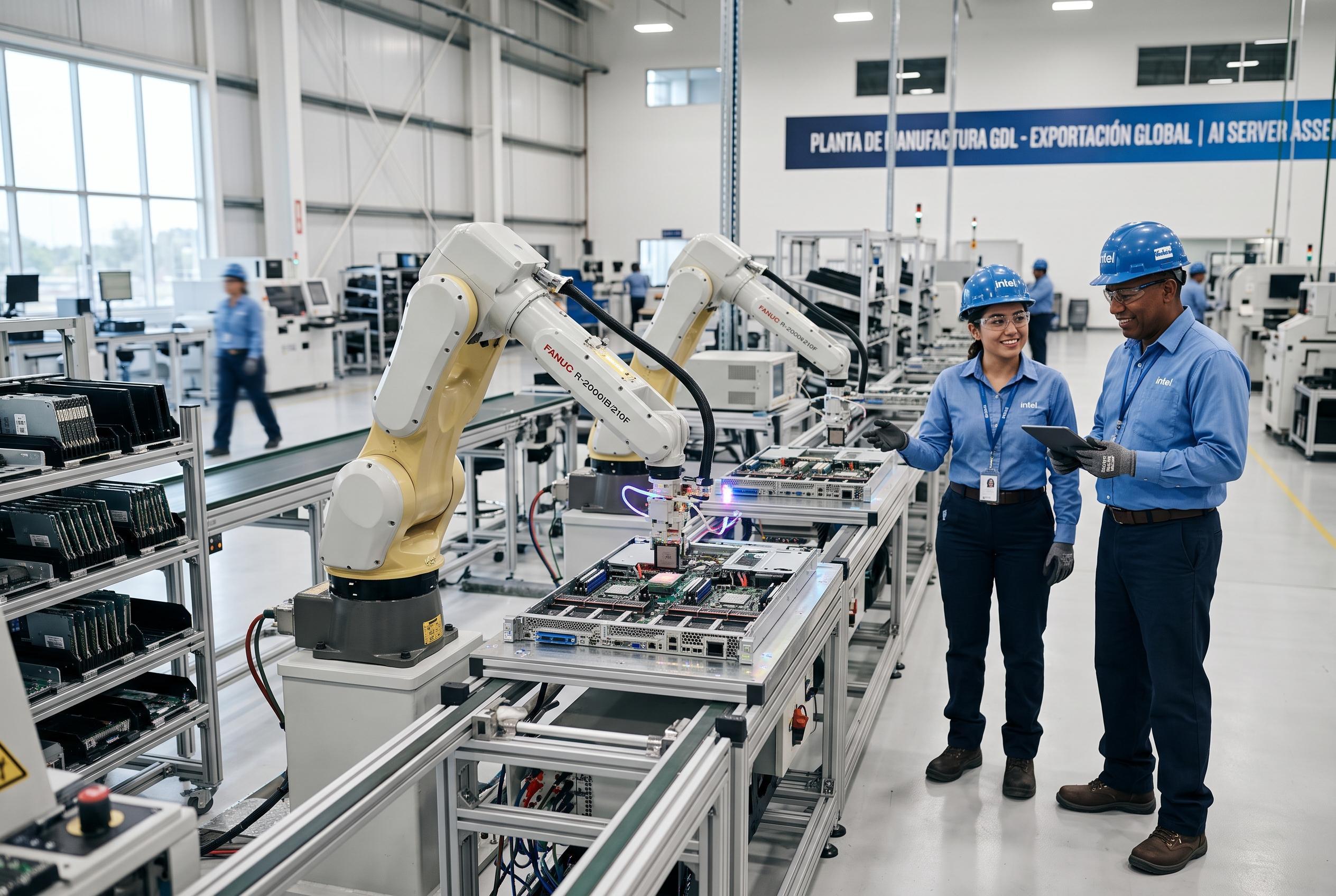

Mexico has become the world’s second-largest exporter of essential AI components, yet its domestic adoption of AI remains limited, highlighting a growing export-driven AI economy with untapped potential for growth at home, according to the World Bank’s 2026 report.
Mexico has emerged as an unexpected linchpin in the artificial intelligence supply chain, ranking as the world’s second-largest exporter of essential AI components, according to the World Bank’s World Development Report 2026. Only China ships more. For now, Mexico sits ahead of manufacturing rivals including Malaysia, Vietnam and Thailand, and its role spans hardware, semiconductors, electronics and equipment used in data centres.
Yet the same report draws a sharp distinction between exporting the parts that power AI and actually using the technology at scale. Mexico’s industrial strength has not translated into broad domestic adoption. According to the World Bank, the country is missing much of the productivity gain that AI could deliver because firms are not integrating it deeply into production processes. Small businesses are the main exception, but even there uptake remains limited.
The contrast matters because AI investment is accelerating and data-centre construction is expanding, which should favour countries with strong positions in global supply chains. The World Bank argues that if infrastructure, connectivity and skills improve, AI could help developing economies make in a decade the kind of progress that might otherwise take a century. It also says the risk of job displacement is lower in lower- and middle-income economies, where about 4.5% of jobs are exposed, compared with 14.2% in high-income countries.
There is also a wider geographic divide in AI use. The World Bank’s method, which draws on ChatGPT usage per internet user, places Mexico and Spain in a group of countries that export heavily but do not rank among the top 20 users. A separate Microsoft study based on its own tools paints a somewhat different picture, placing Spain above both the United States and Mexico in usage. Even so, the broader point remains unchanged: Mexico is helping build the AI economy far more than it is benefiting from it at home.
Disclaimer: This content is intended for informational purposes only. Readers are advised to exercise their own judgement, conduct due diligence, or consult a qualified expert before acting on any information provided.