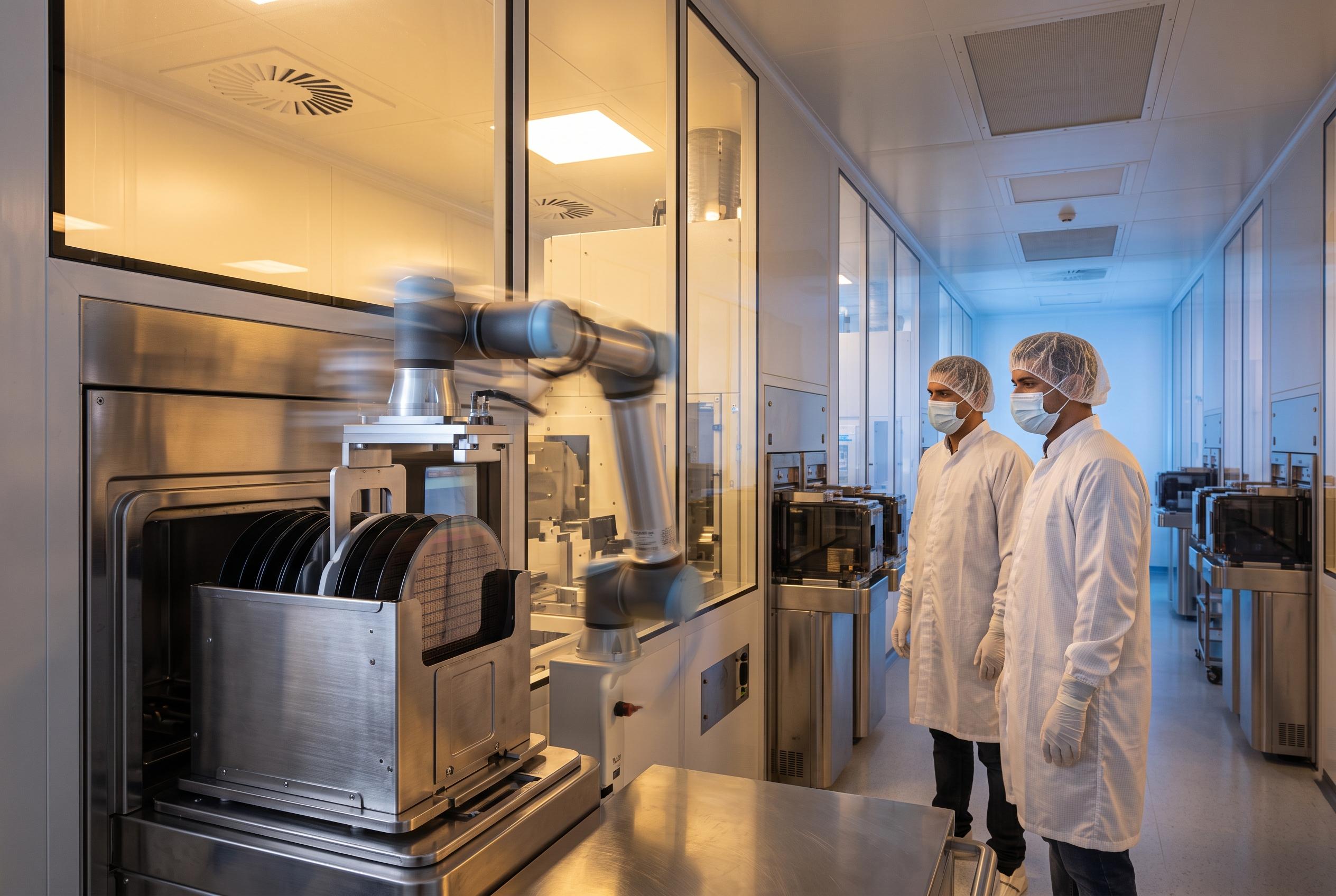

Micron’s Gujarat facility secures approval to operate 12-hour shifts, marking a pioneering move in Indian semiconductor manufacturing to boost output and protect production yields amid global chip demand.
Micron has secured an unusual concession in Gujarat that will allow its Sanand semiconductor plant in India to run 12-hour shifts, a move reported as the first of its kind in the state. The decision, covered by Desh Gujarat and later reported by Indian technology and business outlets, is intended to support the demands of chip assembly and testing, where production lines often need to operate with minimal interruption.
According to reporting from The New Indian Express, longer shifts are expected to reduce the number of handovers between teams and limit the movement of staff across clean-room boundaries, which can help protect yield and cut downtime on expensive equipment. The company is also trying to lift output across NAND, DRAM and HBM as it works to meet demand from data-centre customers.
The arrangement still sits within India’s labour rules. The weekly working cap remains 48 hours, meaning employees cannot be scheduled for more than four 12-hour shifts in a week under the new system. Reports from Deccan Founders, The Economic Times and India Today said the change is permitted under the Occupational Safety, Health and Working Conditions Code, with workers required to give written consent before joining the extended-shift roster.
The Sanand site is becoming central to Micron’s manufacturing network. Desh Gujarat reported that the first phase includes more than 46,000 square metres of clean-room space, including one of the world’s largest single-storey clean rooms for memory assembly and testing. The press information bureau in India has said the plant is ultimately expected to reach a weekly output of 14 million units, while Business Standard said it could account for as much as 10% of Micron’s shipped production when fully loaded.
That expansion forms part of a wider diversification drive. Simply Wall St said Micron has committed $2.75bn to its India manufacturing push as it seeks to reduce reliance on any one country while meeting demand driven by artificial intelligence. TrendForce has noted that Micron’s footprint in India and Malaysia, together with planned sites in Taiwan, Japan and Singapore, gives it a broader regional spread than some of its South Korean rivals.
Disclaimer: This content is intended for informational purposes only. Readers are advised to exercise their own judgement, conduct due diligence, or consult a qualified expert before acting on any information provided.