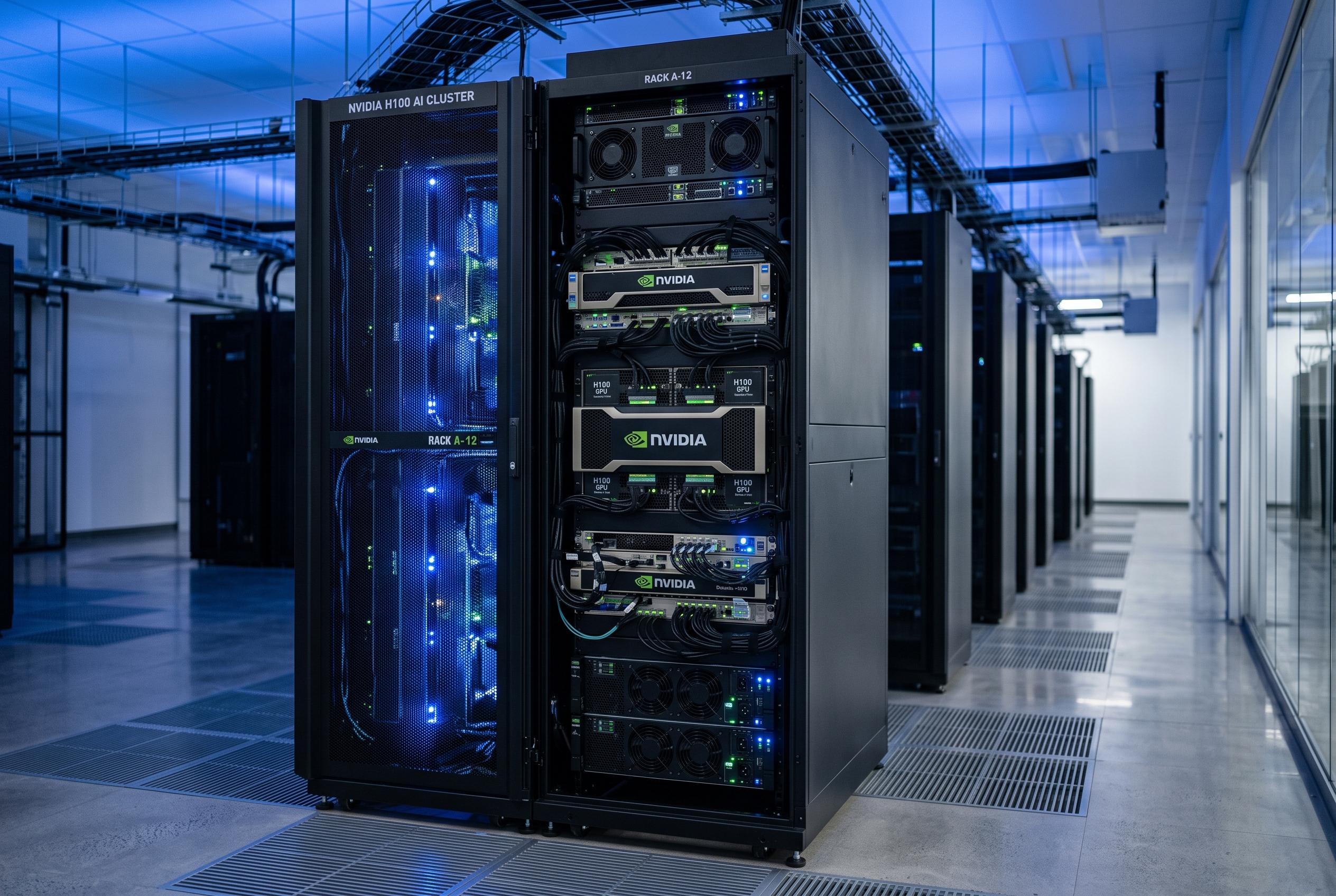

Nvidia and leading investment firms are pioneering a $500 billion funding platform that redefines AI chips as valuable assets, signalling a shift towards long-term infrastructure investment in artificial intelligence.
Wall Street is beginning to treat Nvidia’s artificial intelligence chips less like ordinary hardware and more like financeable assets, as the chipmaker and a group of major investment firms move to build a funding platform worth more than $500bn for AI infrastructure. According to Axios, the effort is aimed at helping customers pay for the data centres, power systems and computing equipment needed to run AI workloads, with pension funds, insurers and other long-term investors expected to play a central role.
The structure marks a notable shift in how AI expansion is being funded. Axios reported that Apollo, BlackRock, Blackstone, Brookfield, Goldman Sachs and KKR are among the firms involved. Their participation suggests that AI computing is increasingly being framed as a long-duration infrastructure trade rather than a short-lived technology cycle. The financing is also meant to help smaller operators compete with hyperscalers such as Alphabet, Amazon, Meta Platforms, Microsoft and Oracle, which analysts expect to keep spending heavily on AI through 2027.
For Nvidia, the appeal is strategic as well as financial. The company has spent years building CUDA, its software layer that helps make its graphics processors useful for AI training and inference, and that ecosystem has made its chips harder to replace. The Financial Times analysis cited by the lead article said Chief Executive Jensen Huang sees the new financing structures as a possible foundation for a wider asset class built around AI chips. The report also said the approach could reduce Nvidia’s need to act as a direct backer of customer borrowing.
But the arrangement is not without risk. According to the Financial Times analysis, Nvidia is still expected to absorb some early losses if chip values fall more sharply than planned, with the company effectively standing behind a floor on GPU values during the lease period. That matters because the market is betting on demand for high-end chips remaining strong long enough to justify the debt structures. Some analysts warn that this assumption may prove too optimistic if AI investment slows, hardware supply normalises or newer models require less computing power.
The broader financial logic is already spreading through the market. The Financial Times said some lenders are examining structures similar to collateralised loan obligations, in which loans tied to GPU leases are repackaged and sold to investors. That could deepen the pool of capital available for AI projects, but it also ties the sector more closely to the resale value of fast-depreciating hardware. Nvidia argues that its newest chips remain useful for longer than many expected, and that older products such as its H100 and A100 lines continue to command demand. Yet the new financing model rests on a simple question: whether the AI build-out is becoming a durable industrial platform or a highly leveraged boom built on expensive chips that may age quickly.
Disclaimer: This content is intended for informational purposes only. Readers are advised to exercise their own judgement, conduct due diligence, or consult a qualified expert before acting on any information provided.