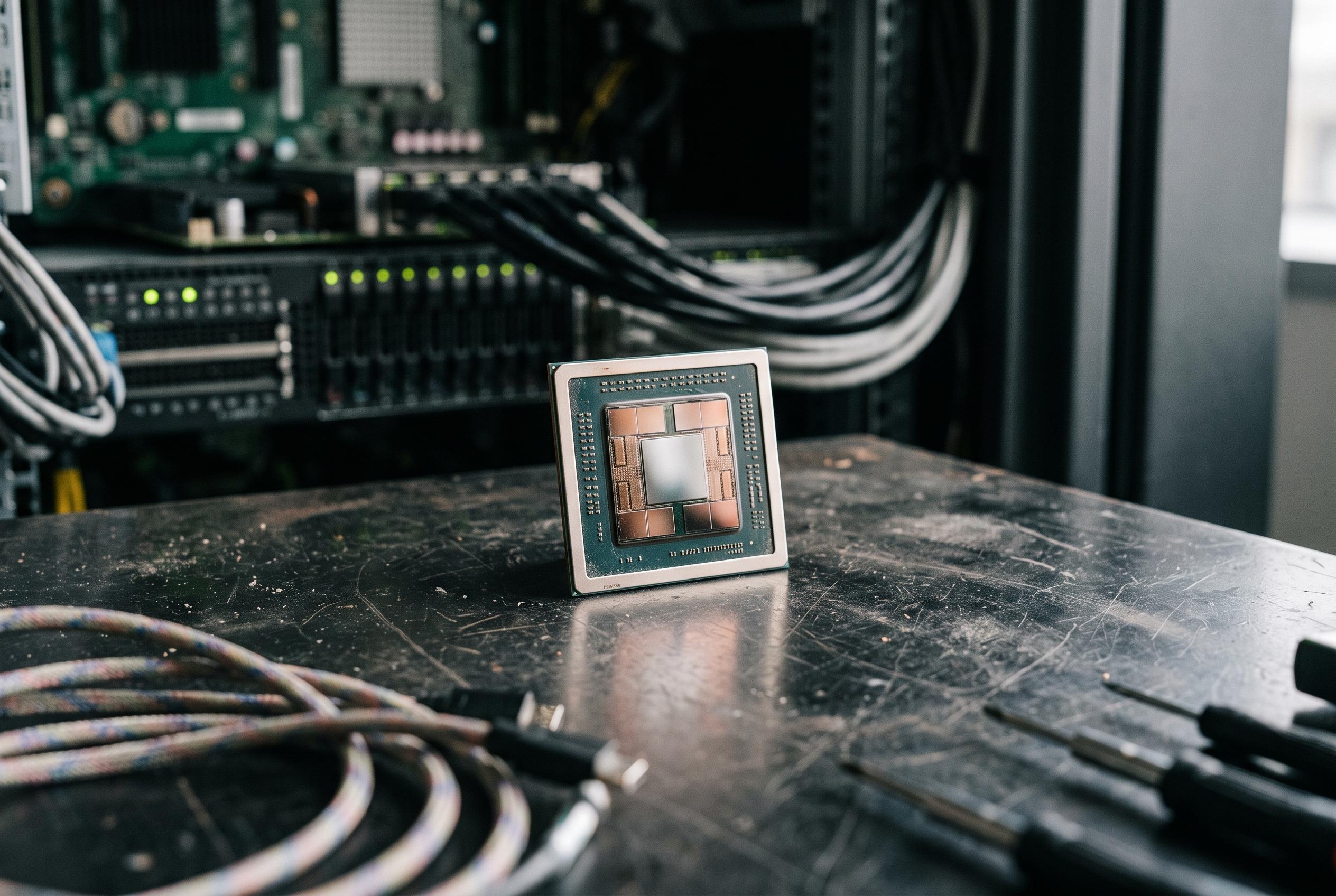

Nvidia has begun selling limited quantities of its H200 AI chips in China amid US export controls, highlighting ongoing geopolitical tensions and supply chain challenges affecting the tech giant’s recovery in the Chinese market.
Nvidia has begun selling a small number of H200 artificial intelligence chips to customers in China, marking a cautious return to a market that had been sharply constrained by US export controls. In its latest earnings report, the company said Chinese sales of H200s accounted for less than 1% of data centre revenue in the three months to 26 July, underscoring how limited the initial rebound has been.
The move follows a series of policy shifts in Washington this year. According to reporting by the South China Morning Post, the US government approved H200 exports to China in January, after earlier restrictions had blocked shipments. Those permissions were later described as allowing sales up to half of domestic US volumes, though the practical scale appears far smaller.
Nvidia chief executive Jensen Huang said in March that the company had received purchase orders from multiple Chinese customers and had restarted production for the H200 line, according to Tom’s Hardware. Around the same time, US officials said shipments had started, but only in minimal quantities. Separate reporting in May said the Trump administration had cleared around 10 Chinese firms, including Alibaba, Tencent, ByteDance and JD.com, to buy the chips, although deliveries had not yet begun.
Even with approval in hand, Nvidia has not been able to sell the full amount permitted. The company said objections from Beijing have limited demand, and it booked a $400 million charge over the past six months against excess H200 inventory. That suggests the reopening of this channel has been shaped as much by politics and supply-chain realities as by customer appetite.
Disclaimer: This content is intended for informational purposes only. Readers are advised to exercise their own judgement, conduct due diligence, or consult a qualified expert before acting on any information provided.