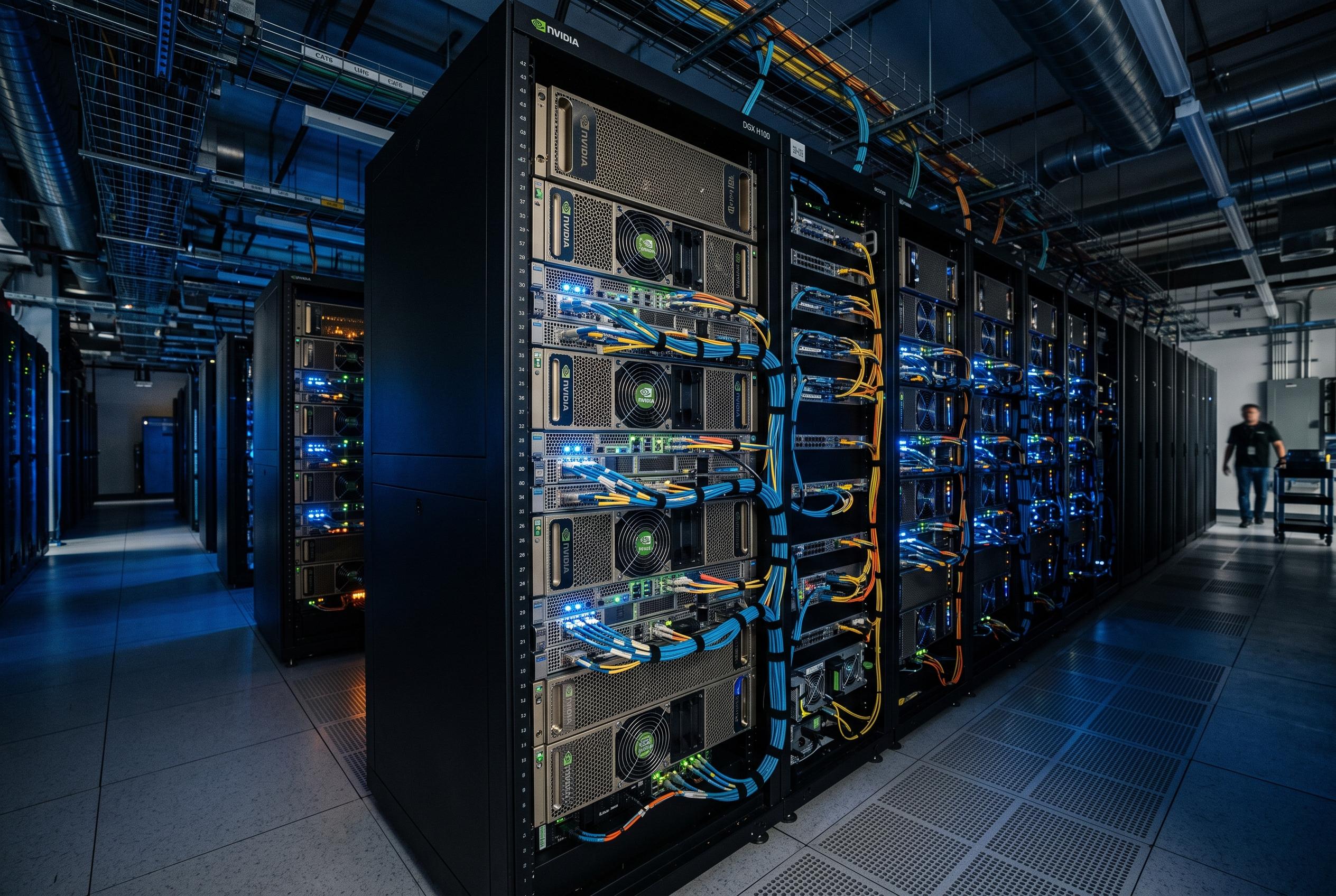

Nvidia’s latest quarterly results reveal a massive leap in revenue driven by AI demand, with the company’s data centre division surpassing previous annual sales, as it commits heavily to securing the components needed for future growth amidst rising memory costs.
Nvidia’s latest quarter was another reminder that the company has become the central supplier to the artificial intelligence build-out. Revenue reached $96.2 billion in the second quarter of fiscal 2027, more than double the level a year earlier and well ahead of the prior quarter. The scale is now so large that its data centre division alone generated $89 billion, exceeding Nvidia’s entire company-wide sales from a year ago.
The result was driven by continued demand from hyperscale cloud operators and AI infrastructure developers, who are still expanding capacity aggressively. Nvidia’s gross margin held at 75%, while operating income rose to $63.7 billion and net income reached $59.7 billion, or $2.46 a share. Revenue from hyperscale customers in the data centre business climbed to $48.7 billion, underlining how deeply the company remains tied to spending by the largest buyers of AI hardware.
The forward outlook was equally important. Nvidia guided third-quarter revenue to about $108 billion, plus or minus 2%, while assuming no compute sales to China. It also forecast gross margin of 74%, plus or minus 50 basis points, a step down from the latest quarter. Management said margins should bottom between 71% and 72% in the fourth quarter before improving in fiscal 2028. That pressure appears linked to memory costs, suggesting Nvidia is paying more for the components that support its graphics processors and leaving more pricing power with suppliers.
That dynamic matters for the wider AI supply chain. According to the company’s commentary and industry reporting, Nvidia has sharply increased long-term procurement commitments, much of them tied to memory, as it tries to secure supply for future demand. Tom’s Hardware reported that those commitments rose to $279 billion from $119 billion in the previous quarter, with a major portion linked to memory supply arrangements. The same reporting said Nvidia expects its new Vera Rubin platform to become its fastest-ramping data centre product yet, with shipments beginning in August 2026 and first commercial deployment at Microsoft. Together, the figures point to a business still growing rapidly, but one that is also spending heavily to lock in the components needed to sustain that growth.
Disclaimer: This content is intended for informational purposes only. Readers are advised to exercise their own judgement, conduct due diligence, or consult a qualified expert before acting on any information provided.