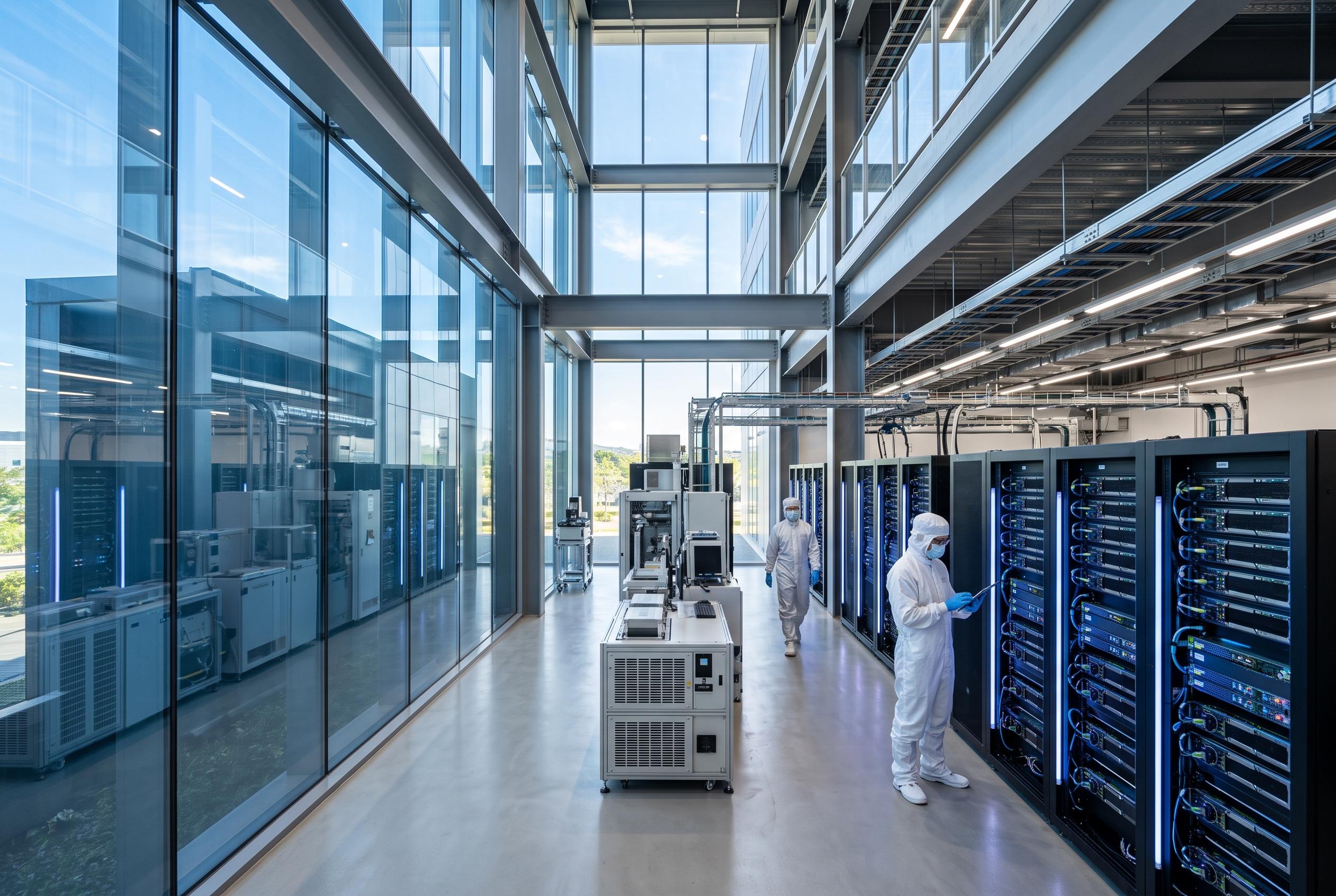

Taiwan’s exports reached their third-highest monthly total on record in July, driven by surging demand for semiconductors and AI servers, amid ongoing US trade and overcapacity concerns.
Taiwan’s exports climbed to $75.30 billion in July, the third-highest monthly total on record, as demand for semiconductors and AI servers kept the island’s technology supply chain running at full tilt, according to the Ministry of Finance. The figure extended a run of annual growth to 33 months and arrived as Taipei faces a separate US overcapacity inquiry that still has not produced a ruling.
The July tally was up 32.9% from a year earlier and trailed only March’s $80.18 billion and May’s $78.48 billion, according to the ministry. In the first seven months of 2026, exports reached $491.95 billion, up 44.7% year on year, while the trade surplus widened to $114.61 billion. The ministry said August shipments are also likely to rise further.
The strength was concentrated in two categories. Integrated circuits set a monthly export record of $26.30 billion, up 52.3% from a year earlier, while information, communications and audio-video products added $31.37 billion, a gain of 29.5%. Together, those lines accounted for 78.5% of all exports in July, underscoring how closely Taiwan’s trade performance is now tied to AI infrastructure, server hardware and semiconductor output.
The ministry said the increase reflected firm global demand for AI applications, a broader expansion in the world economy and seasonal stock-building ahead of new consumer electronics launches. The numbers also showed that not all sectors are participating equally: machinery exports rose 10.8% and electric equipment gained 34.3%, but transport vehicles and textiles declined.
Much of the export surge still runs through Taiwan Semiconductor Manufacturing Co. TSMC reported second-quarter revenue of $40.2 billion, up 36% from a year earlier, and lifted its full-year growth outlook to above 40%. It also raised 2026 capital expenditure plans to as much as $64 billion, largely to meet AI-related demand. Chief executive C.C. Wei has said demand for AI infrastructure is running ahead of the company’s own forecasts.
That boom has exposed new bottlenecks. TSMC’s CoWoS advanced packaging process, which combines logic chips and high-bandwidth memory, remains one of the key constraints on AI chip delivery. The packaging chain also depends on ABF substrates, where supply remains tight and lead times have stretched. Industry data cited by TrendForce and other analysts suggests that even with aggressive capacity expansion, the system is unlikely to loosen quickly.
Trade policy remains the biggest external risk. Taiwan has benefited from recent tariff relief under a January deal with Washington, but semiconductors and many of the island’s most important technology exports are still excluded from that arrangement. A separate US overcapacity probe launched in March has yet to announce a conclusion. Taiwanese economists have said any action would be more damaging if it extends to finished products containing chips rather than to mature semiconductor lines alone.
For now, the export data point to an economy still being pulled forward by AI demand. Taiwan’s ministry says the trend should continue into August, but the deeper question is whether the current cycle reflects durable structural growth or a temporary inventory and investment wave that could cool if hyperscalers slow spending. The July numbers suggest the former still holds, at least for now.
Disclaimer: This content is intended for informational purposes only. Readers are advised to exercise their own judgement, conduct due diligence, or consult a qualified expert before acting on any information provided.