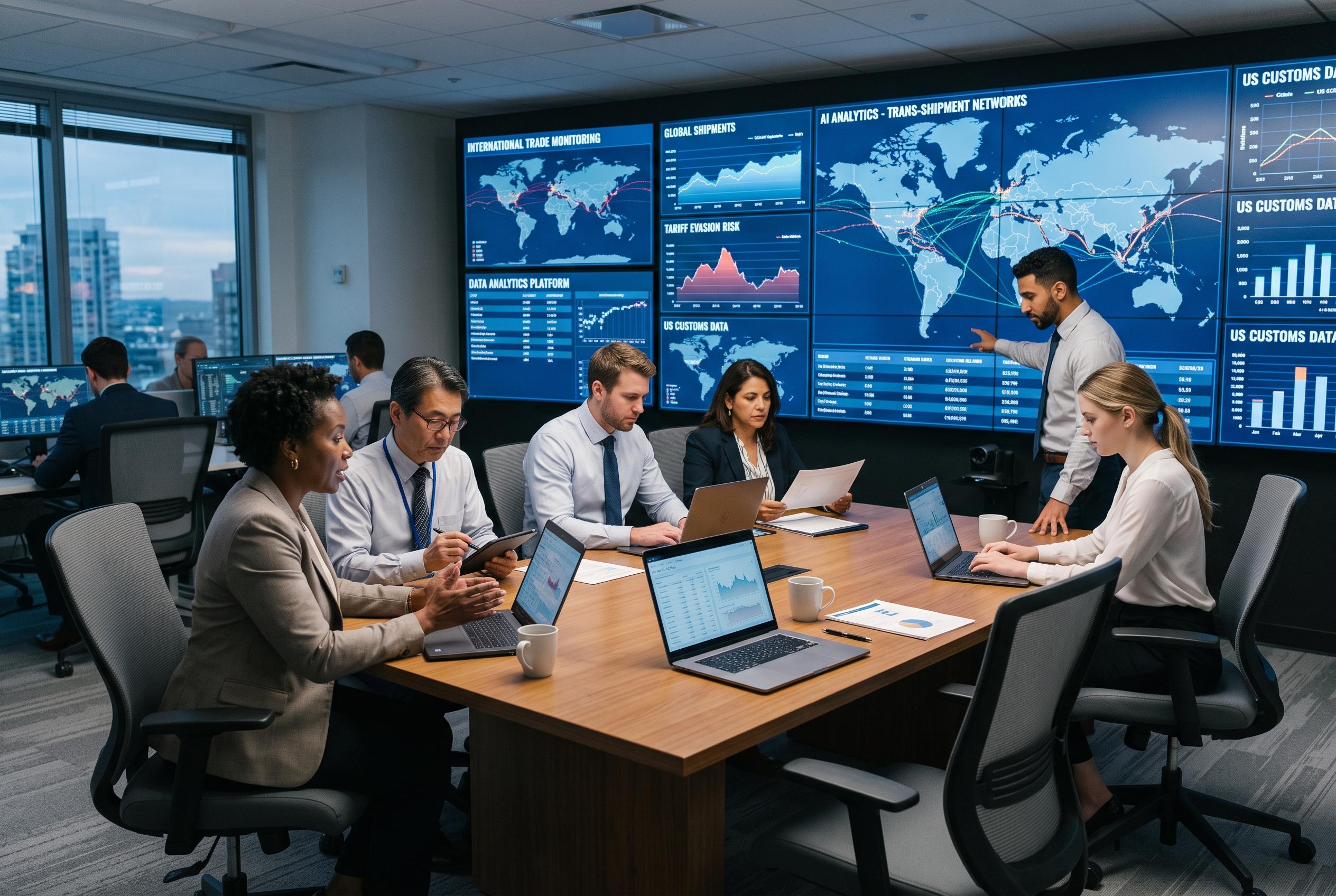

The United States has expanded its investigation into global trans-shipment schemes linked to China, targeting over 40 countries including India, as it rolls out AI tools to combat tariff evasion and protect domestic industries.
The United States has expanded its scrutiny of trade flows tied to China, accusing more than 40 countries, including India, of being part of what it describes as a shadow trans-shipment network used to sidestep American tariffs. The allegation comes as Washington prepares to deploy artificial intelligence tools to flag suspicious shipments, according to PTI and a report released by Peter Navarro, President Donald Trump’s senior trade adviser.
Navarro’s report, titled “The Great Transshipment Scam”, argues that the practice accelerated after 2018, when the Trump administration imposed Section 301 tariffs on China over trade practices it considered unfair. It puts the annual value of goods rerouted through third countries at between USD 40 billion and USD 303 billion, depending on how the estimate is calculated. Among the countries named are Mexico, Canada, the European Union, India, Japan and South Korea.
The report says the scheme works by moving Chinese goods through other jurisdictions for light processing, relabelling, repackaging or invoice changes that create the appearance of a different country of origin. It also points to manufacturing and logistics hubs with low labour costs, weaker customs oversight or favourable trade access. One section singles out India’s Pune-Gujarat-Chennai corridor, saying it absorbs pumps and compressors that would otherwise feed supply chains in US cities such as Cincinnati, Dayton and Columbus.
Washington is also preparing an AI-based system called “Detective Border” to identify goods that reach the US after being routed through third countries. According to the report, the tool would draw on shipment records, routing history, product classification, ownership links, production capacity, anomaly detection and computer vision. The aim is to help US Customs and Border Protection distinguish legitimate nearshoring and foreign investment from illegal pass-through trade and then convert those findings into enforcement measures such as duty collection, penalties and exclusion orders.
The move comes amid a broader tightening of US trade policy. Business Standard reported in March that the Office of the United States Trade Representative opened Section 301 investigations into 16 economies, including India, over claims that industrial overcapacity is harming American manufacturing. Separately, the US has also widened probes into alleged tariff evasion in sectors such as solar equipment, underscoring the extent to which trans-shipment and origin fraud have become part of a larger trade and industrial policy drive.
Disclaimer: This content is intended for informational purposes only. Readers are advised to exercise their own judgement, conduct due diligence, or consult a qualified expert before acting on any information provided.