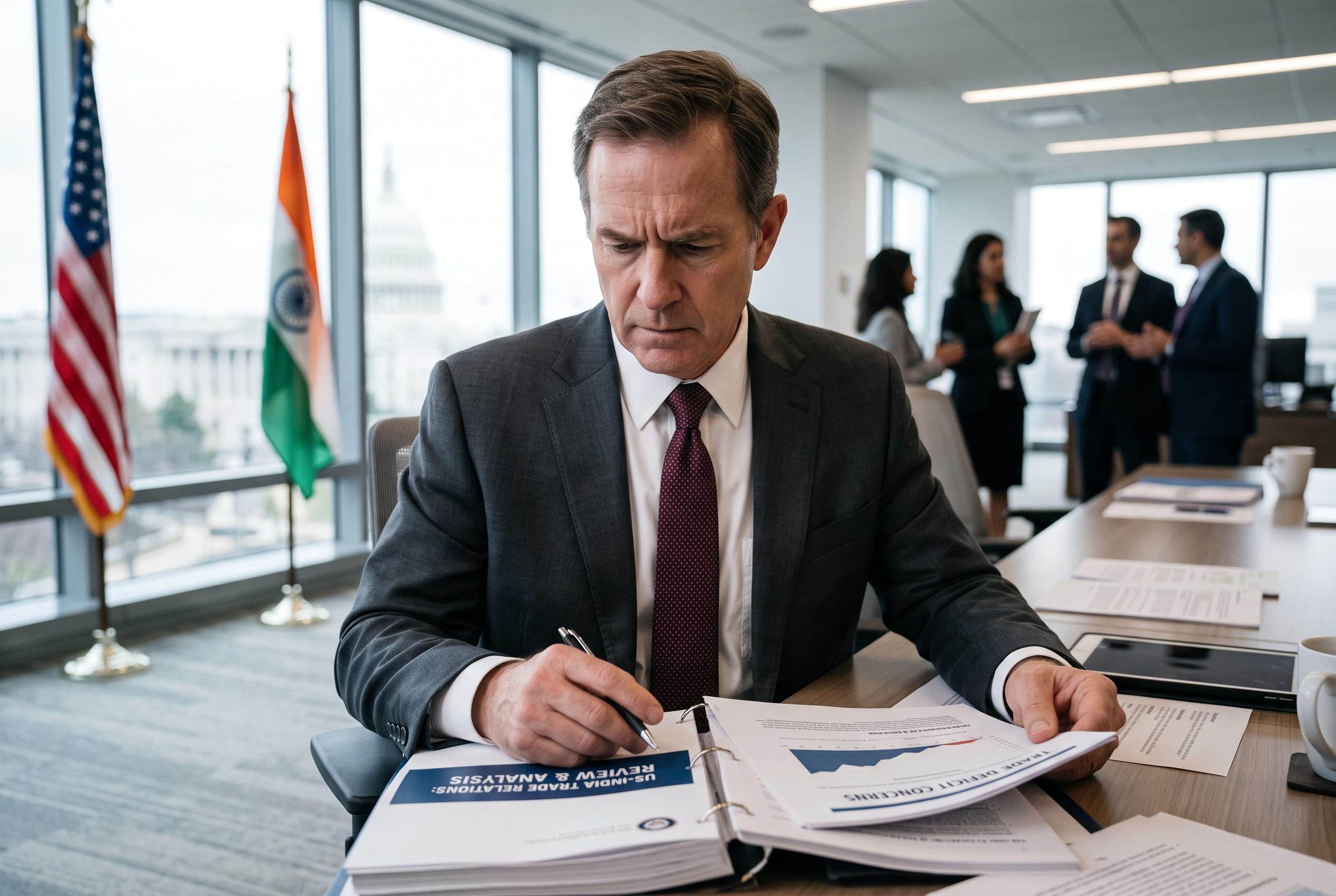

The White House classifies India within a top-tier list of nations at risk of Chinese-linked tariff evasion, prompting potential increases in customs enforcement as US-India trade talks face new challenges.
India has been placed by the White House in a top-tier category of countries it says are vulnerable to Chinese tariff evasion, raising the prospect of tighter scrutiny on shipments into the United States at a delicate moment in trade talks between New Delhi and Washington. According to the White House report, “The Great Transshipment Scam”, more than 40 countries are part of what it describes as a shadow transshipment network, with India grouped alongside other major trading economies such as Canada, the European Union, Israel, Japan, Mexico, South Korea and Taiwan.
The report argues that the risk is harder to spot in countries with large and legitimate trade flows, which it labels “Diversified Scale Leaders”. It also points to the Pune-Gujarat-Chennai industrial corridor as a staging area for pumps and compressors, drawing a comparison with manufacturing centres in Cincinnati, Dayton and Columbus. In the report’s language, these are “ugly sister cities”: foreign hubs where suspect China-linked goods may be handled on one side, and US towns making similar products on the other, losing orders in the process.
The White House defines illegal transshipment as relabelling, repackaging, re-invoicing, minor processing or false country-of-origin claims designed to secure tariff treatment that would not otherwise apply. It says the practice expanded after Section 301 duties were imposed on Chinese goods in 2018. Citing Commerce Department estimates, the report puts the value of transshipped goods through China-linked hubs including Mexico, India and Vietnam at about $67 billion in 2025, with a tariff loss to the US of roughly $28 billion. It also cites wider annual estimates ranging from $40 billion to $303 billion, based on five separate government and private assessments.
White House trade adviser Peter Navarro said at a briefing that India was “well on our radar”, adding that countries would try similar methods as tariffs rise elsewhere. He said the practice amounted to modern smuggling involving more than 40 countries. The timing is awkward for India, as it and the US are negotiating an interim reciprocal trade agreement that includes rules-of-origin commitments. If Washington tightens enforcement, Indian exporters using Chinese components may have to show more clearly how much processing or value addition takes place in India before goods qualify as Indian origin, increasing compliance costs and customs risk. The White House has also said it is pursuing an investigation, new monitoring measures and an AI-enabled “Detective Border” system to help Customs and Border Protection separate genuine nearshoring from pass-through trade.
Disclaimer: This content is intended for informational purposes only. Readers are advised to exercise their own judgement, conduct due diligence, or consult a qualified expert before acting on any information provided.