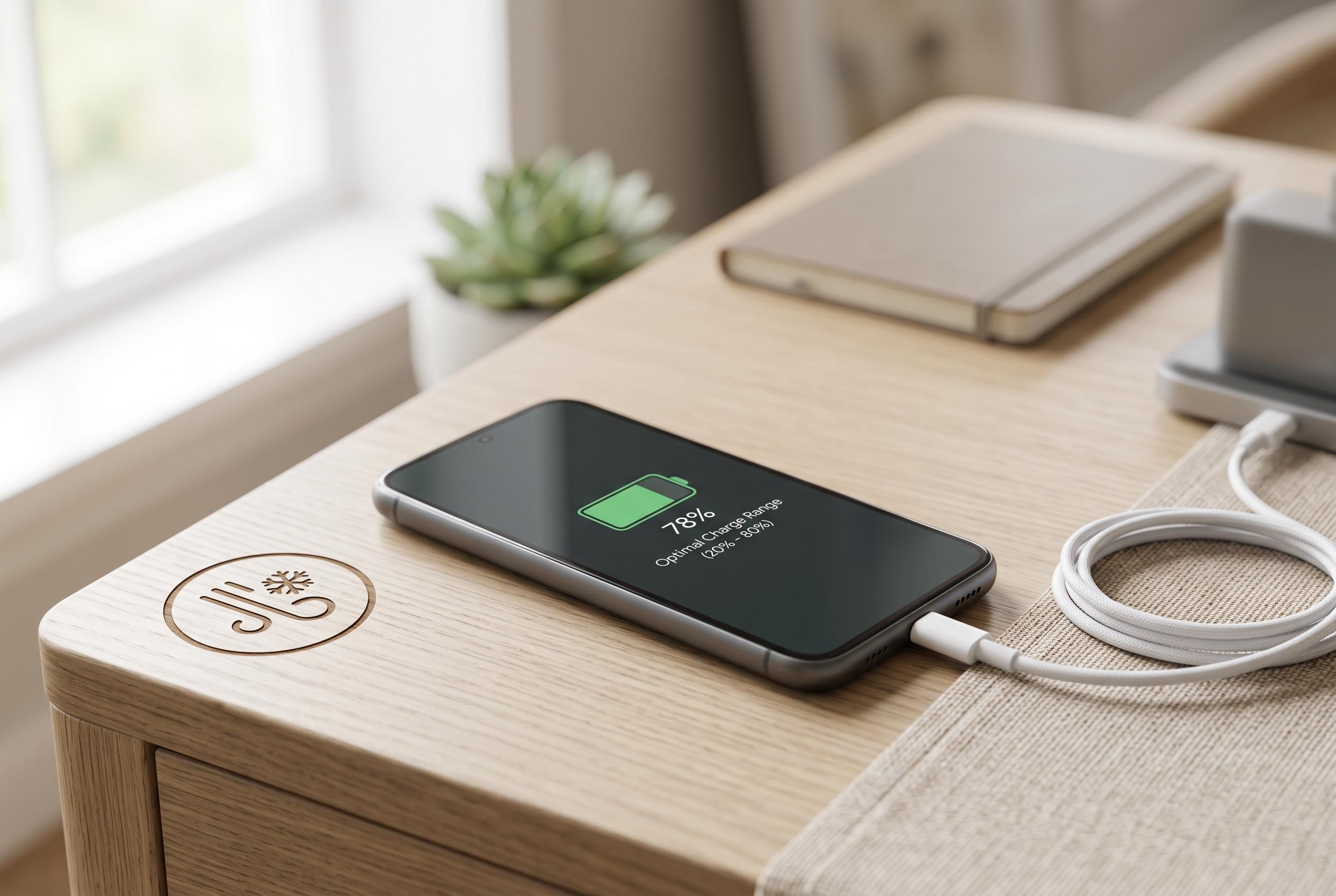

Experts highlight common charging behaviours, such as avoiding heat and optimising charge levels, that can significantly extend or shorten a smartphone’s battery lifespan.
Smartphone charging habits can have a lasting effect on battery health, and the main risks are heat, repeated full charges and poor-quality accessories. Indonesian outlet VIVA reported that everyday behaviour, rather than battery age alone, often explains why a handset starts to lose capacity faster than expected.
According to Slashgear, as cited by VIVA, lithium-ion batteries do not need to be run down to 0% before being charged again. In practice, keeping a phone within a moderate charge range is generally better for long-term performance than repeatedly draining it completely and then filling it to the top.
Several devices now offer software features designed to slow battery wear. Battery Protection, Optimised Charging and Charge Limit tools, available on some models, reduce the time a phone spends at 100%, although the exact name and limit vary by brand and handset. For many users, charging to around 80% to 90% is enough for daily use if that option is supported. VIVA also noted that avoiding high temperatures matters just as much, because charging in a hot room, inside a sealed space or in direct sunlight can accelerate battery degradation.
The same principle applies when the phone is under load. Reviews compiled by Kompas and other Indonesian technology outlets suggest that using a device for demanding tasks such as gaming while it is charging can raise internal temperatures and place extra strain on the battery. Those reports also recommend using original or certified chargers, checking cables and plugs for damage, and being cautious with fast charging when speed is not essential, since higher power can generate more heat.
For overnight charging, adaptive charging features can help by delaying the final stage of the charge until closer to the time the user normally wakes up. That reduces the amount of time the battery spends sitting at full capacity, which is one of the conditions linked to faster wear.
Disclaimer: This content is intended for informational purposes only. Readers are advised to exercise their own judgement, conduct due diligence, or consult a qualified expert before acting on any information provided.