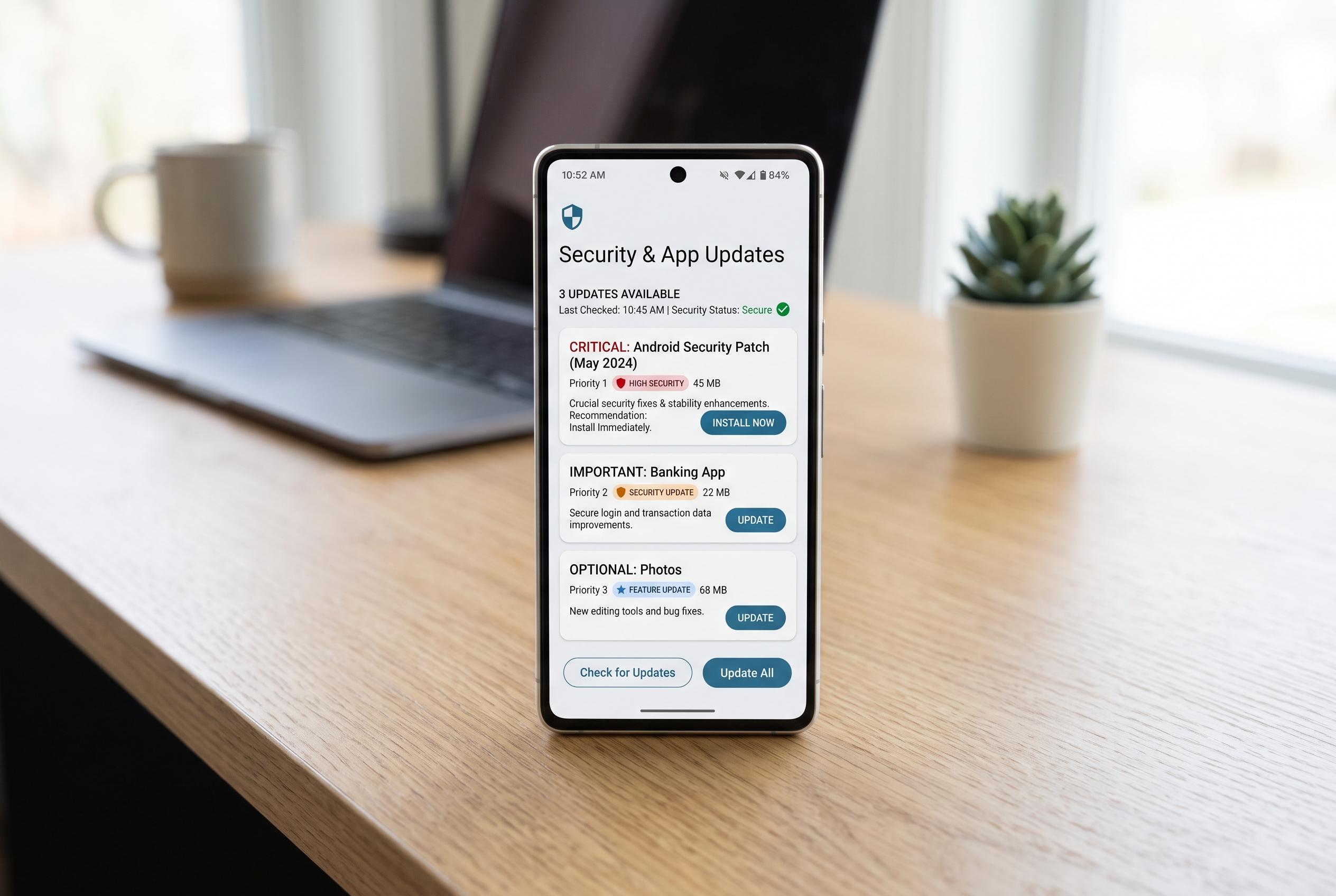

As routine app updates blur with vague descriptions, experts call for more transparent labels to prioritise security and empower users in managing their devices effectively.
Millions of smartphone users accept app updates every day with little more than a tap on “Update All”, even though those downloads can range from urgent security patches to minor design changes. Android’s own guidance says updates can bring new features, stronger security, better performance and improved app compatibility, while also warning that skipping them can leave devices more vulnerable and less reliable. The problem is not that updates are unnecessary. It is that the average user is asked to trust them without being told what matters most.
That lack of clarity has become normal across mobile platforms. Security researchers and app-industry explainers regularly note that updates often do more than add polished features: they can fix software bugs, close vulnerabilities, adjust permissions, change defaults and alter how data moves through an app. Tech Times reported in April that Android system updates frequently include security fixes for multiple vulnerabilities at once, underlining how much can be hidden inside a routine prompt. In practice, that means an update can be either a lifesaving patch or a cosmetic refresh, yet the phone often presents both in the same bland language.
This is where update fatigue sets in. A user who sees the same vague phrases , bug fixes, performance improvements, general enhancements , across dozens of apps has no easy way to judge urgency. That matters because the risks are not equal. A banking app that needs a critical security patch deserves immediate attention, while a new icon pack or menu redesign can wait. As digital-literacy writers have pointed out, repeated updates can also shift user control in subtle ways by changing settings, defaults and privacy terms one step at a time, often without drawing much notice.
There is a straightforward fix: clearer labels. Instead of hiding every release behind the same boilerplate, app stores and developers could flag updates by type, such as security, stability, compatibility, features or design. That would not require publishing a hacker’s roadmap. It would simply tell people whether they should install now or defer until later. Alibaba has argued that many users would benefit from a more selective approach, especially for essential apps such as banking and messaging, where security matters most. The point is not to discourage updating, but to let people prioritise intelligently.
The broader issue is trust. Software companies have made updates faster and more frequent, which is often a genuine gain for security and reliability. But speed has also made update prompts feel routine, and routine has made them invisible. If every alert looks the same, then none of them carries enough weight. The next improvement in mobile software may not be a new feature at all. It may be a simple, honest explanation of what changed.
Disclaimer: This content is intended for informational purposes only. Readers are advised to exercise their own judgement, conduct due diligence, or consult a qualified expert before acting on any information provided.