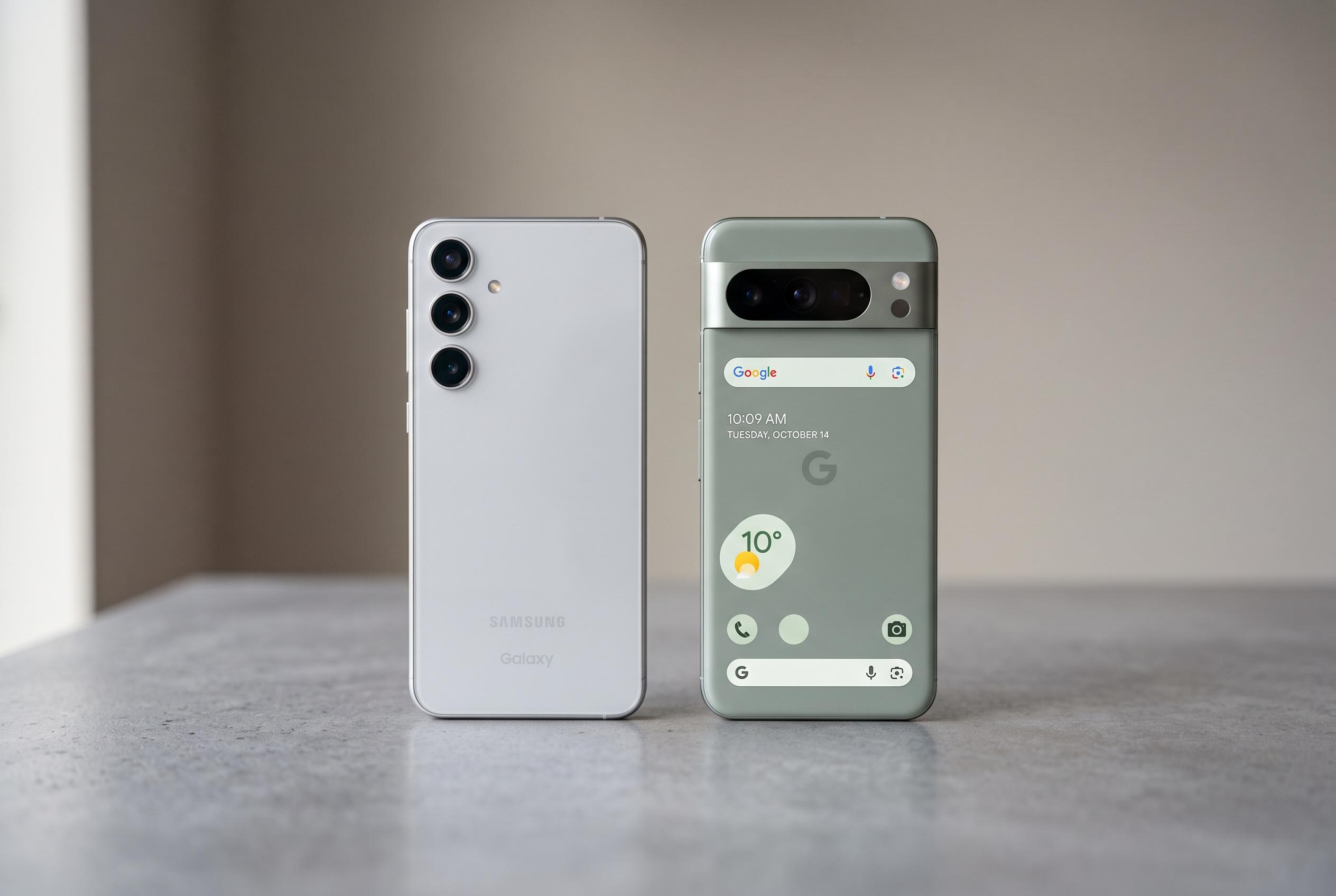

The Samsung Galaxy S26 and Google Pixel 11 emerge as leading compact flagships of 2026, each targeting distinct user priorities with innovative features, design choices, and performance traits.
Samsung’s Galaxy S26 and Google’s Pixel 11 are shaping up as two of the most capable compact flagships of 2026, but they are aimed at different buyers. Both use 6.3-inch displays, both carry 12GB of RAM and both promise 7 years of software and security support, yet their priorities diverge quickly once you look beyond the spec sheet. The Galaxy leans towards thinner hardware and stronger peak performance, while the Pixel pushes harder on battery life, imaging and Google’s own AI tools.
On pricing, the two phones sit close together in base form. La Razón says the Galaxy S26 starts at €999 for 12GB of RAM and 256GB of storage, rising to €1,199 for the 512GB version. It says the Pixel 11 also starts at €999 for 256GB, but the 512GB model is cheaper at €1,129. What Hi-Fi? reported that Google’s wider Pixel 11 family was unveiled with the standard model positioned as the entry point, while the broader range goes up to foldables and Pro variants.
The design split is clearer. Samsung has kept the S26 very restrained, with a vertical camera stack in a rounded module and a body that measures 149.6 x 71.7 x 7.2mm and weighs 167 grams. Google has retained its horizontal Camera Bar on the Pixel 11, which makes the phone more visually distinctive but also larger and heavier at 152.8 x 72 x 8.6mm and 197 grams. La Razón says both phones are IP68-rated for water and dust resistance, but Samsung’s lighter build should appeal to users who value pocketability above all else.
The display comparison is close, but not identical. La Razón says the Galaxy S26 uses a Dynamic AMOLED 2X panel with a 2,340 x 1,080 resolution, adaptive refresh up to 120Hz and a 2,600-nit peak brightness, alongside Samsung’s anti-reflective Gorilla Armor 2 glass. The Pixel 11’s Actua OLED panel is slightly sharper at 2,424 x 1,080 and brighter at 3,000 nits, with 60Hz to 120Hz refresh support and Gorilla Glass Victus 2. In practice, Google has the brighter screen, but Samsung appears to have the edge for outdoor visibility because of its anti-glare treatment.
Performance and software follow the same pattern of trade-offs. La Razón says Samsung uses its Exynos 2600 chip in the S26, while Google has fitted the Pixel 11 with Tensor G6 and a Titan M3 security coprocessor. What Hi-Fi? and Digital Camera World both say Tensor G6 underpins Google’s newer AI tools, including improved voice-to-text and image editing features. Samsung counters with One UI 8.5 on Android 16 and Galaxy AI. Both phones are promised 7 years of updates, which means long-term support should not be a deciding factor unless the exact Android version matters to the buyer.
Battery life is one area where Google appears to have a more convincing advantage. La Razón says the Pixel 11’s 4,985mAh cell is far larger than the S26’s 4,300mAh battery, and it also charges faster at 30W wired and 25W wireless, with PixelSnap accessory support. Samsung’s charging is slower at 25W wired and 15W wireless. Android Central described the Pixel 11 as the more battery-focused phone in the pair, while Samsung’s slimmer design necessarily comes with a smaller battery. For users who want all-day-plus endurance, Google looks better placed.
The camera hardware also points in Google’s favour for reach, while Samsung retains an edge in video specifications. La Razón says the S26 has a 50MP main camera, 12MP ultra-wide and 10MP telephoto lens with 3x optical zoom, plus 8K video recording on the rear camera. The Pixel 11 uses a 48MP main sensor, 13MP ultra-wide and 10.8MP telephoto with 5x optical zoom, but its rear video tops out at 4K. Digital Camera World said Google’s main sensor is designed for greater light sensitivity, which should help low-light photography, while PhoneArena’s comparison also points to the Pixel’s larger battery and longer zoom as practical advantages. In short, Samsung looks like the better all-rounder for power users and those who prioritise a lighter body, while Google’s phone is the more compelling choice for battery life, zoom photography and a cleaner Android experience.
Disclaimer: This content is intended for informational purposes only. Readers are advised to exercise their own judgement, conduct due diligence, or consult a qualified expert before acting on any information provided.