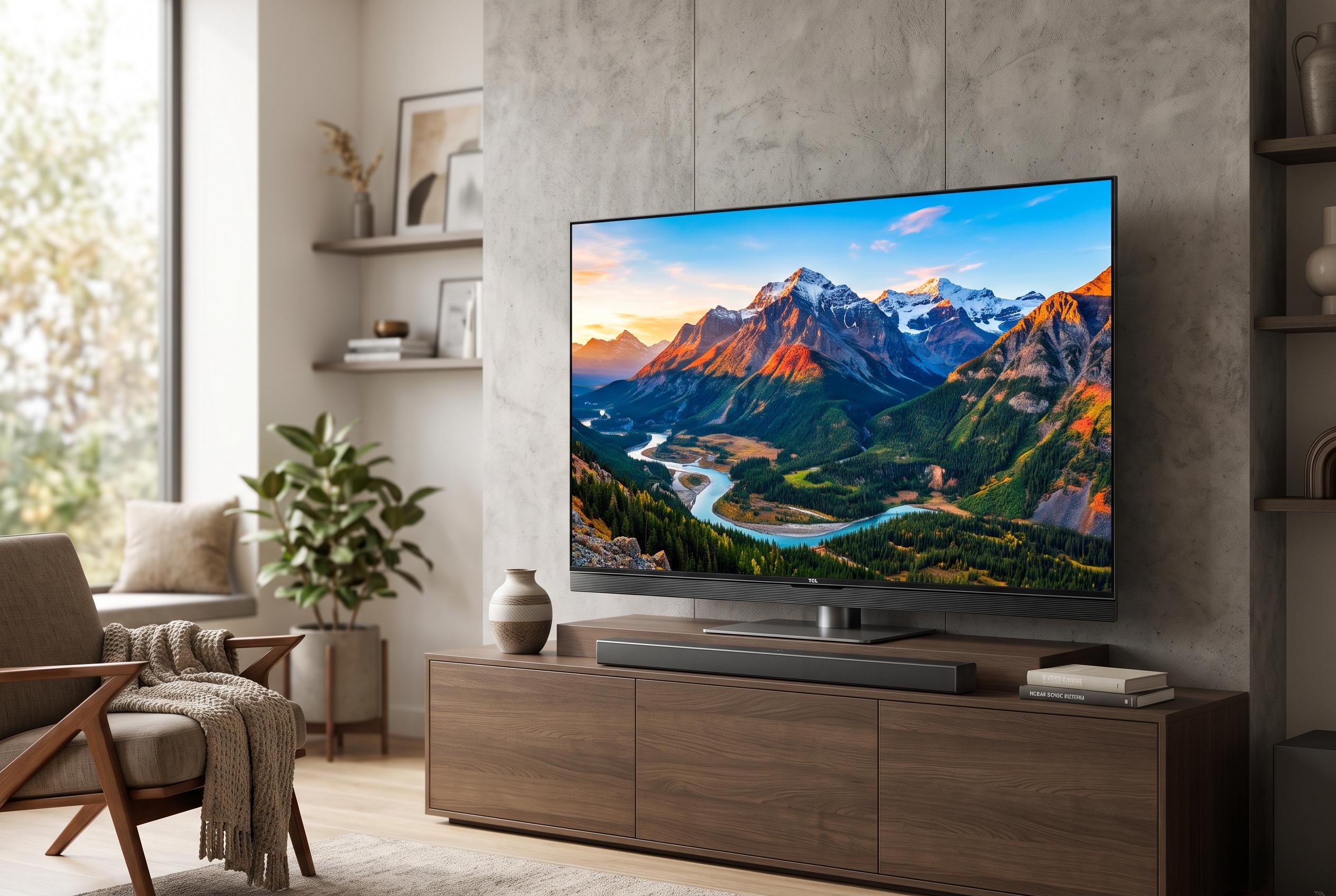

TCL’s QM7L 75-inch TV combines high brightness, rich colour and gaming features at a competitive price, positioning itself as a serious choice for value-conscious buyers in the 2026 TV market.
TCL’s QM7L is emerging as one of the more credible value plays in the 2026 TV market, according to Tom’s Guide, which says the 75-inch model combines strong brightness, rich colour and a competitive price with only modest compromises. The review places the set in TCL’s new SQD Mini-LED line and says it is intended to bring higher-end picture traits to buyers who do not want to pay premium OLED money. Tom’s Guide also notes that the 75-inch version is listed at $2,000 but has been selling for about $1,500, putting it close to the Hisense U7 in the same size class.
The TV’s hardware is broadly conventional, but TCL has kept the design tidy. Tom’s Guide describes a centre-mounted stand, a slim chassis and a rear port layout that is easy to reach. There are four HDMI 2.1 ports, though only two support 144Hz gaming, while the other two are limited to 60Hz at 1080p. Best Buy’s product listing adds that the set uses TCL’s TSR AI Processor, a 144Hz native refresh rate and Bang & Olufsen-tuned audio, while TCL also claims peak brightness of up to 3,000 nits on the series.
In its lab testing, Tom’s Guide says the QM7L delivered the kind of punch that matters most on a large LCD screen: high HDR brightness, strong colour volume and good SDR accuracy. The site measured 2,270 nits of HDR brightness and 90.28% coverage of the Rec. 2020 colour gamut on the 75-inch model, both of which it said helped the television hold up well in demanding film and streaming content. RTINGS also finds the set very bright and colourful, but it warns that HDR colour accuracy is less consistent than the brightness figures suggest, with over-brightening and less precise tone handling in some material.
The set also appears to be a serious gaming option. Tom’s Guide measured input lag at 9.4 milliseconds and praised support for VRR, AMD FreeSync Premium Pro and ALLM, along with TCL’s game menu tools. RTINGS, however, is more cautious, saying slower pixel response can introduce motion blur in gaming mode. That makes the QM7L feel fast in practice for many players, but not necessarily class-leading for those who are especially sensitive to motion clarity.
Audio and software are additional strengths. Tom’s Guide says the 2.2-channel Bang & Olufsen system sounds wider and more balanced than expected from built-in TV speakers, while Google TV keeps navigation straightforward and relatively uncluttered. On balance, the QM7L looks like a well-judged mid-range television: bright enough for sunlit rooms, capable enough for gaming and priced aggressively for its size. RTINGS suggests buyers who want the most refined black levels, motion performance and overall picture consistency may still prefer pricier rivals such as TCL’s own QM8L or Hisense’s better-rounded alternatives, but for many shoppers the QM7L hits a useful middle ground.
Disclaimer: This content is intended for informational purposes only. Readers are advised to exercise their own judgement, conduct due diligence, or consult a qualified expert before acting on any information provided.