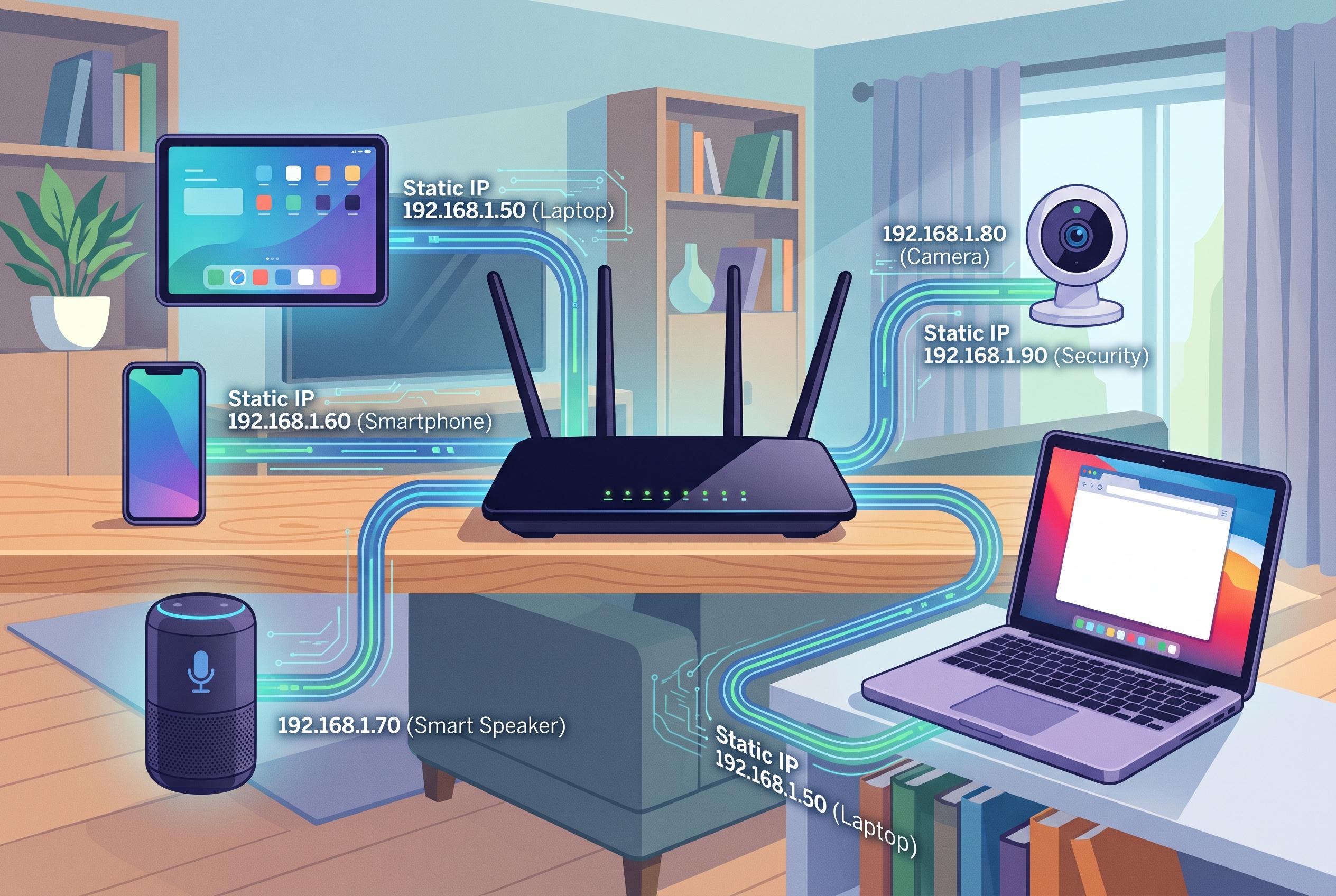

Assigning static IP addresses can greatly improve the manageability, troubleshooting, and stability of home networks, especially for self-hosted systems and smart-home devices, according to tech experts.
Assigning static IP addresses can make a home network far easier to manage once it grows beyond a handful of devices. In most households, a router’s DHCP server hands out addresses automatically and that is usually enough. But for a network built around self-hosting, network storage and connected gadgets, a fixed address gives each device a stable identity that is easier to reach, monitor and troubleshoot, according to TechTarget and Micro Center.
That advantage is clearest with a home server or NAS. A device that reboots with a new address can be awkward to find again, especially when it hosts services such as media servers, automation tools or remote management dashboards. TechTarget says static IPs are well suited to systems that need to remain consistently reachable, while ShowMyIP notes that they also simplify remote access and allowlisting.
Static addressing also makes network diagnosis more precise. When every important machine keeps the same local address, it becomes simpler to see which device is making blocked requests, which service is failing and which exception should apply only to one computer or phone. That is particularly useful in homes using local DNS filtering or other policy-based controls, because a predictable address helps tie logs and rules to the right endpoint.
The same logic extends to smart-home equipment. Once more household devices are moved off the cloud and into local control systems, a stable IP range can make them easier to identify and isolate. Micro Center and Naproxy both note that static IPs are especially useful for devices such as printers, security systems and NAS units, where consistency matters more than automation.
There is, however, a practical warning: static IPs are most effective when they are assigned within a planned structure. Using whatever address the router happened to provide at the time can create confusion later, especially as the network expands. A simple range plan, such as separating computers, IoT devices and guest devices into different blocks, makes the address map easier to read at a glance and reduces the need to renumber everything later. ShowMyIP also notes that static assignments can increase administrative burden and should be managed carefully.
Disclaimer: This content is intended for informational purposes only. Readers are advised to exercise their own judgement, conduct due diligence, or consult a qualified expert before acting on any information provided.